
What’s keeping us from making our food supply chain better?
If the pandemic showed us anything, it’s that how our food gets to us is almost as important as what we eat in the first place.
But how will the supply chain evolve to address the tensions between our “on-demand” economy and conflicting desire for sustainability, for locally-produced, but also cheap and accessible food? As the editor-in-chief of both Food Logistics and Supply & Demand Chain Executive, Marina Mayer is thinking What the Future of the supply chain day in and day out. Here’s where she thinks it’s headed.
Matt Carmichael: Will the current supply chain issues be systemic or will they go away once the pandemic leaves us?
Marina Mayer: I think the issues will always be here, just in different forms. People are still stockpiling. People are still buying food and other things online. It’s hard to revert to old ways. There’s great technology out there. The problem is that it doesn’t solve all problems at all times.
Carmichael: Do advances in indoor and lab-grown food (plants as well as meat) start to redefine “local” and shorten supply chains?
Mayer: It does bring in a localization aspect because farms are usually out in the middle of nowhere, but if you’re bringing it indoors you can build that anywhere. We’ve seen companies who have built their indoor farm attached to a grocery store. That’s what a lot of companies need to do to shorten that supply chain and maintain the freshness of their foods.
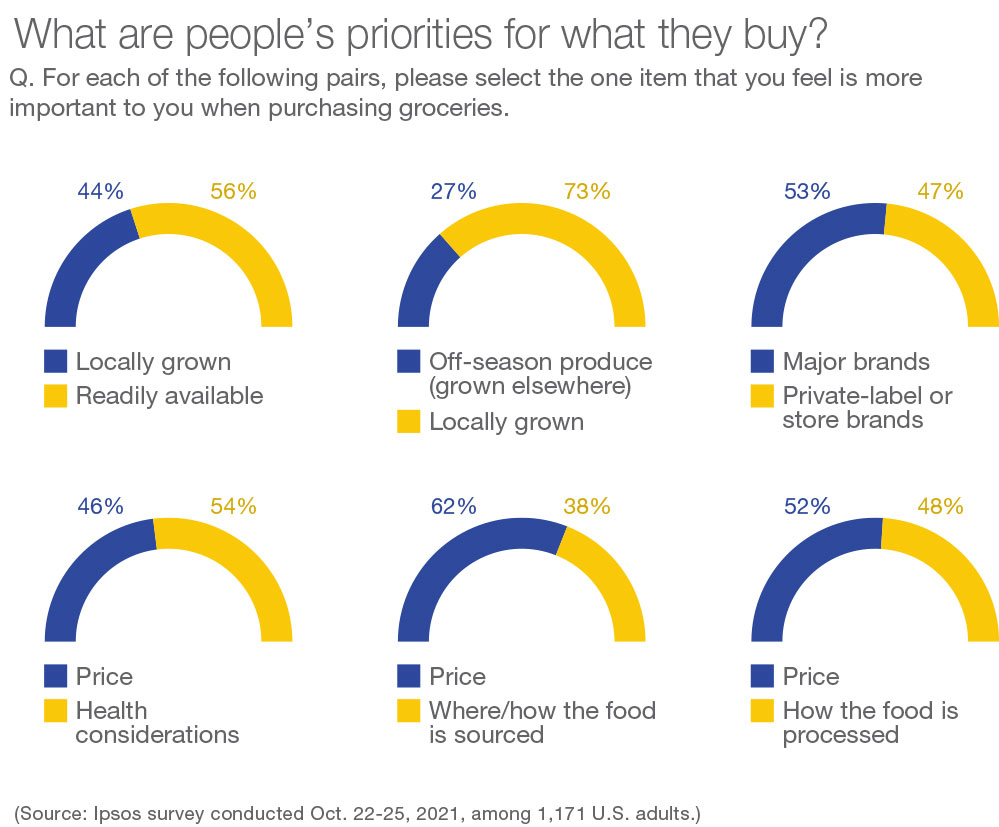
Carmichael: We surveyed about which is more important, locally grown or readily available, and found that locally grown is very important, but price and availability are important considerations, too. How do you balance these considerations in the supply chain of the future?
Mayer: The availability part is what’s throwing things out of whack because now customers want things right away. That’s creating this uphill battle for us. Price is just cyclical, but the “readily available” thing, that’s where the root of all of this starts. People want it right away. They also want it fresh, but they don’t care so much about that. They just want it.
Carmichael: How is the industry dealing with that new “to my doorstep” leg of the chain?
Mayer: Initially, it struggled because it was introduced basically overnight. I think a lot of companies thought it would be temporary, and now it’s not. Retailers struggle with a lot of different challenges, all similar in nature. The kicker is that they’re competing with other trucks and companies that have already been doing this, like UPS and FedEx. So, if retailers don’t hire somebody else to do these things for them, then they have to create a fleet, as Walmart did. Walmart said, “Hey, this is a problem. It’s not going to go away. We’re just going to create this supply chain arm in our company and just fix it.”
Carmichael: In the end, price trumps all considerations. How do we keep the economics and affordability and the equitability of food as the supply chain evolves?
Mayer: Localization is key to that because it means less road to travel, fewer hands to touch [product] in between. There are a lot of third-party providers now that say, “You just need to produce it. We’ll take it from there.” That is where the challenge is for some of these smaller companies who’ve been doing everything themselves—they don’t realize that there are other ways to do these things.
Carmichael: In recent years, there’s been a renaissance of locally grown, farm-to-table, etc., but it seems like the world is pivoting back to an advantage for the larger companies that can scale operations and invest in the technology at the farm, itself. Do you see that pendulum swinging back?
Mayer: Yes. It’s also the larger corporations that are doing more with sustainability. That matters to consumers. People still want to know the values of the companies where they’re buying from to correlate with their own values.
Carmichael: What needs to change for the supply chain to become more sustainable?
Mayer: People aren’t really talking about it enough, but when you put a lot more trucks on the road to deliver a lot more shipments to somebody’s door, you’re burning more fuel, and it’s undoing sustainability progress.
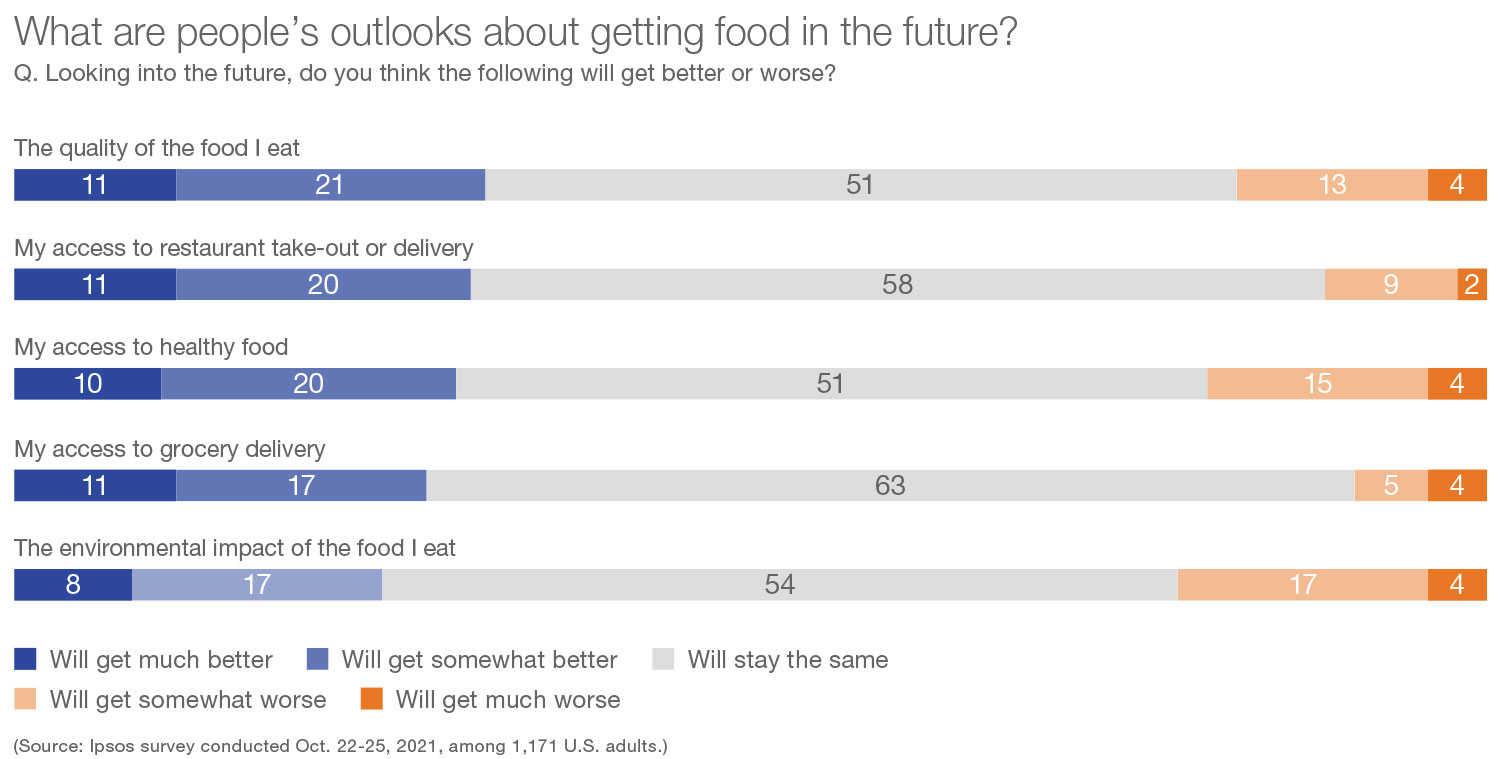
Carmichael: How important is further localization and lab creation of meat and plants and technology to help with traceability to the supply chain industry?
Mayer: Traceability is becoming more and more important. The challenge is that it seems to be more useful for the companies that are producing and shipping these products than it is to the consumers. Consumers will say, “I want to know where my meat comes from,” but they’re not going to actually physically take the time to scan whatever it is and view the journey.
Carmichael: What changes do you foresee in how the supply chain can impact the incredible amount of food waste?
Mayer: Food waste has always been an issue and will always be an issue. It’s getting better because a lot of trucks have put in solutions and sensors that can literally say, “Hey, this truck is under temperature or above temperature.” But then you have stuff that’s stuck on ships in ports.
Carmichael: Labor shortages have been an issue in the trucking industry for quite some time. How bullish are supply chain-related companies on automated driving?
Mayer: They are [bullish], but then there are a lot of drivers out there who are pushing back, even though there’s a driver shortage. It’s a chicken or egg thing. They have to figure out how to fix this, and they have to fix it, like, yesterday.


