Cracks in the foundation
Last year, fueled in part by a wild swirl of conspiracy theories, a mob attacked the US Capitol on January 6th, 2021.
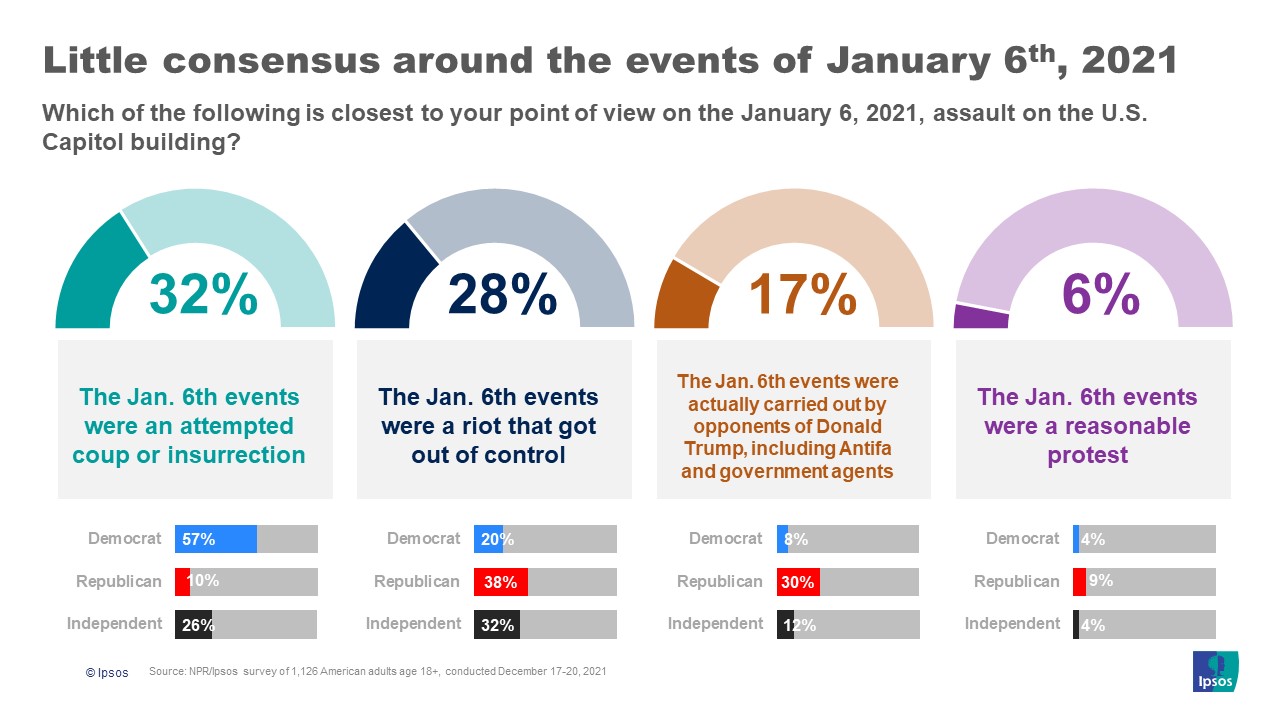
The dust is still settling from that event. As our polling tells us, the country is still no closer to consensus on what actually happened at the Capitol. Or on November 3rd, 2020, for that matter.
The toxic effect on our democracy is readily apparent. Many hold grave concerns about the future of democracy and believe that it may be at a breaking point.
Despite the many changes that 2021 brought us, belief that the election was illegitimate or fraudulent has held constant. In fact, our polling data underscore that the misinformation ecosystem that gave rise to January 6th is still present today.
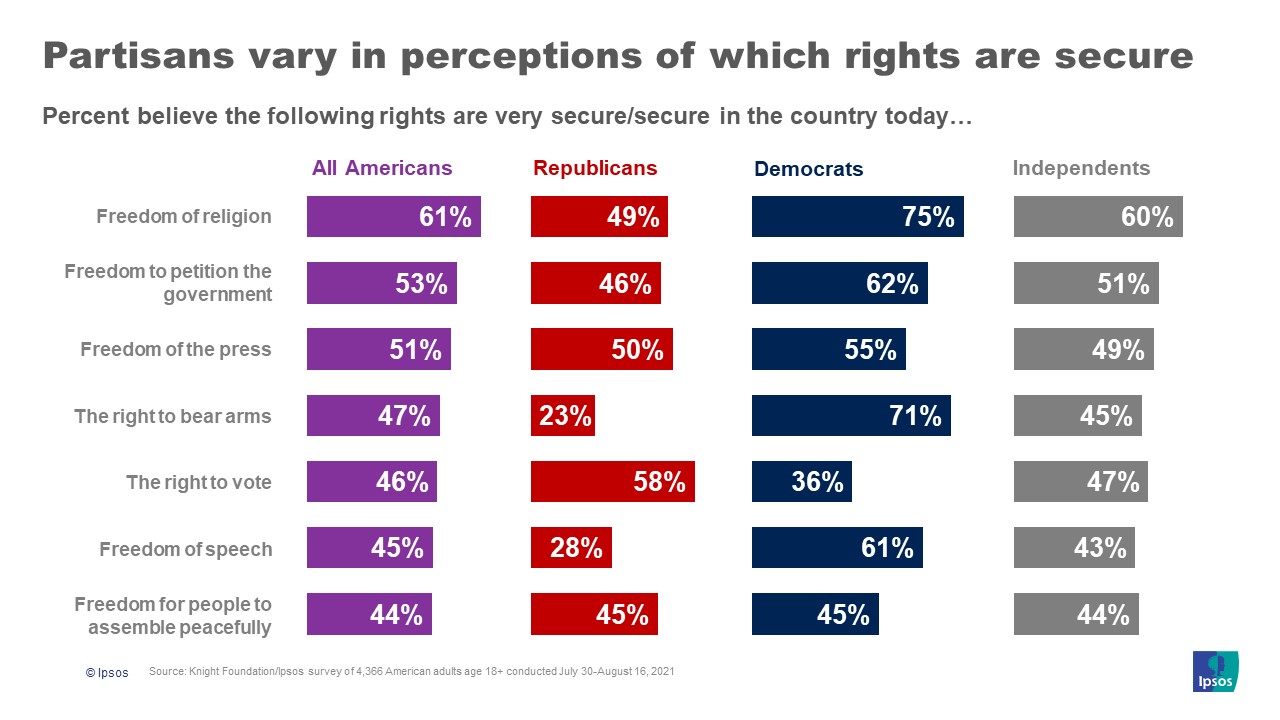
- Breaking down. A majority of Americans believe that America as a whole and American democracy are at risk of failing. While this is far from the most uplifting data point to start the year out on, it does appear to mark a very slight improvement from the immediate aftermath of January 6th, when 79% said they agree that “America is falling apart.”
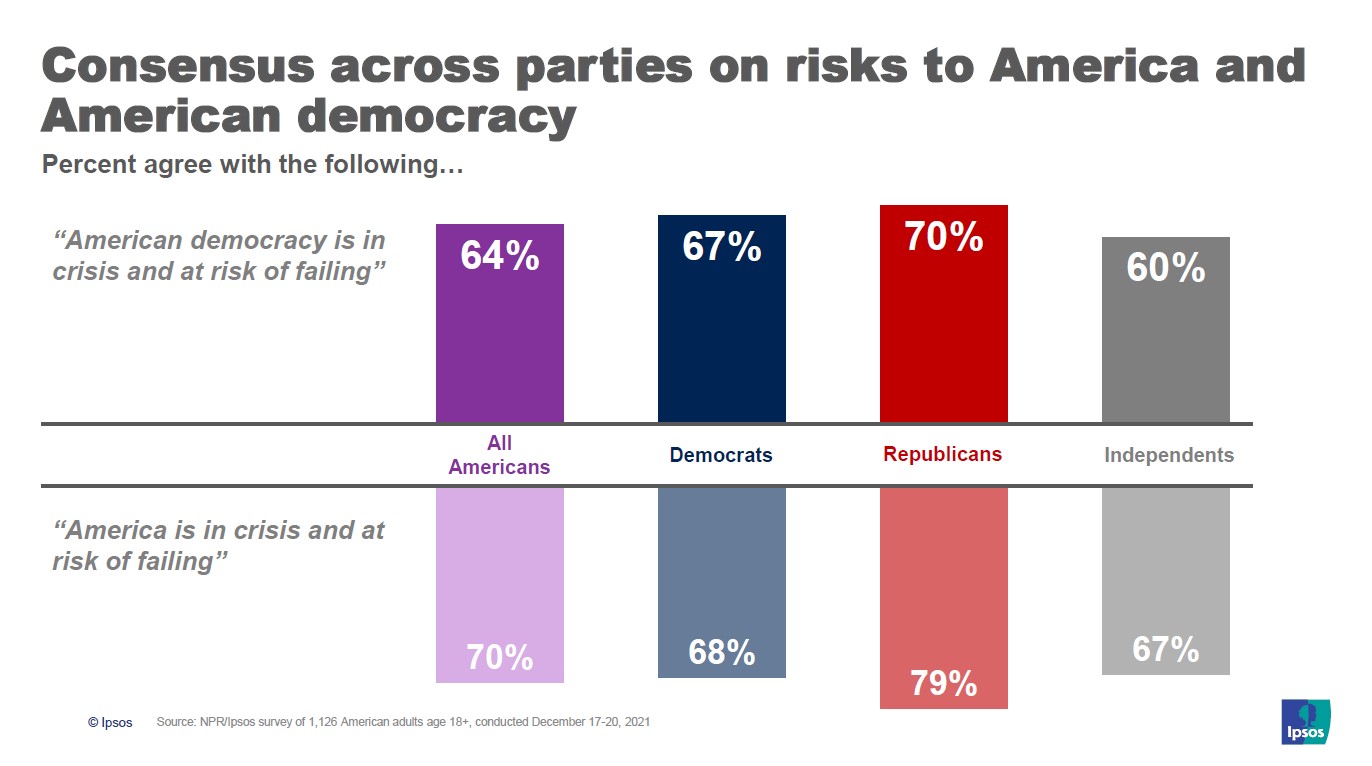
- Fundamental rights. Although both parties express concern about the state of American democracy, what rights they believe are secure or threatened are not the same. As our polling with the Knight Foundation finds, Democrats are more likely than Republicans to feel that freedom of speech, freedom to petition the government and freedom of religion are secure. Meanwhile, Republicans are more likely to feel that the right to vote is secure. These differences point, in broad brushstrokes, to the unique preoccupations and fears of each party.
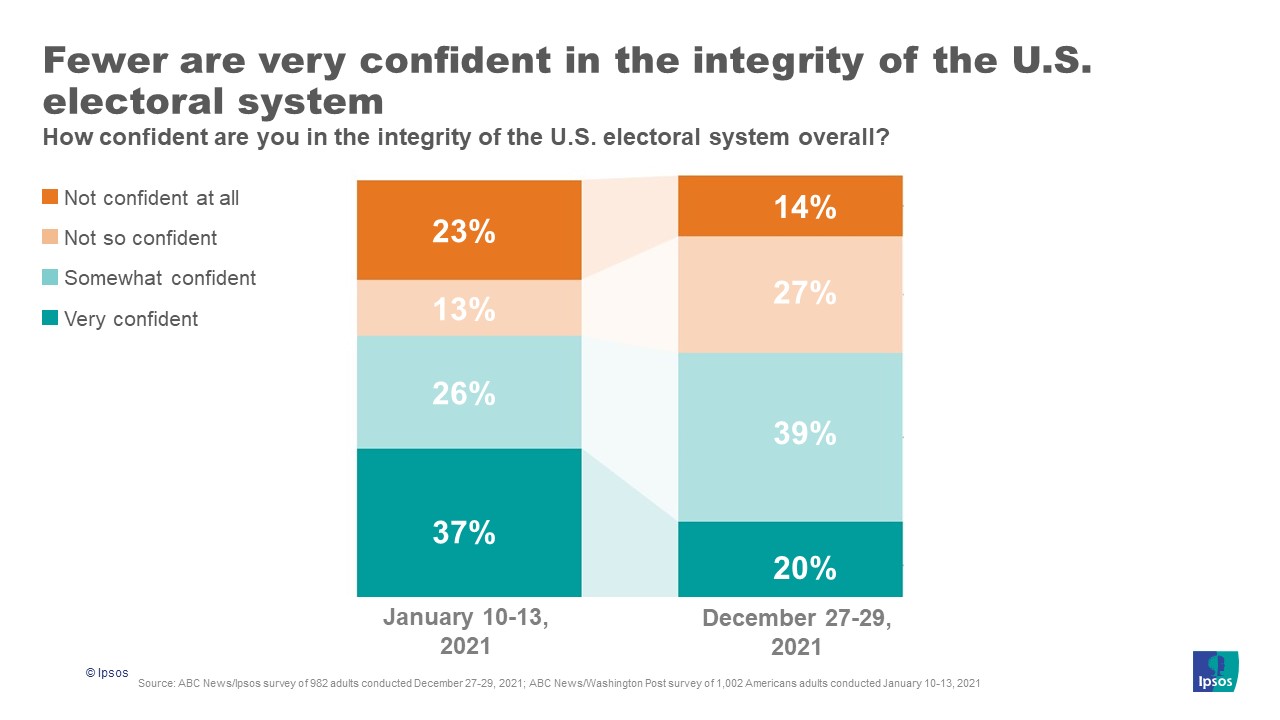
- Electoral confidence. Just 20% are very confident in the US electoral system, down from 37% last year. Doubts are most pronounced among Republicans and independents – 13% of Republicans and 20% of independents say they are very confident in the system, compared to one in three Democrats.
- No consensus. For many Americans, January 6th is symbolic of larger threats to our democracy. Yet not everyone sees it through the same lens. A plurality – driven by Democrats – believe that it was an attempted coup or insurrection. Others see it as a riot that got out of hand, or falsely believe that it was ginned up by Antifa or government agents.
- Split reality. The lack of consensus around the events of January 6th is just one place where our shared reality breaks down. To assess how widespread conspiracy beliefs are, we recently surveyed the public on a series of ten true/false statements (six of which are shown below), testing whether people believe that the COVID-19 vaccine contains microchips, or that a group of “Deep State” elites are controlling Joe Biden. While Americans are more likely to be able to determine true from false than not, just 25% got all statements right.

We are left today with a democracy in which both major parties are skeptical about its future viability, although for different reasons. For some, it comes down to misinformation and false beliefs about election fraud, while others express concern about electoral mechanisms affecting voting rights and access to polls. Yet when evaluating where the public stands today, it is important to remember that we didn’t arrive at this point without warning. The crisis of confidence in our electoral processes has been a slow and steady burn.