
Affluent & Concern For the Environment
Affluent Americans are extremely concerned about the environment—only the economy in general, pandemics and healthcare rank higher. While Affluents generally agree on other top issues across gender, race, and ethnicity, that is not the case on the environment. Instead, it turns out, concern is largely driven by whites and women.
This crucial fact gives brands two options as they craft their messages concerning the environment and about sustainability when marketing products toward the Affluent:
- Double down and continue a communications plan geared towards the dominant subgroups among the Affluent;
- or specifically craft your messaging to draw in groups for whom other issues seem more important, such as racial inequality.
Read on for research, insights and tips to learn how improved messaging can reach a broader range of Affluents.
KEY TAKEAWAYS:
The environment is a major issue for affluent Americans, but Ipsos data shows the concern is driven largely by specific subgroups, according to data from Ipsos Affluent Survey 2021 Barometers.
- White Affluents—and particularly white women—are most concerned about the environment
- African Americans and Hispanic Americans Affluents show far greater concern about racial inequality
- Brands can focus on the connection between racial inequality and environmental injustice to broaden concern for the environment across all segments of the Affluent
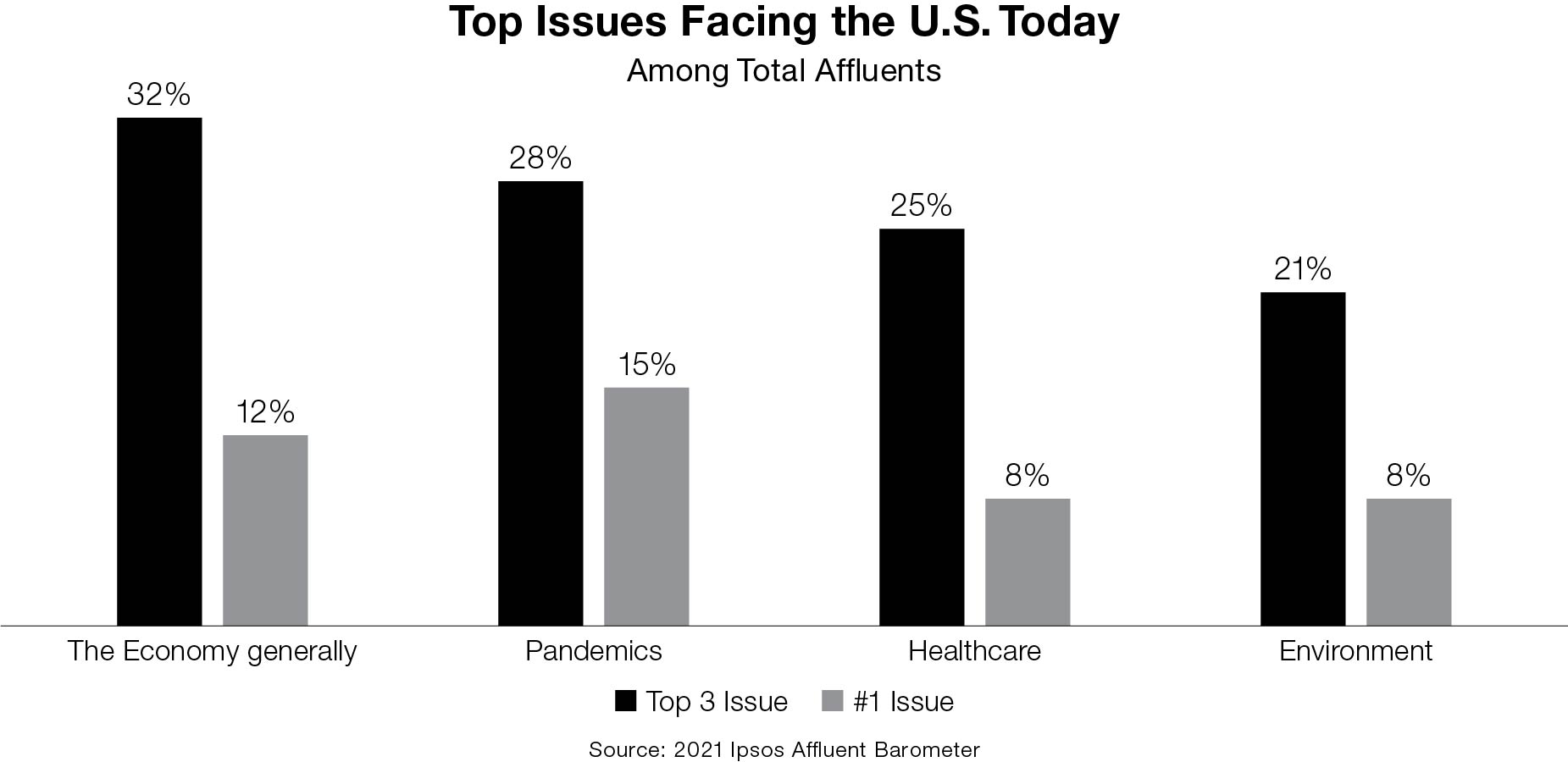
Affluent Americans are extremely concerned about the environment—only the economy in general, pandemics and healthcare rank higher. While Affluents generally agree on other top issues across gender, race, and ethnicity, that is not the case on the environment. Instead, it turns out, concern is largely driven by whites and women.
This crucial fact gives brands two options as they craft their messages concerning the environment and about sustainability when marketing products toward the Affluent: Double down and continue a communications plan geared towards the dominant subgroups among the Affluent; or specifically craft your messaging to draw in groups for whom other issues seem more important, such as racial inequality.
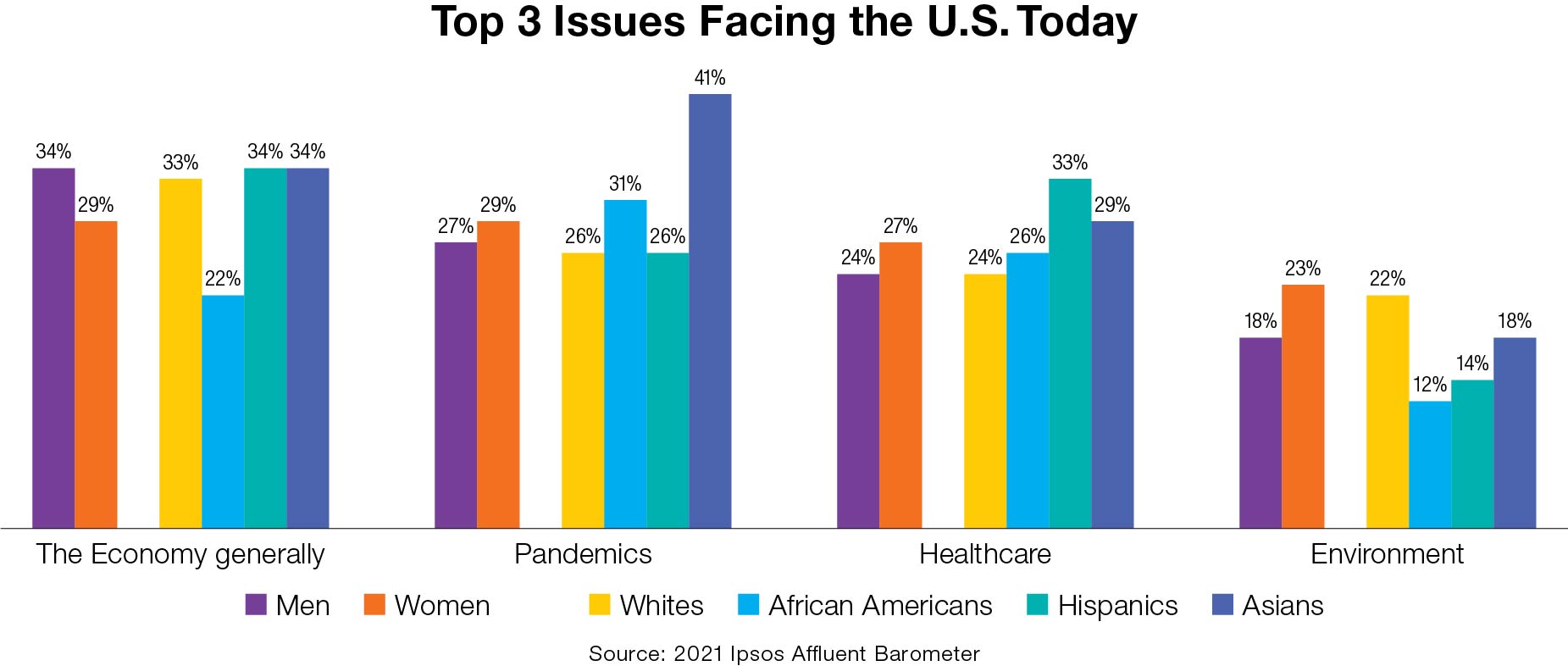
One in five Americans (21%) name the environment as one of the top three issues facing the U.S. today. But dive into the data, and it becomes clear that the total is largely being driven by white Affluents (22%), in general and affluent white females (24%) in particular. In contrast, only 12% of affluent African Americans and only 7% of affluent African American males include the environment among their top three concerns.
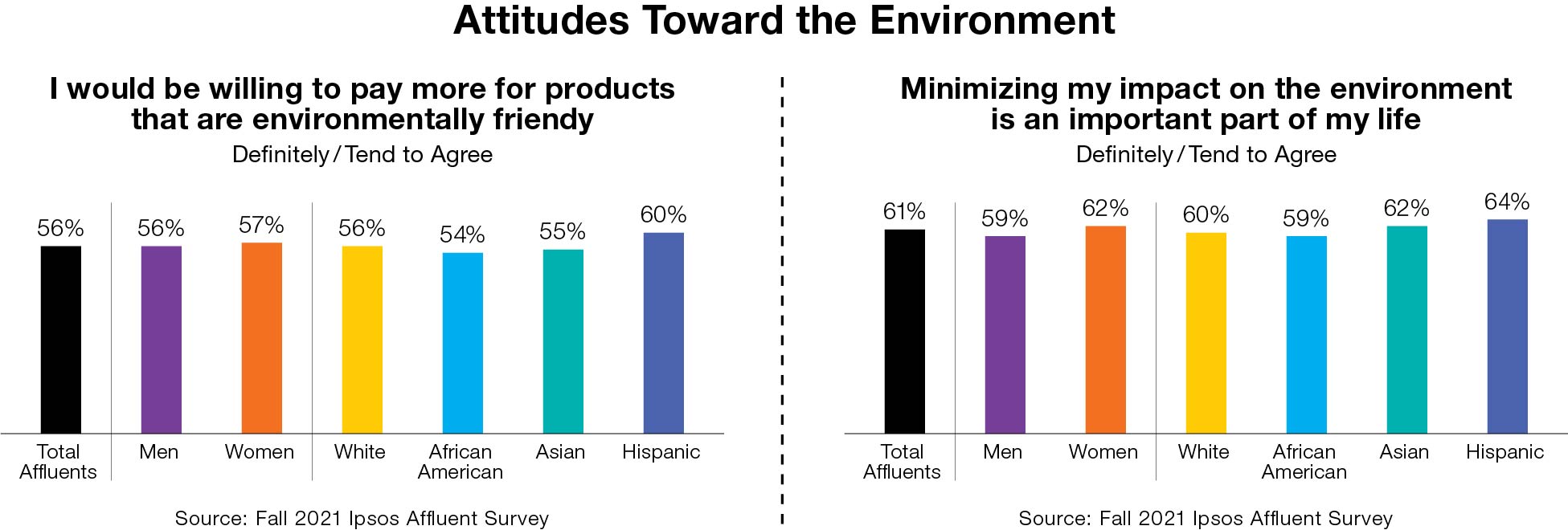
Affluent Americans have been asked to choose between the environment and the economy before, in the Fall 2021 Ipsos Affluent Survey. More than half (56%) of Affluents then said they agree with the statement “I would be willing to pay more for products that are environmentally friendly,” and over 60% said that “minimizing my impact on the environment is an important part of my life.”
The level of agreement on these statements remains relatively consistent across race, ethnicity, and gender, with slightly higher percentages for women and Hispanics, and slightly lower number for African Americans.
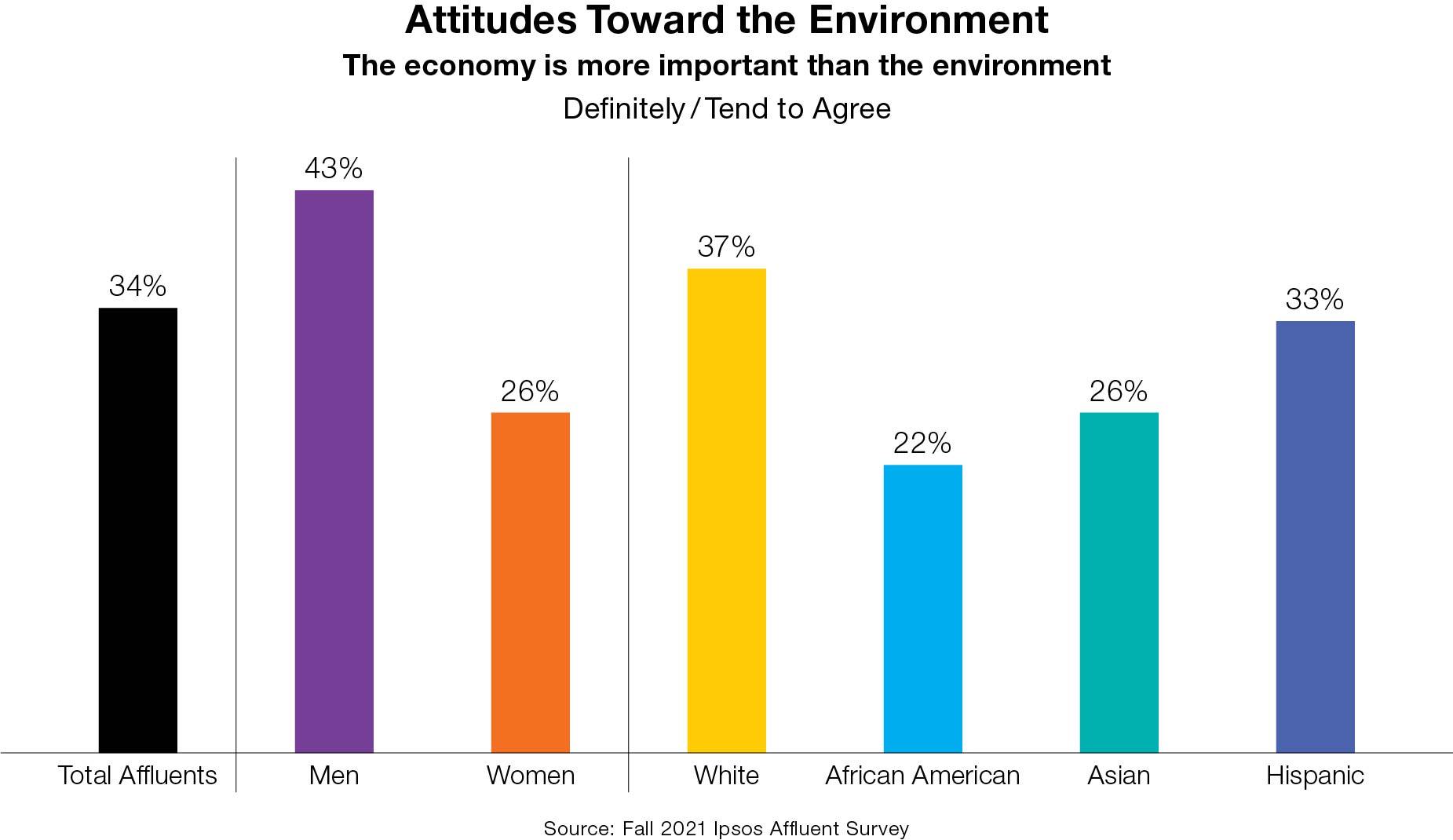
When these same respondents, however, are asked to prioritize their commitment to the environment against another factor, specifically “The economy is more important than the environment” a greater rift emerges. Men are significantly more likely to agree with this statement as are whites.
Environmental issues don’t resonate as strongly with affluent African Americans as another issue: racial inequality: Not surprisingly, 45% list that as a top-three issue. Given the events of the past few years, it is not all that surprising that racial inequality also replaces the environment for Hispanics and Asian Americans as well, at 18% and 25% respectively.
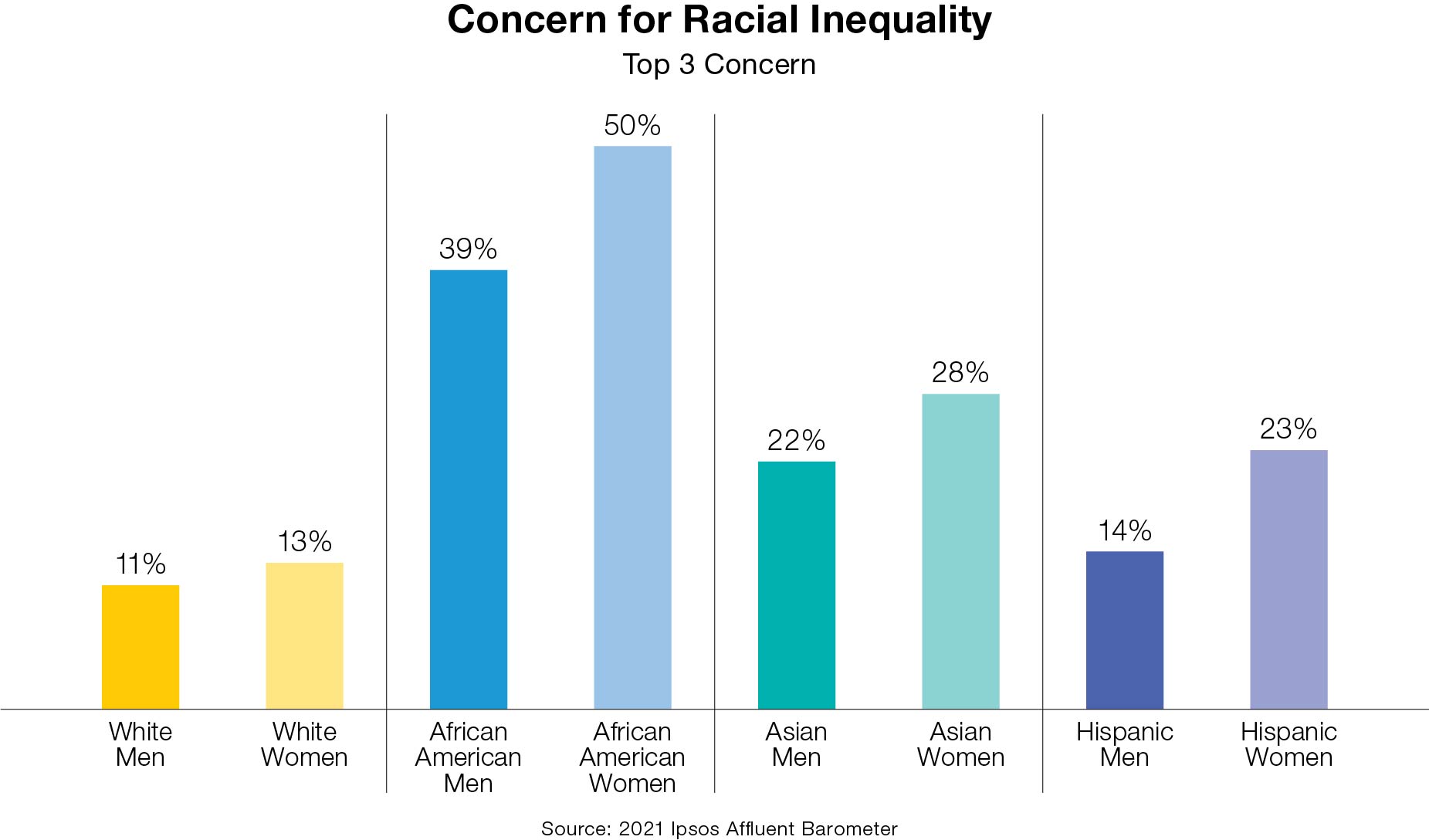
To make concern for the environment a top issue for all Affluents, messaging must connect with those subgroups that significantly lag behind: non-white Affluents. For all these subgroups, the way to do that is to create messaging that connects concern for the environment with what is for them a more important issue: racial inequality. Emphasizing the racial disparities that exist within issues of the environment can become a key messaging tool to expand concern beyond its current base.
By understanding the sum of the parts of the Affluent, marketers can end up reaching a greater affluent whole.
WHAT’S NEXT:
- Concern for the environment is important to non-white Affluents, but other issues pull focus away
- To create messages that truly resonate with all Affluents, marketers need to connect the subgroups’ concerns about inequality to environmental and sustainability issues reflecting their lived experience
- Make environmental justice a key component of any marketing strategy that extends beyond the current base of white support
![[WEBINAR] How winning brands are making themselves essential in a tight economy](/sites/default/files/styles/list_item_image/public/ct/publication/2026-09/thumbnail-templates%20demo_3.png?itok=0YmowUKN)

