
How is inflation affecting private label? It's complicated.
Inflation and the rising cost of everyday goods is having a significant impact on consumer spending and what many can afford. But while nearly all consumers plan to scale back on spending, switching to private label brands as a means to save some cash isn’t top of mind for many as a solution.
In this paper, we detail recent research exploring U.S. consumers’ private label purchase intent, a deep dive in interest by target segments such as White, Black, and Hispanics, as well as opportunities and tips to help private label brand marketers.
KEY FINDINGS:
- Most consumers don’t see private label as a solution to their financial concerns. Despite inflation, this has not changed since the beginning of 2022.
- An analysis of private label buyers shows these products are not universally appealing, instead they are most likely to be purchased by college educated women with children in the household.
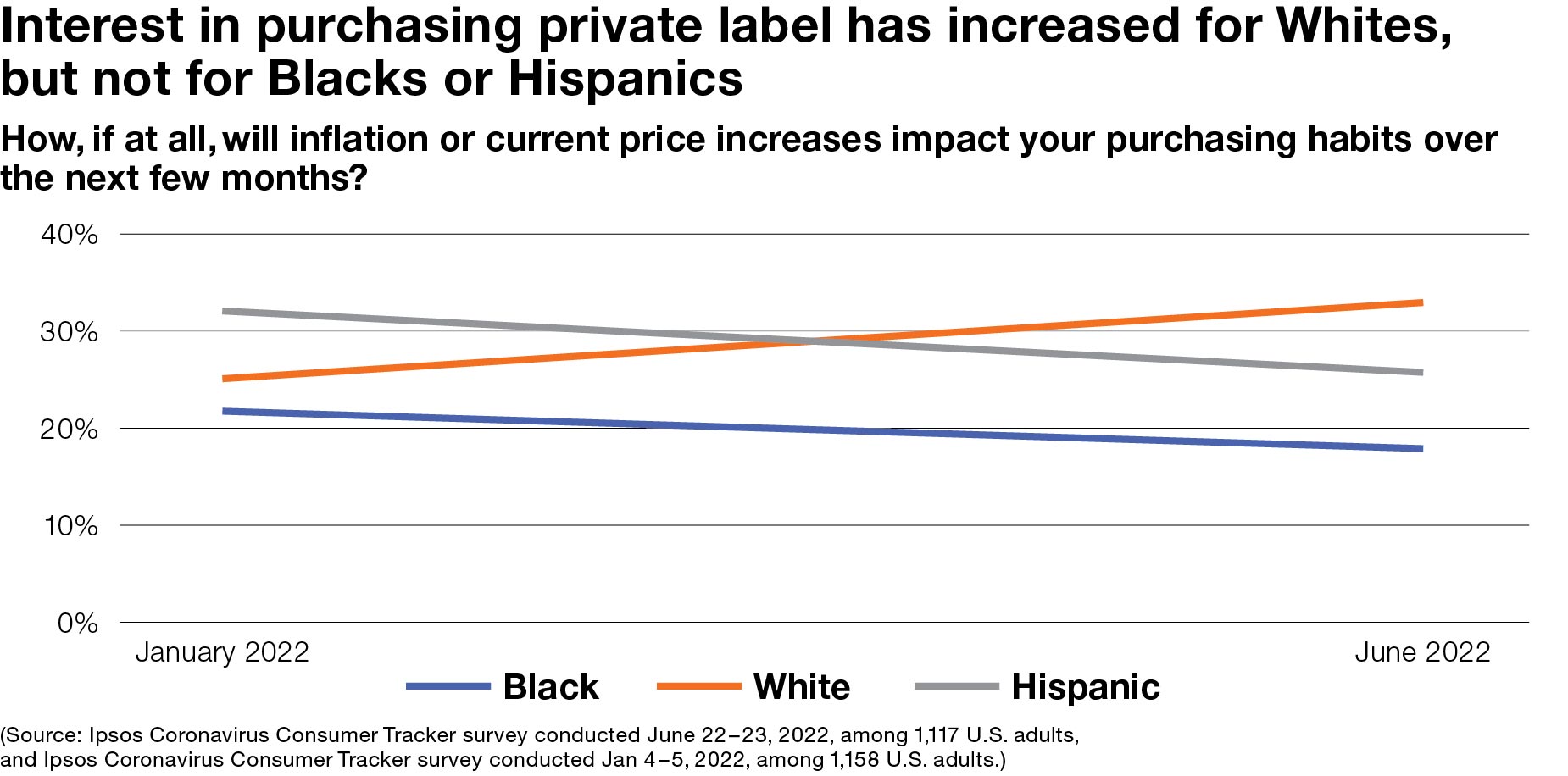
- Notably, private label brands aren’t being seen as the desired solution for Black or Hispanic Americans. Despite inflation, these consumer groups are not showing an increased interest in purchasing private label brands. This is an opportunity for private label brands to better understand the needs of these consumers to build desire for purchasing.
Inflation and the rising cost of everyday goods is having a significant impact on consumer spending and what many can afford. But while nearly all consumers plan to scale back on spending, switching to private label brands as a means to save some cash isn’t top of mind for many as a solution.
Instead, many consumers still want to buy “their brands” and accept this may mean waiting until their brands go on sale or maybe buying their brands less often. At this moment, as consumers are considering more solutions to save money, private label brands have an opportunity to help consumers navigate these inflationary times.
But to make the most of this opportunity, private label brands need to show consumers they are more than just cheaper options, but real brands that deliver on their personal needs.
Private Label Brands Are Not Readily Seen as a Solution for Inflation
Ipsos consumer tracking data shows that while changing purchase habits is a nearly universal expectation, these changes are most likely to involve both restricting purchases and looking for deals.
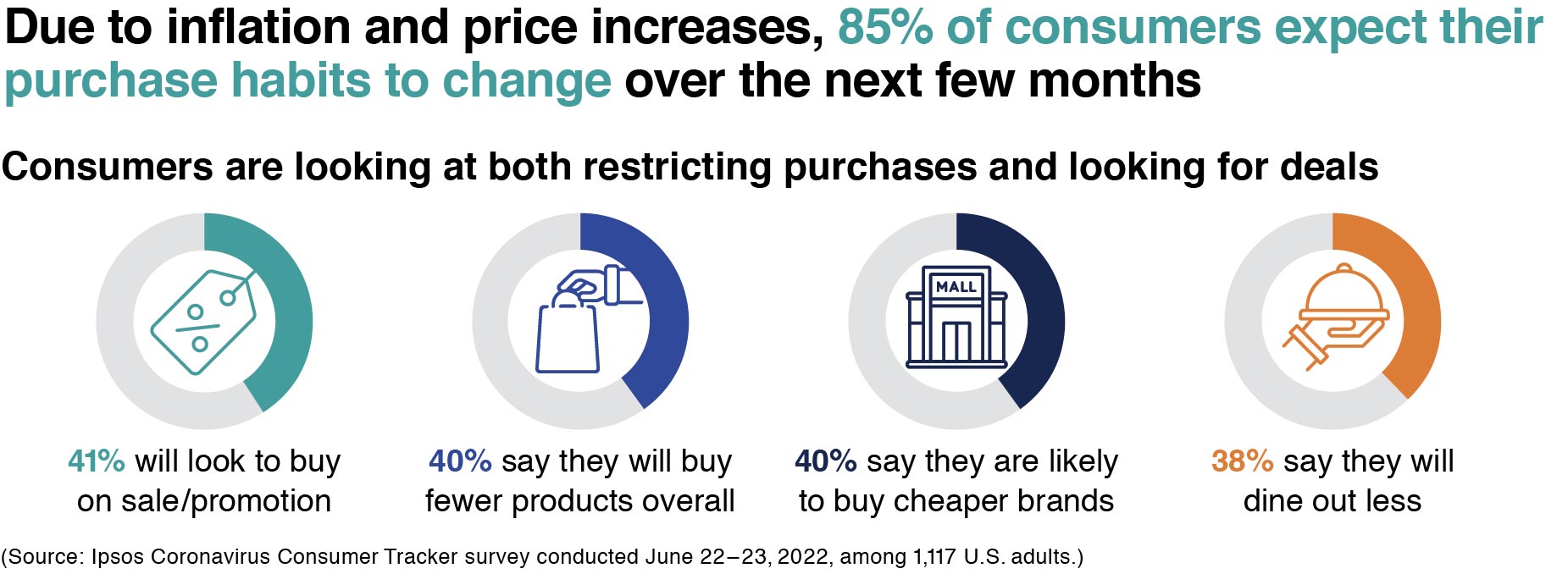
Private label products could be a hero and help consumers manage this gap in what they want and what they can afford, but most consumers don’t see private label as a solution to their financial concerns, and despite continual price increases, this has not changed since the beginning of 2022.
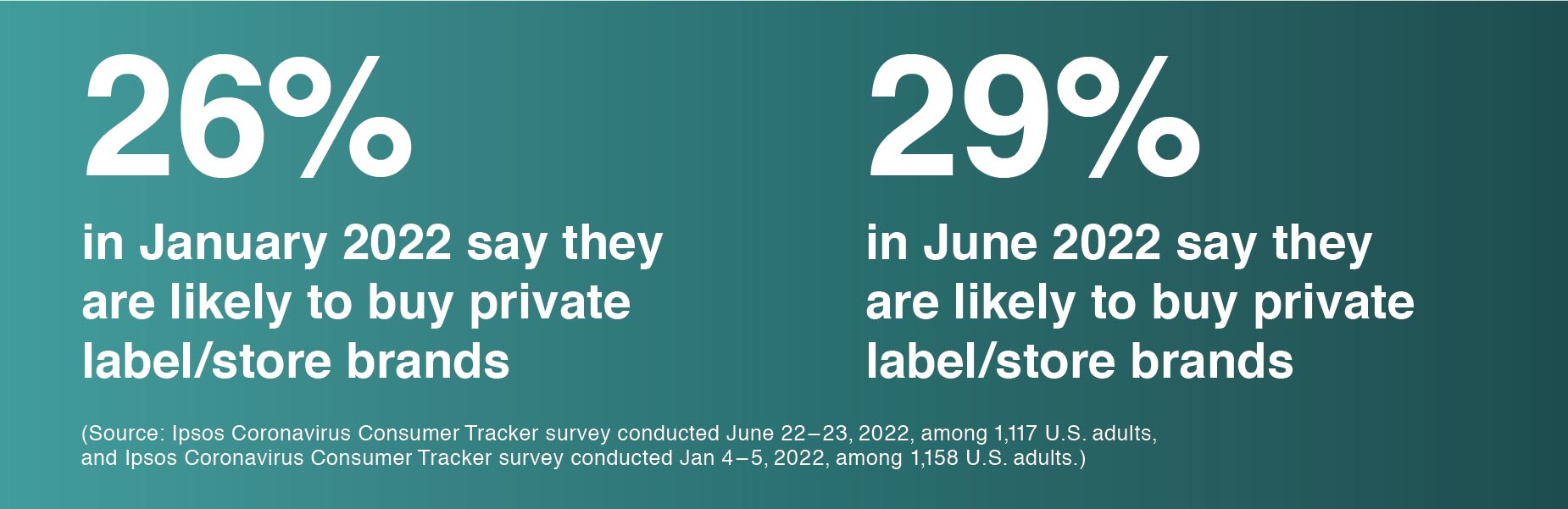
Private Label Meets the Needs of Some, but Not All
There are many consumers who purchase private label and see the value these brands deliver. But they are far from meeting the needs of all. An analysis of private label buyers shows they are most likely to be college educated women with kids in the household. And higher income households are just as likely to buy private label brands as lower income households, according to Ipsos research. Notably, private label brands aren’t being seen as the solution for Black or Hispanic Americans. Despite inflation, these consumer groups are not showing an increased desire to purchase private label brands.
This is a missed opportunity for private label brands to connect with a large portion of the population by offering them something that meets their needs during inflationary times.
Private Label Brands Need to Connect with Consumers, Not Just Offer Low Price
It’s an incorrect assumption that consumers are buying private label brands only because they are cheap. While it’s true that private label buyers are looking for products that are low price, they have emotional needs as well, such as products that improve their mood and simplify their life.
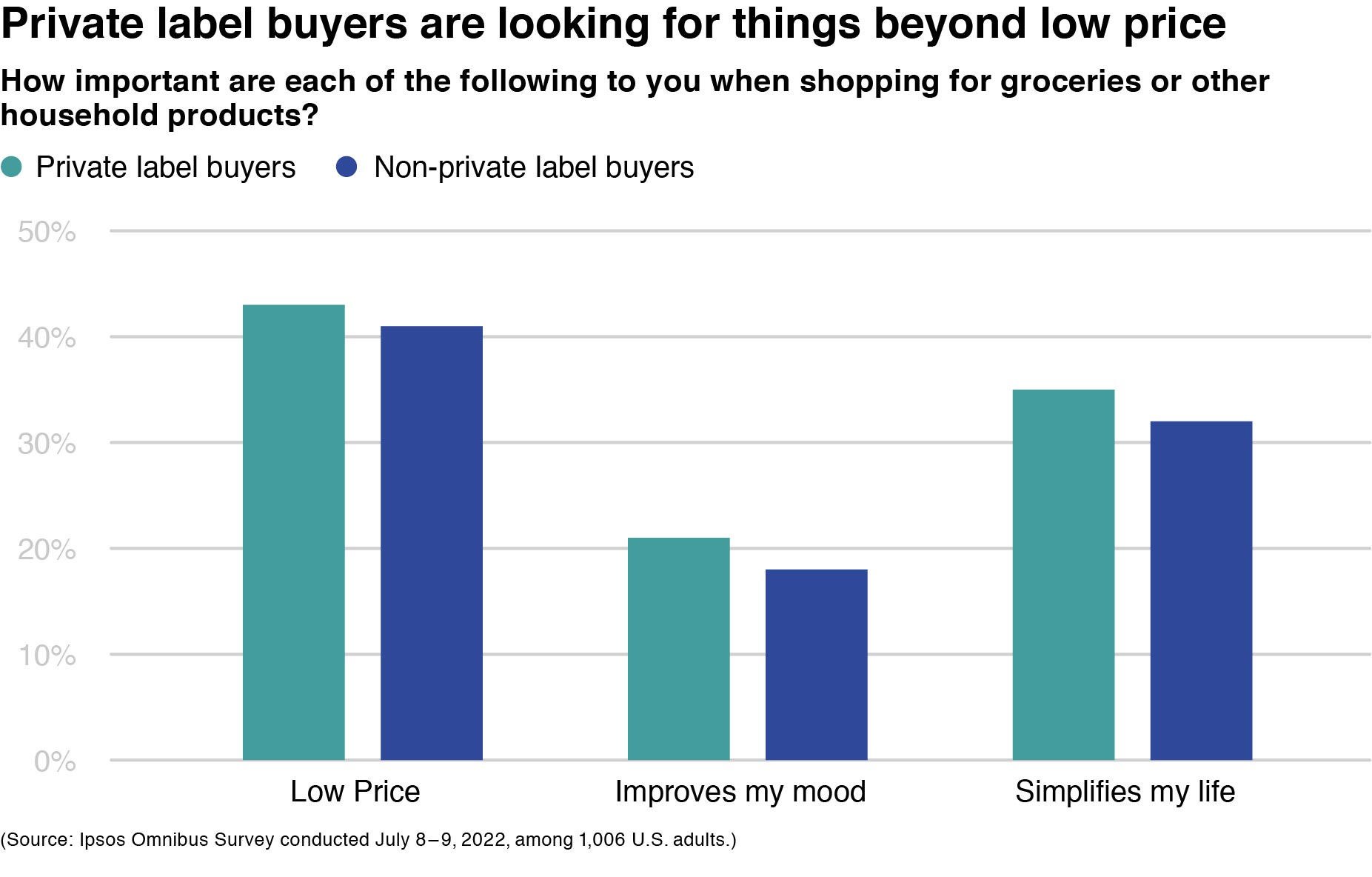
Similar to the general population, Black and Hispanic consumers want low price products, but they want more from their products. There are additional needs private label brands need to consider in order to connect with these consumers.
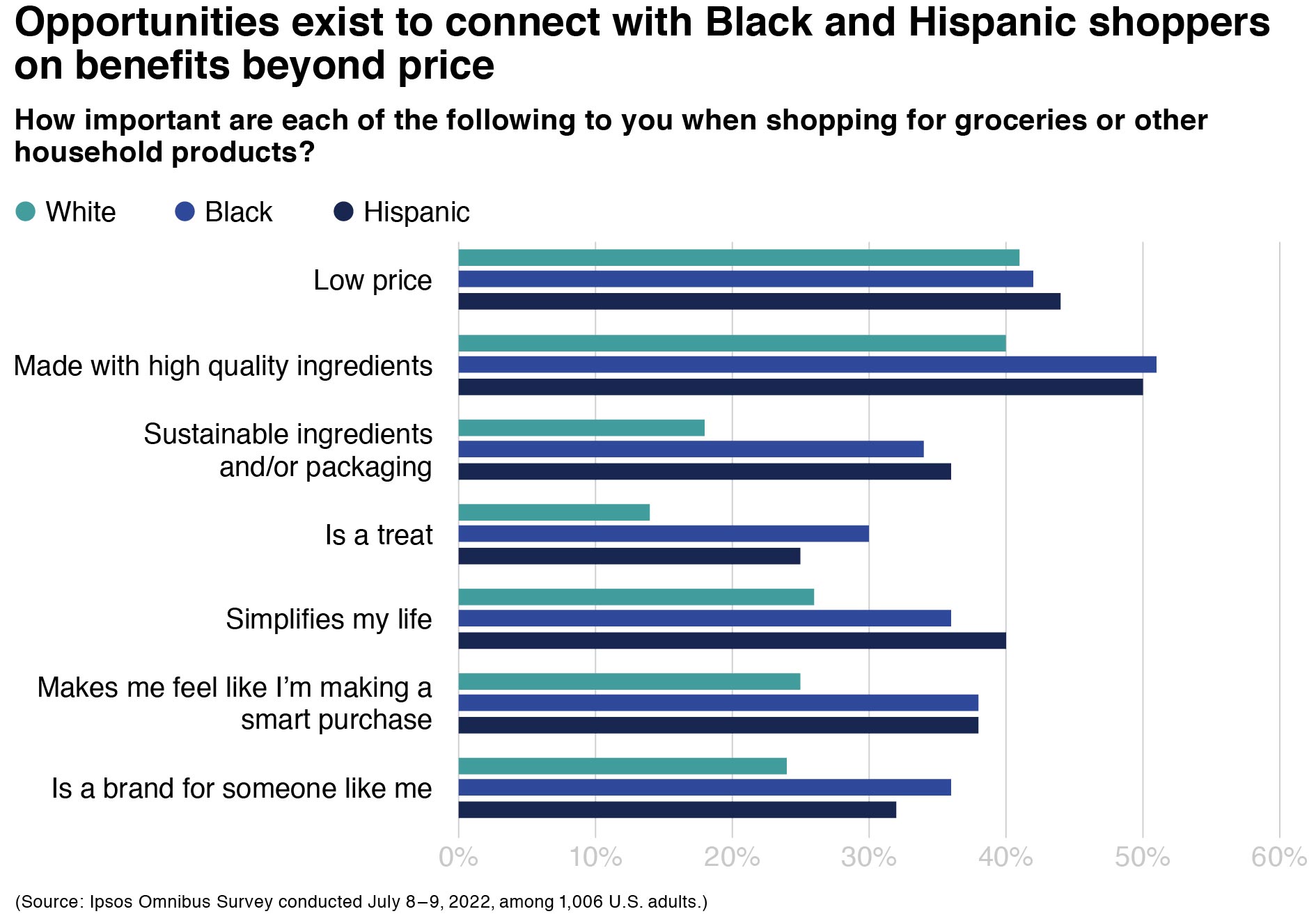
Too often private label brands are presented to consumers as a low cost option but deliver little product benefit or personality other than being lower priced. Successful private label brands, just like national brands, stand for something and make a connection with consumers.
WHAT’S NEXT:
- Understanding the foundational needs of your shoppers, both functional benefits as well as emotional needs, is critical to expanding brand share, including private label brands.
- Consider all of the opportunities to connect with consumers, particularly those not engaged with private label today, to build that personal brand connection, including: in-store messaging, digital shopping experience, packaging communication, packaging benefits and product performance.
- Each of these touchpoints represents a critical opportunity to show consumers that private label brands aren’t about giving something up, but in these inflationary times are more than ever a brand for someone like them.
![[WEBINAR] The Modern Twenty-Something: How Gen Z Thinks About Money, Milestones, and More](/sites/default/files/styles/list_item_image/public/ct/event/2026-07/thumbnail-templates_0.png?itok=GNEHIkP1)

![[WEBINAR] TOAST 2026: Under Pressure - Fewer, Fragmented, Fought-For](/sites/default/files/styles/list_item_image/public/ct/event/2026-07/thumbnail-templates_1_0.png?itok=MxL-wPJW)