
Older Americans are working hardest on their health
The Ipsos Consumer Tracker asks Americans questions about culture, the economy and the forces that shape our lives. Here's one thing we learned this week.
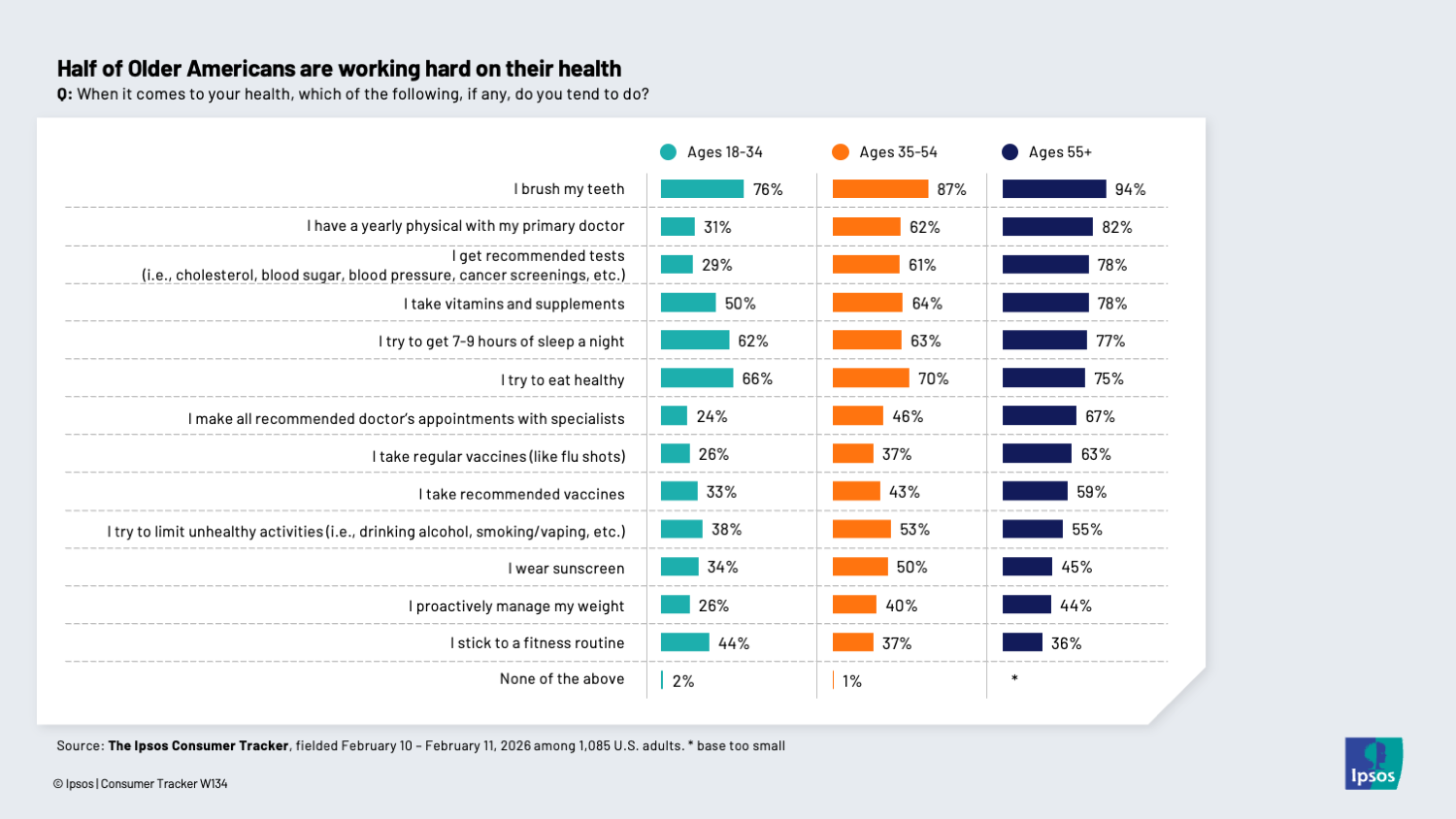
Why we asked: “Longevity” is a word we hear a lot these days, including from our clients. So how actively are folks managing their health? We asked about 13 activities people could do to have a positive impact on their wellness. The question was worded, “Which do you tend to do” and included proactive things like making their recommended doctor visits to wearing sunscreen to brushing their teeth to avoiding unhealthy behaviors.
What we found: Most, but not all, people brush their teeth (86%). From there, there’s some fall-off. A cluster of about two in three take vitamins and supplements, try to get 7 to 9 hours of sleep, have an annual visit with their primary doctor, and try to eat healthy. About half take recommended vaccines, make all recommended specialist visits, take regular vaccines (like flu shots), limit unhealthy activities (drinking alcohol, smoking/vaping, etc.). Fewer wear sunscreen, proactively manage their weight, or stick to a fitness routine.
That said, despite what you might believe by looking at wellness influencers on the socials, younger folks are not the ones most actively managing their health, it’s the 55+ crowd. We bucketed how many folks were doing one to four, five to eight, and nine or more of the items we asked about. Older Americans were more than three times as likely as the 18- to 34-year-olds (56% to 17%) to say they do nine or more of these wellness tasks. The high engaged aren't just doing the basics; they are the ones keeping their specialist appointments, getting regular physicals, and tracking their sleep. Besides older Americans, high earners (57%) and Democrats (47%) are more likely to fall into this group.
On the other end, almost half of the 18- to 34-year-olds (46%) only do one to four of these activities. Men are also more likely to show up in this bucket (33% compared to 19% of women.)
From the question elsewhere in this survey on functional foods, and our Ipsos Global Trend about Conscientious Health, we know that health and wellness are topics people think about beyond traditional healthcare and pharmaceutical brands. It’s food. It’s tech. It’s mental as well as physical wellness.
But this segmentation shows that health isn't also just about intent; it's about resources and life stage. The fact that high engagement doubles as you move from the lowest income bracket (19%) to the highest (52%) suggests that "doing more" for your health is currently a luxury for many, or a function of age-related necessity.
More insights from this wave of the Ipsos Consumer Tracker:
Fewer Americans want brands to remain neutral
Americans are here for healthy food additives
Americans aren’t buying the benefits of tariffs
Ingredients for the perfect food: flavor, quality and affordability
The Ipsos Vibe Check: Here's how Americans feel about the government this week
The Ipsos Care-o-Meter: What does America know about vs. what does America care about?