
2020 Adult Inpatient Survey results published
The 2020 Adult Inpatient Survey results have now been published. The infographic below looks at overall experience, experiences of the hospital and ward, medicines, patient views of doctors and nurses, and differences in experience between patient groups.
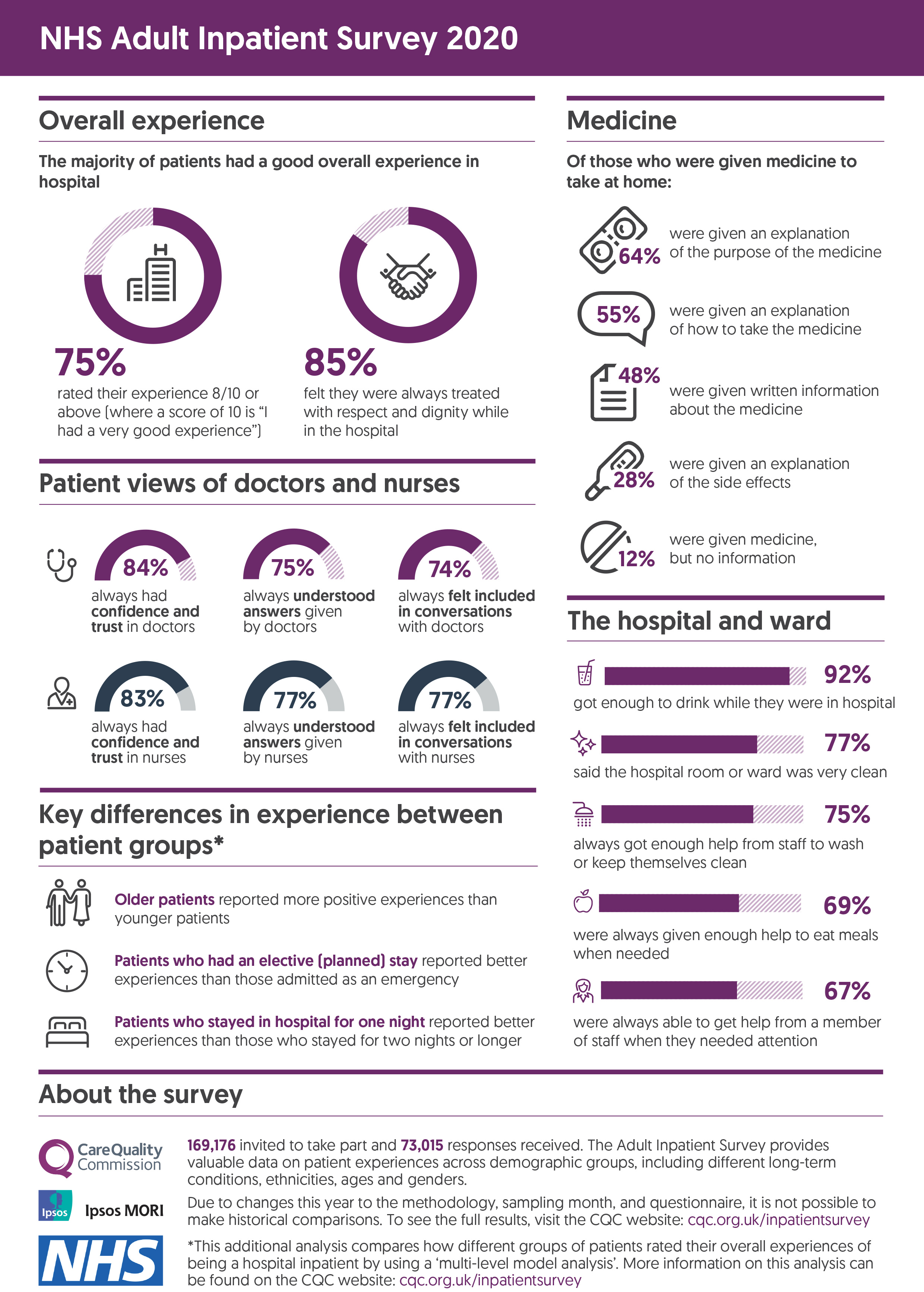
We have published a blog looking at what this data tells us about health inequalities, which you can find on the Ipsos website. Full results are available on the CQC’s website.
Technical note:
Ipsos coordinates the Adult Inpatient Survey on behalf of the CQC. NHS trusts selected a sample of 1,250 patients, aged 16 or over, who had stayed at least one night in hospital during November 2020. The survey was conducted using a mixed methods approach, combining online and paper questionnaire modes. A total of 73,015 patients responded to the survey (an adjusted response rate of 46%) and fieldwork took place between January 2021 and May 2021.
Results for the adult inpatient 2020 survey are not comparable with results from previous years. This is because of a change in survey methodology, extensive redevelopment of the questionnaire, and a different sampling month. More information on this is available in the survey development report.
For each question in the survey, the individual responses are converted into scores on a scale of 0 to 10. A score of 10 represents the best possible result and a score of 0 the worst.
The data has been weighted with two weights, which are then multiplied together to provide a single combined weight:
- ‘Trust weight’ aims to weight responses from each trust to ensure each trust has an equal influence on England results. As some trusts have a higher response rate than others, they have a larger share of respondents in the total respondent’s population for England.
- ‘Population weight’, ensures responses for each individual are weighted to make sure it is representative of the trust’s own population (based on the initial eligible sample). This involves weighting based on variables that are related to how people respond: age group, sex and route of admission (planned or emergency).
Further technical information and the full survey results can be found on the CQC website.


