
7 in 10 Britons describe the British economy as poor, leading reasons include COVID-19 and decisions made by Liz Truss and Kwasi Kwarteng
When asked what factors have contributed the most to the economy’s current state, those who answered that the state of the economy is poor are most likely to blame the COVID-19 pandemic (54%) and the decisions of former Prime Minister Liz Truss and former Chancellor Kwasi Kwarteng (52%). Brexit (50%) and the Conservative party’s policies in governments (49%) were also identified as key factors.
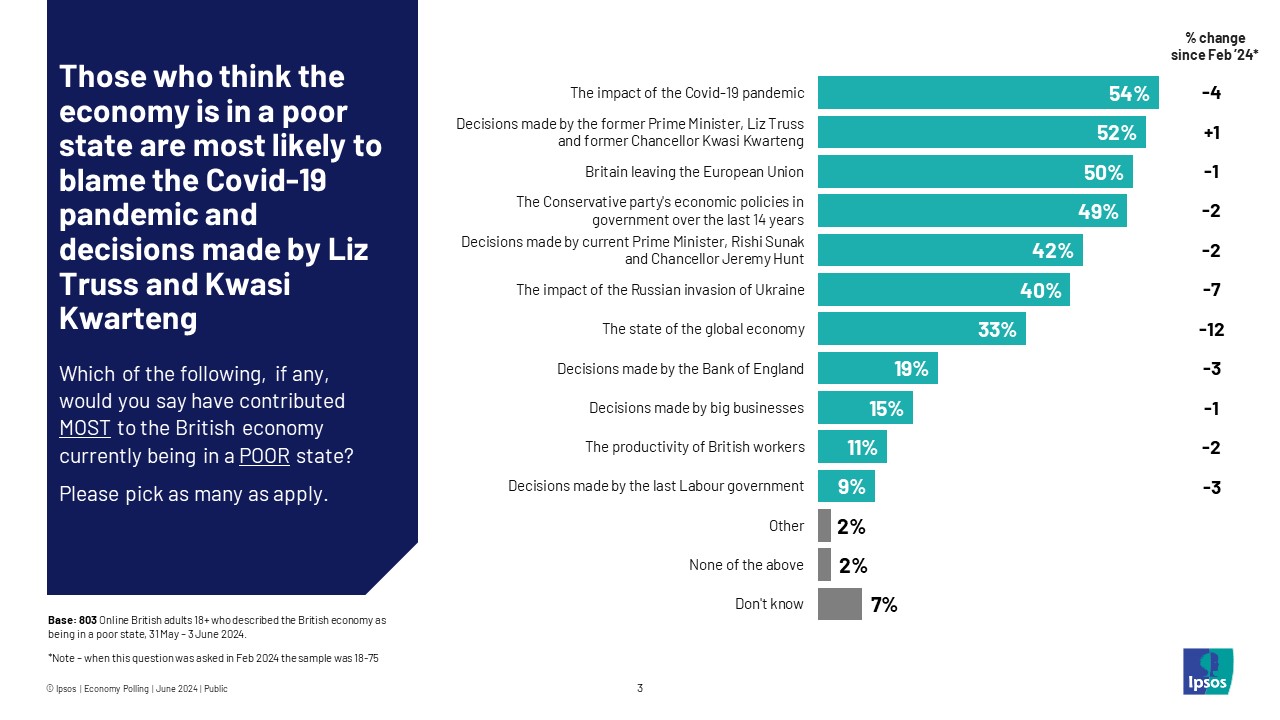
Conversely, those who believe the current state of the economy is good are most likely to cite the actions of Prime Minister Rishi Sunak and Chancellor Jeremy Hunt as the primary reason for its success (39%). This is followed by decisions made by the Bank of England (33%) and Brexit (31%).
Commenting on the findings, Keiran Pedley, UK Director of Politics at Ipsos, said:
Our recent poll reveals a split in public opinion regarding the UK economy. While a significant majority consider the UK economy poor, attributing this to a combination of the pandemic, past political decisions, and Brexit, a smaller, optimistic contingent credits the current government, the Bank of England, and Brexit for positive economic signs.
This divide highlights the enduring impact of recent political decisions – particularly those made by former Prime Minister Liz Truss and Chancellor Kwasi Kwarteng during their time in office - on how the public view the economy.
Technical Note
Ipsos interviewed a representative sample of 1,130 adults aged 18+ across Great Britain. Polling was conducted online on between 31 May-3 June 2024. Data are weighted to match the profile of the population. All polls are subject to a wide range of potential sources of error.


