75 years of the NHS - Thriving or Surviving?
Public and Society Podcast: NHS 75
The Delivery of Care: meeting the needs of today's population
Vaccinating the population: from 1958 to now
Genomics and healthcare
The changing nature of general practice
Falling satisfaction with the NHS
Public and Society Podcast: NHS 75
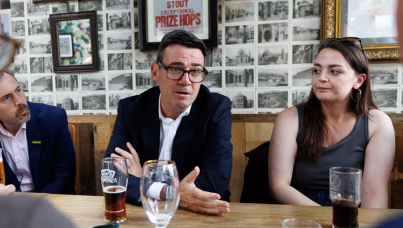
On this episode of Public & Society, Ipsos' Kate Duxbury and Anna Quigley are joined by Louise Ansari, Healthwatch, Tim Gardner, Health Foundation and Axel Heitmueller, Imperial College Health Partners. They discuss the current NHS model, trends and developments in the NHS over its 75 years, and what this means for the public and patients.
Subscribe to our YouTube channel to stay up to date with Public & Society episodes and other Ipsos content. Listen to Ipsos UK Podcast: Public & Society, wherever you get your podcasts.
The Delivery of Care: meeting the needs of today's population
Looking back at the last 75 years since the creation of the NHS in 1948, the delivery of care – where, how and who delivers it – has changed dramatically. From its humble beginnings at Trafford General Hospital, the NHS has continuously evolved to meet the needs of the population. In recent years one trend has been a drive to provide more care away from hospitals, and closer to where people live.
Community Diagnostic Centres (CDCs) are a shining example of this shift. Launched in 2021, CDCs provide a range of diagnostic services, such as imaging, pathology, and outpatient consultations, in centres based within local communities (instead of hospitals). They’ve been introduced primarily to build capacity for more diagnostic testing in England and relieve pressure on hospitals. This has the potential to introduce a radical shift for patients who use diagnostic services, and the staff who work in them.
Recognising this potential, NHS England (London) asked Ipsos and Imperial College Healthcare Partners (ICHP) to carry out engagement with local staff, patients and the public to understand how these services should be designed and delivered to best meet local needs. This was an opportunity to hear about priorities for the delivery of local health services, directly from the populations they need to serve.
During our conversations with participants, we heard support for the concept of moving these services into the community. Staff emphasised the importance of retaining choice of where to work, while patients sought access to services that fit people’s different life situations. We also heard that waiting times were most important to them (more so than travel time), but accessibility was a crucial principle when designing these centres. Participants also envisioned CDCs as calm, modern, and clean environments, where privacy and discretion were paramount. You can read more about it here.
Engagement like this plays a critical role in making sure that any changes to NHS services reflect the needs of the people that use them. We know the NHS is facing unprecedented challenges, but these challenges also present opportunities – opportunities to build services around the needs of the population of today, rather than the population of 1948.
Vaccinating the population: from 1958 to now
Vaccinating the population has been a key role for the NHS since the first mass vaccination programme was introduced in 1958. Fast forward to 2021, and the NHS was driving the largest vaccine programme in its history: to protect the population against Covid-19. At its peak this involved coordinating 4,000 vaccination sites across seven regions of the NHS.
Of course, this unprecedented vaccine programme came in the midst of responding to the pandemic itself; a pandemic that revealed a great deal about the public’s relationship with the NHS. Our polling back in March 2020 showed real concern that a fragile NHS would be overwhelmed, but this was quickly displaced by gratitude, and a reinforced pride in the institution.
Subsequently, the NHS roll-out of the COVID-19 vaccination programme was largely viewed as a triumphant feat. Our data showed that the roll-out of the vaccine programme (led by the NHS) was one of the few things the public thought the government was doing well. Yet, initially there had been considerable vaccine hesitancy, with only half of the public saying they’d be certain or very likely to get a vaccine against COVID-19, if one became available (53% in July 2020). However, just a year later confidence had climbed, with 94% willing to take the vaccine (June 2021). While this change of heart can be attributed to a number of things, the public’s trust in the NHS (and the professionals that work in it) is likely to have played a sizeable role.
Pockets of hesitancy remained though, particularly amongst younger people, more deprived, and ethnic minority groups. It’s no coincidence that there is overlap with the groups we know are less likely to access health services. Vaccine hesitancy is a complex behaviour, but we saw that local agencies were able to make headway with some groups, employing tailored solutions that focused on specific barriers. We can learn a lot from this about what we might – and should – expect from the NHS in the future. Tailoring services and taking them to where the population is, rather than the other way round, could be key to reducing health inequalities and building mutually beneficial relationships between the public and the NHS.
Genomics and healthcare
Sixty years after establishing the first genetic laboratories, the NHS is leading the world in implementing genomic medicine into routine care. Genomics technology holds immense potential to revolutionise patient care by facilitating faster diagnosis, more effective interventions, and improved survival rates.
However, alongside these advancements, the integration of genomics into healthcare raises questions about the relationship between patients and the NHS. For example – to get the most up-to-date evidence-based care, the public is being asked to share aspects of their medical record for genomic medicine. On top of this, the ability to collect, store and share patient information can only be fully achieved with public trust and confidence, something recognised by Genomics England, the Sciencewise Programme and the Scottish Genomes Partnership. They asked Ipsos to deliver a public dialogue to understand concerns and aspirations among the public, so that any advances in genomic medicine could take account of how this might affect the ‘social contract’ that exists between the public and the NHS.
The dialogue with the public revealed widespread enthusiasm and support for the potential of genomic medicine. However, it also highlighted clear boundaries or ‘red lines’ for its use. Although people were eager to embrace advancements in genomics, some expressed concerns about the potential misuse or exploitation of their genetic information. They wanted to see a balanced approach to using genomic data.
I’d be less inclined to have my genome sequenced if I knew it would affect my insurance.
The dialogue also highlighted tensions around the ethics of feedback to individuals. This is an area that the NHS will need to consider when conducting research using people’s data, not least because of the workforce needed to deliver genetic counselling and support.
So, while the integration of genomic medicine within the NHS represents a significant leap forward in personalised healthcare, it raises a lot of questions for the public about the practical implementation of such innovations. There’s justifiable excitement about what could be achieved through genomic medicine, but these advancements must be accompanied by transparency and ongoing dialogue to understand and address any questions from the public if we are to maintain its trust.
The changing nature of general practice
Within a month of creating the NHS, 90% of the population had registered with a GP. The model of general practice looks similar today, retaining many of the features we saw back in 1948. However, over the past decade, the use of digital solutions has led to a new era in healthcare. Notably, in 2017, we saw a radically different model of care emerge, when Babylon GP at hand (BGPaH) changed from a traditional practice to operate a ‘digital-first’ model – extending the geographical spread of registered patients by offering the option of a remote consultation with a GP. This came at a point when NHS England had been actively encouraging the use of digital technology in general practice through policies like the GP access fund and the GP online consultations systems fund.
One aspect our evaluation of the app-based service looked at was how patients were using it. While the service contained many features, the most widely used were digital appointments – and, despite the fact that the app defaulted to a video appointment, we found that a large proportion of patients chose to have telephone appointments. The evaluation also identified that patients using this ‘digital-first’ service model were typically younger, more affluent and healthier than at the average practice. The convenience of remote appointments was appreciated by these patients, but the service was not being used by large numbers of older people, or large numbers of people with more complex health needs.
The outbreak of the Covid-19 pandemic in 2020 made remote consultations essential to ensure social distancing measures and provide continuity of care. Their increased usage has been scrutinised, with some media outlets urging GPs to return to face-to-face consultations.
How do patients really feel about remote consultations?
Our data shows the type of appointment does have a significant impact on satisfaction, with patients having appointments in person more likely to say their needs were met than those with telephone appointments. However, the picture is more nuanced than this. For example, when making an appointment at their GP practice, the most important consideration for the public is getting an appointment as quickly as possible, while the format of the consultation, whether face-to-face or remote, takes a secondary role. Some patients tell us they prefer telephone appointments because they are more convenient.
Speaking with patients, we found that the critical issue is that they have a choice and that they know that a face-to-face appointment is available should they need it.They are quite happy for a telephone triage or initial appointment if this means speaking to someone quickly, but want to know they will be seen in-person if that becomes necessary.
Remote consultations in primary care appear to be here to stay. Nearly half of patients (49%) received a telephone appointment in 2022 when they last tried to make an appointment, compared with under 10% in 2020. Having said that, the latest GP Patient Survey results show that the balance has shifted again as we move further from the peak of the pandemic – with 37% in 2023 saying they received a telephone consultation at their last appointment.
Remote consultations are not right for everyone. Although there is a need for innovation in primary care, our findings suggest that efforts need to be made to ensure specific patient groups are not left behind as services continue to evolve, as this has the potential to exacerbate health inequalities. This supports the notion that a personalised approach to healthcare, encompassing patient preferences and individual needs, is essential for fostering patient satisfaction and ensuring comprehensive care.
Falling satisfaction with the NHS
It is undeniable that in its 75th year the NHS is juggling a multitude of challenges. When the COVID-19 pandemic hit, the service was already under significant strain with funding pressures, staff shortages and expanding waiting lists. Recovery post-pandemic and dealing with strikes are just two new challenges to address. At this crucial time, how does the public feel about the state of the health service?
We’re seeing that satisfaction with the services that the NHS provides is at a record low. Our polling with the Health Foundation earlier this year showed, across the UK, only a third (33%) of the public thought the NHS was providing a good service nationally, a significant fall from the previous survey (43%) in May 2022. While we must take caution in making comparisons (due to different methods being used), it looks like this is the lowest satisfaction has been for almost 20 years.
In the latest GP Patient Survey, ratings of access continue to fall, though the rapid decline we saw between 2021 and 2022 has slowed. Pressure on GPs (and other parts of the workforce) has been a growing concern for the public; in our polling for the Health Foundation last year, around three-quarters of the public (73%) reported concern about the level of pressure that GP practices are facing.
The onus of responsibility appears to heavily reside on national government, as just 10% of the public feel the government have the right policies in place for the NHS. In England a minority think the government are doing a good job at reducing NHS waiting lists (62% say the government is doing a bad job, 14% say good job) and ensuring people get the NHS care they need more quickly (61% say bad job, 14% say good job).
However, this doesn’t mean the public is ready to write off the NHS. Despite falling satisfaction, there is strong evidence that we still believe in the NHS, value the model, and want it to continue working for the British population. By some distance, the NHS is what makes self-identified British citizens most proud to be British – with just over half (54%) selecting this. More see the NHS as a source of pride than our history (32%), our culture (26%) or our system of democracy (25%). Among members of the public who say the NHS is something that makes them proud to be British, the founding principles (the NHS being free at the point of use, available to all and treating everyone equally), are the most frequently mentioned reasons.
Looking ahead, a majority agree that the NHS should continue to provide a comprehensive service available to all (87%), remain free at the point of delivery (also 87%) and be funded primarily via taxation (83%). But how should the NHS do this given the challenges it faces? There is strong public support for increased funding – and the public think a range of taxes should be used to pay for this. But securing the NHS’ future will be about more than increases to funding – it will also be about finding new ways of doing things that suit today’s population and today’s challenges.
As we celebrate its 75th anniversary many of us will not know a Britain without an NHS. Often heralded as the foundation of our society and a core part of British culture, we also see a service that is at a crossroads. Yes, we have seen satisfaction falling over recent years, but the public still believe in the core principles underpinning the NHS and are willing to see changes to how the service is delivered. We know the public are ready to embrace new models of care, new ways of using the service, and new innovations. This is promising, and shows that they are willing to help shape the NHS of the future – thinking about solutions that go beyond increased funding. But one thing is certain, a ‘one size fits all’ approach will hamper any efforts to ensure the NHS survives for another 75 years. If it is to survive, or even thrive, it must take account of the needs of the population we have today, and involve them meaningfully in the design and delivery of services.