From Pet Chickens to Prototypes
As Americans glimpse the light at the end of the COVID tunnel, they are beginning to reenter the world. While this return may not be a predictable, straight line, it does represent a big change in consumer behavior. And because qualitative research is at its best when connecting with consumers in a natural way, marketers should consider what this behavioral shift means for their learning plans.
That’s not to say we should flip a switch and move all qualitative back to face-to-face. There’s no need to jettison highly effective digital techniques, and not all consumers and companies are ready to go back in person. So, in what circumstances should you choose in-person qualitative, and how do you ensure it’s a success? We have 3 tips:
- Understand where your target is, physically and emotionally
- Consider your objective
- Plan for safety and success
Download more details here.
KEY TAKEWAYS:
- As Americans emerge from the COVID limbo, qualitative research offers a framework for understanding their behavior.
- Companies must understand where targets are physically and emotionally.
- In-person research may be appropriate, depending on objectives and market conditions.
As Americans glimpse the light at the end of the COVID tunnel, they are beginning to reenter the world. While this return may not be a predictable, straight line, it does represent a big change in consumer behavior. And because qualitative research is at its best when connecting with consumers in a natural way, teams should consider what this behavioral shift means for their learning plans.
That’s not to say we should flip a switch and move all qualitative back to face-to-face. There’s no need to jettison highly effective digital techniques, and not all consumers and companies are ready to go back in person. So, in what circumstances should you choose in-person qualitative, and how do you ensure it’s a success? We offer a framework.
1. Understand where your target is, physically and emotionally
Behaviors like dining out and shopping at malls are already on the increase, and as we look ahead to summer, more and more Americans anticipate being comfortable going out.
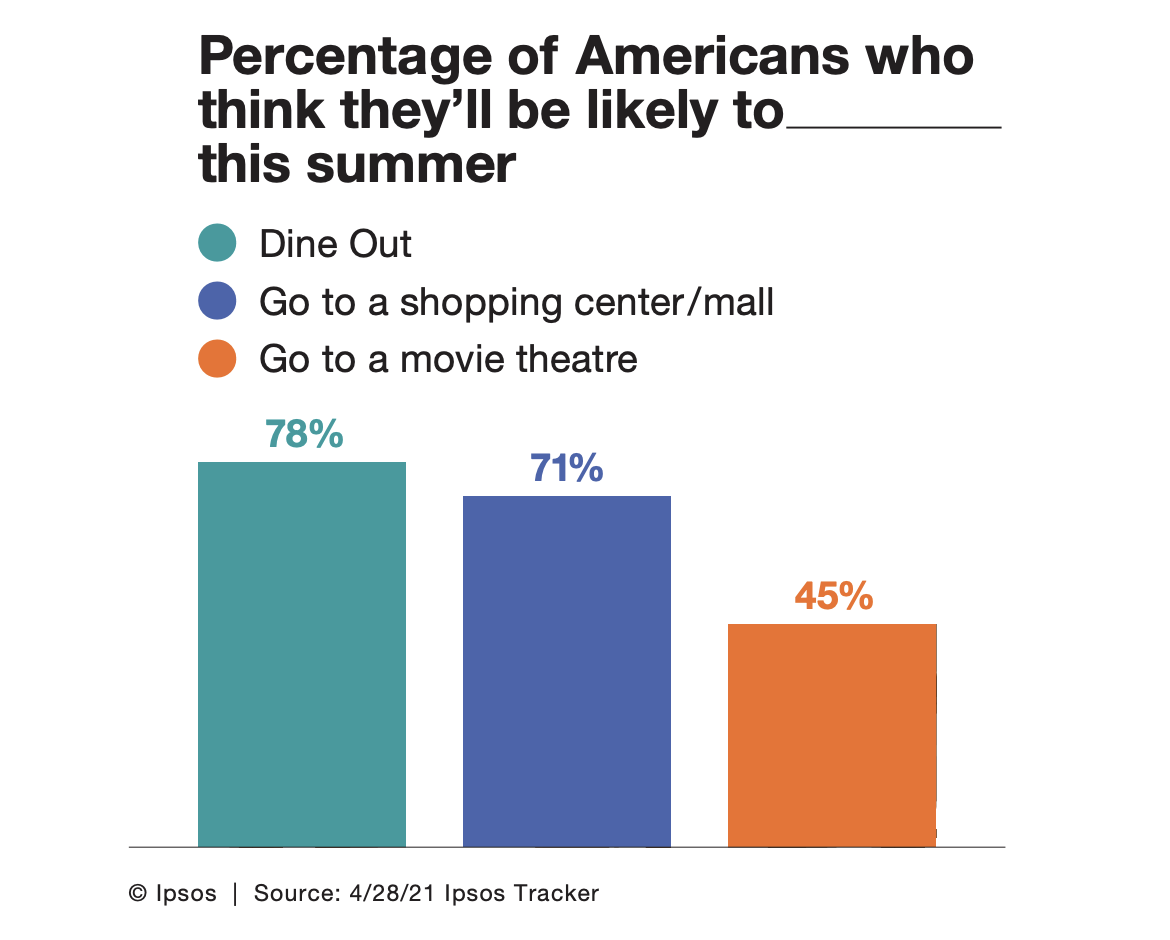
That said, not all consumers are in the same place, as illustrated by panelists in our America in Flux ethnography project:
- Staying the course: Shemika, who lost her father to COVID, says, “In New York, we have two different variants of the virus. It kind of stresses me out. I still have not let my guard down yet and am not really going out much.”
- Dipping a toe in: Wade tells us, “I am still super vigilant on hand sanitizer and masks,” because he doesn’t think COVID is over, but he’s starting to go to the gym, and preparing for his in-laws to visit (with testing) from Japan.
- Reentering with precautions: Violet is “counting down the days” until she gets on a plane in May. For added safety, she paid extra for bulkhead seats where they won’t be as crowded.
- Getting out there: Eric, who feels that the media has made people panic, stopped watching TV and started getting out; he’s been to the movies and Disney World. “We have started living our lives as we have missed things during the past year.”
If your consumer or patient target tends to be re-entering the world, in-person research may feel more natural to them, as opposed to a target that is staying the course. Naturally, this will evolve over time, so you’ll need to monitor behaviors and views.
2. Consider your objective
In a recent in-home, our Qualitative Consultant was surprised to find a pet chicken in a Manhattan apartment. The chicken is a physical example of a broader point: it can be difficult to know what is really happening in the home (or store, bank, or other location) unless someone is there as an impartial observer. For this reason, we are seeing a return to some in-person research for observationally driven objectives.
The other key need driving face-to-face return is when stimulus is best experienced in person. We’ve conducted in-person research around sensory experiences, prototypes, concept stores, and packages, for example.
3. Plan for safety and success
Choose markets carefully: In-person research may be more appropriate for a market where businesses are open with a low case level, as opposed to a market experiencing a surge that is once again closing doors. And if the last year has taught us anything, these conditions can change, requiring agility, which brings us to the next point.
Prepare to pivot: In this unpredictable world, you need to have back-up plans for everything. For example, each activity you have planned may not work the same way as pre-COVID, you may have a consumer who wants to move outside, and/or you may need to re-book your ticket to conduct more interviews given some of these other disruptions.
Mind the COVID details: Stock extra masks and sanitizers, double check room set-up or on-site permissions, and give everything a little extra attention, to ensure safe and smooth execution. Data shows better show rates and overall recruitment success when companies are clear about how they will maintain cleaning, sanitation, masking, and social distancing practices.
In qualitative research, it’s important to meet consumers where they are. If they are ready for in-person contact with others, we can consider when and how we can be there, too, so we don’t miss the chicken in the room.
What’s Next:
- Companies should overcommunicate with stakeholders and respondents to ensure everyone remains comfortable with plans as they evolve.
- Companies should plan to have back-up plans for activities amid continued uncertainty from consumers.