
How social media can help curb loneliness
 To combat lonesomeness, Vences-Nieves has joined some Facebook groups. One is the Windy City Twins, a closed group of some 2,500 members. She’s also a member of Single Moms of Twins, which has nearly 1,000 followers, as well as some other online mothers’ groups.
“I didn’t know there were other people going through the same thing, so I feel better about that,” she says. “If I have questions that other people are going through, I can relate.”
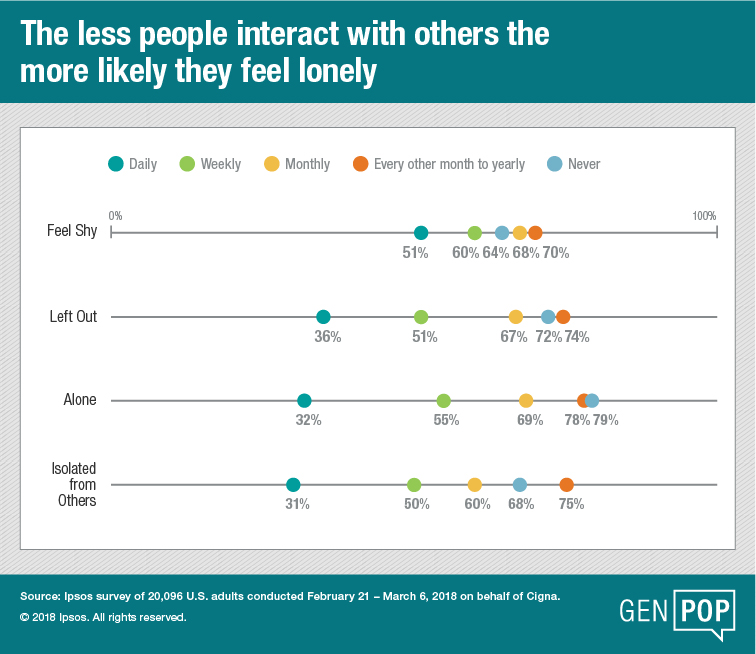
She is one of many Americans who experience loneliness, according to a recent survey conducted by Ipsos on behalf of insurer Cigna. The survey polled more than 20,000 American adults online based on the UCLA Loneliness Scale to create a score between 20 and 80.
Lifestyle factors more than age affect isolation
The higher the score, the lonelier people are. More than half of people polled said they always or sometimes feel as though no one knows them well. Nearly half said they sometimes or always feel alone and/or feel left out. The total average score for Americans was 44.
Surprisingly, the youngest adults between ages 18-22 showed the highest loneliness score as a group (48.3). The oldest group ages 72 and up had the lowest scores (38.6). Even higher scores relate to lifestyle factors. People who had the some of the highest loneliness scores never have daily interactions with other people (59.6), have fair or poor health (52.8) or are adults running single parent homes (48.2).
Conversely, the more people reported that they get together in-person with other people, the lower their average loneliness scores (39.6). People who have these daily encounters are also more likely to report they had good mental health and balance in their sleep and work.
 The study helps debunk a common notion that social media use is a predictor of loneliness. Loneliness scores were rather consistent for people regardless of how much time they spent on social platforms.
In fact, some psychology experts say that social media can curb loneliness and foster rewarding relationships…if they follow some ground rules. They warn that online relationships tend to be superficial or weak if people are passively clicking buttons rather than posting meaningful conversation.
Taking relationships from online to real life
John Grindle began organizing the Game Night San Diego Meetup group four years ago. He believes that face-to-face interaction is best for forging friendships. Today, the group has 9,000 members between ages 18 to 65 and has events about every month.
“I love the concept of having physical and social interactions with real people in real time because where society is going, the fact that we’re connected to some sort of device 24 hours a day I don’t think is a healthy thing to do, myself included,” he says. The Game Night events have also led to real relationships: he knows of two couples that met through the group and are still together.
While the technology of social media platforms is perfect for addressing loneliness, the culture of social media must change, says John Suler, professor of psychology at Rider University. “It can’t be about cultivating a large audience and reducing one’s identity into a brand to get more likes that are supposedly going to make you feel better about yourself,” he says. “It means spending more time thinking about, talking to, and sharing with a few people who you really care about.”
This article was originally published in GenPop, a new online magazine from Ipsos about people and what makes them tick. Click here to read other articles equally as great.
![[WEBINAR] AI in Higher Education: How AI Is Reshaping Teaching and Learning](/sites/default/files/styles/list_item_image/public/ct/event/2026-10/How%20AI%20Is%20Reshaping%20Teaching%20and%20Learning.png?itok=XYdLaI-4)

![[WEBINAR] Winning B2B Buyers: AI Gets You Considered; Trust Gets You Selected](/sites/default/files/styles/list_item_image/public/ct/event/2026-10/Winning%20B2B%20Buyers%20AI%20Gets%20You%20Considered%20Trust%20Gets%20You%20Selected.png?itok=Q4kElwY2)