

More Americans are feeling ‘comfortable’ economically, as fewer believe prices have risen
The Ipsos Consumer Tracker asks Americans questions about culture, the economy and the forces that shape our lives. Here's one thing we learned this week.
Why we asked about economic comfort: The economy is still top of mind for most politicians heading into the midterms. Everyone from President Trump to plausible presidential candidate Gavin Newsom are focused on “kitchen table” issues. So it was time to check back in on this.
What we found: More Americans are feeling “comfortable” with their economic situation since this time last year. Now half (51%) describe themselves as comfortable vs. just 37% last February. That’s due to increases in both very comfortable and somewhat comfortable responses. So what’s driving that? Some data-based hunches:
- Comfort had dropped between 2024 (44%) and 2025 (37%), but the moment we asked this in 2025 was kind of peak tariff uncertainty, which was probably leading to some discomfort
- Interest rates are slowly falling (mortgages dipped below 6% for the first time since 2022) and markets are up. (Yes, we know these are not the parts of the economy most people care about.)
- President Trump has been telling people that prices of many goods like beef, chicken and eggs have been falling. The egg part at least is objectively true. My local butcher who’s on the verge of going out of business might disagree about the beef part.
- Gas prices, which people care deeply about, are down on average from a year ago, according to GasBuddy, but note they have been rising alongside tensions with Iran.
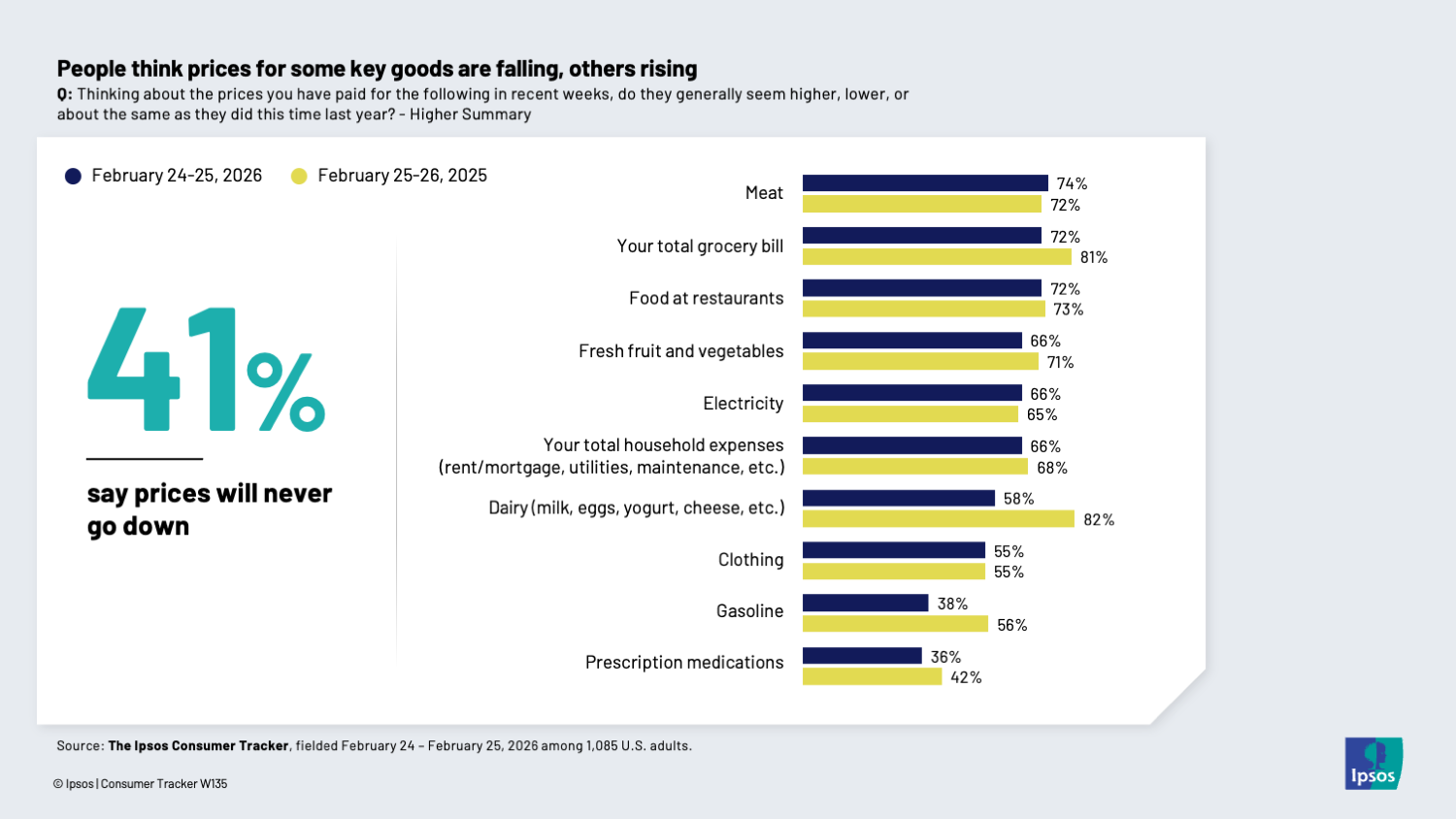
To borrow an important disclaimer from Kai Ryssdal: I am not an economist, but I’ve covered this space for a long time. My hunch is that price perceptions are probably the biggest driver in this shift toward comfort more than the markets and interest rates. Perception of higher gasoline prices compared to the previous year plummeted by 18 points, dropping from 56% to just 38% now. Perceived dairy inflation saw the largest drop among all food categories; only 58% of Americans believe dairy prices are rising, down from a staggering 82% last year. In what is a zero-sum economy, it’s good that some important prices are dropping (or we think they are) because things like electricity are perceived as stubbornly high.
Overall, the the groups less likely to say prices are rising are led by an interesting mix of demographics: high earners, senior citizens and Democrats. For instance, Democrats’ perception of higher gas prices fell by 23 points, compared to a just a 12-point drop for Republicans (which could be tied to urbanicity, for sure.)
More insights from this wave of the Ipsos Consumer Tracker:
Americans have mixed and contradictory views on obesity
Most Americans drink caffeine daily, but it’s not just coffee
What are we willing to give up? Booze tops the list
The Ipsos Care-o-Meter: What does America know about vs. what does America care about?


