Most younger Americans consider ‘cost per wear’ as a metric for apparel purchases
The Ipsos Consumer Tracker, fielded on Ipsos' Omnibus platform, asks Americans questions about culture, the economy and the forces that shape our lives. Here's one thing we learned this week.
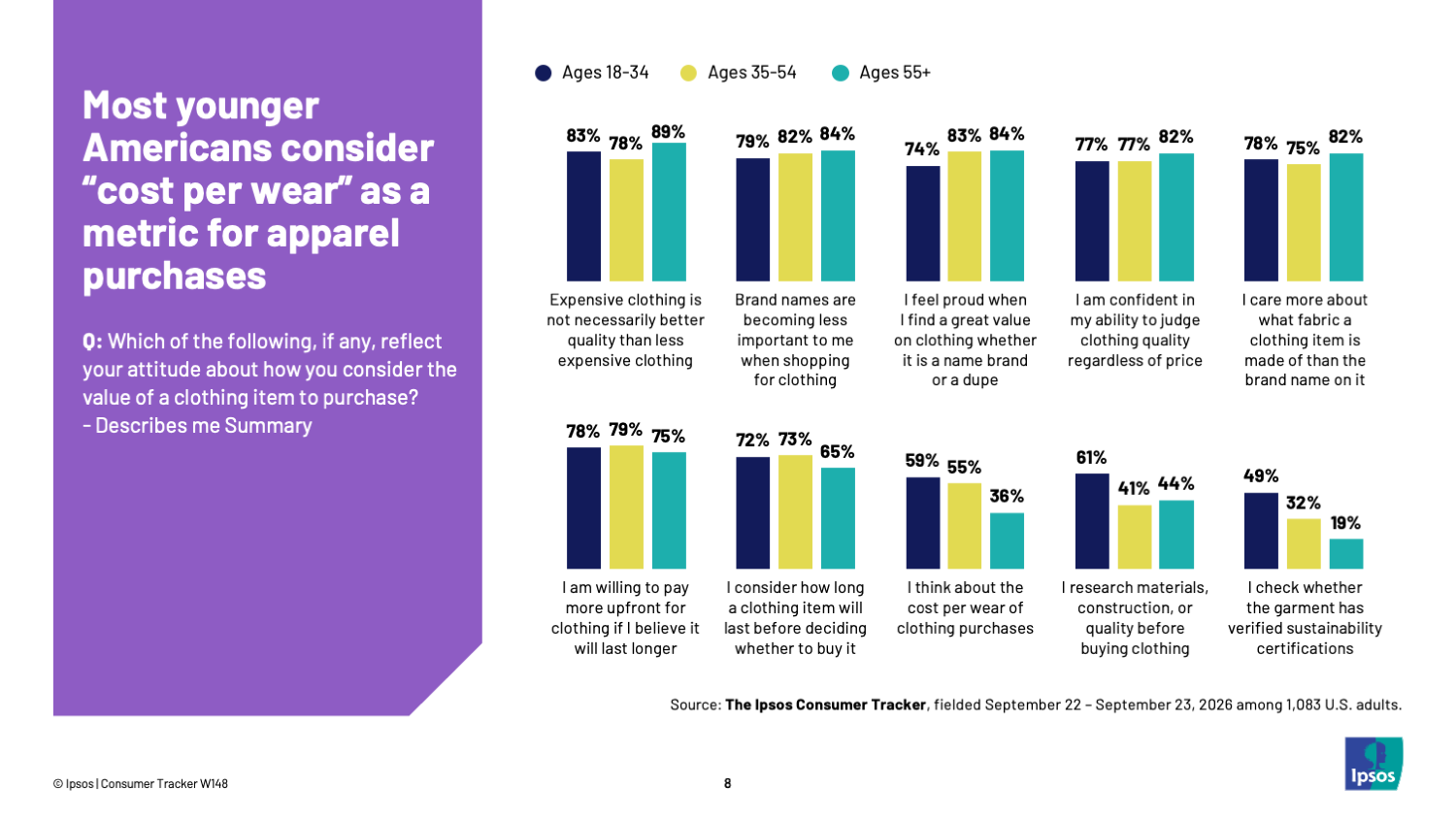
Why we asked about clothing quality: Everywhere you look online, quality-focused fashion influencers are promoting dupes, teaching how to spot value and sustainability, and sometimes scolding designer brands for not living up to higher standards. So we wanted to understand how Americans are judging what makes a garment or accessory worth buying.
What we found: Americans largely agree on the biggest values for shopping, but not always in the ways we expected. More than eight in ten people reject the idea that expensive clothes are necessarily better than less expensive ones, and as many say that brands are becoming less important as a deciding factor. A similar portion of Americans say they take pride in finding a great value, whether it’s a name brand or a dupe, and 79% are confident in their ability to judge quality regardless of price.
But there are major differences by age. We see this clearly in the 23-point difference between adults ages 18 to 34 and those ages 55 and older who consider the cost per wear of the clothing they buy. Cost per wear has mostly been the language of retail and fashion insiders. Today, younger consumers are adopting this metric as their own for judging value.
Sustainable manufacturing is also important for younger Americans especially, who are 30 points more likely than the oldest group to check for verified sustainability certifications (49% vs 19%). The age gap also shows a wide difference in whether people research the materials, construction and quality before buying. Younger Americans (under 34) are much more likely than 35-54 and 55+ Americans to say that describes them. (61% to 41% and 44%). In most of the age splits, the younger folks and mid-aged folks responded similarly. But here the younger set are stand-outs.
Earlier this year, about half of consumers said durability and avoiding waste were primary reasons a premium purchase felt worthwhile. In this survey, we see how younger consumers are putting those beliefs into practice. Value is becoming less about what a product costs and more about the quality that shoppers can verify. Instead of accepting price or brand as badges of quality, many shoppers believe they have the tools to judge for themselves.
More insights from this wave of the Ipsos Consumer Tracker:
One in three Americans have talked to a chatbot instead of their doctor
Most Americans now understand how tariffs work; More see the costs, fewer see the benefits
Fewer think having armed federal agents in their community make them feel safer
Most Americans trust food inspections less
The Ipsos Care-o-Meter: What does America know about vs. what does America care about?