Quality and desire lead in reasons Americans will splurge on a purchase
The Ipsos Consumer Tracker asks Americans questions about culture, the economy and the forces that shape our lives. Here's one thing we learned this week.
Why we asked: A smart friend, Westin Grabow, posted some discussion on LinkedIn related to private labels and wondering essentially what makes people think a splurge is “worth it.” Which seemed like a really interesting question. So we asked folks.
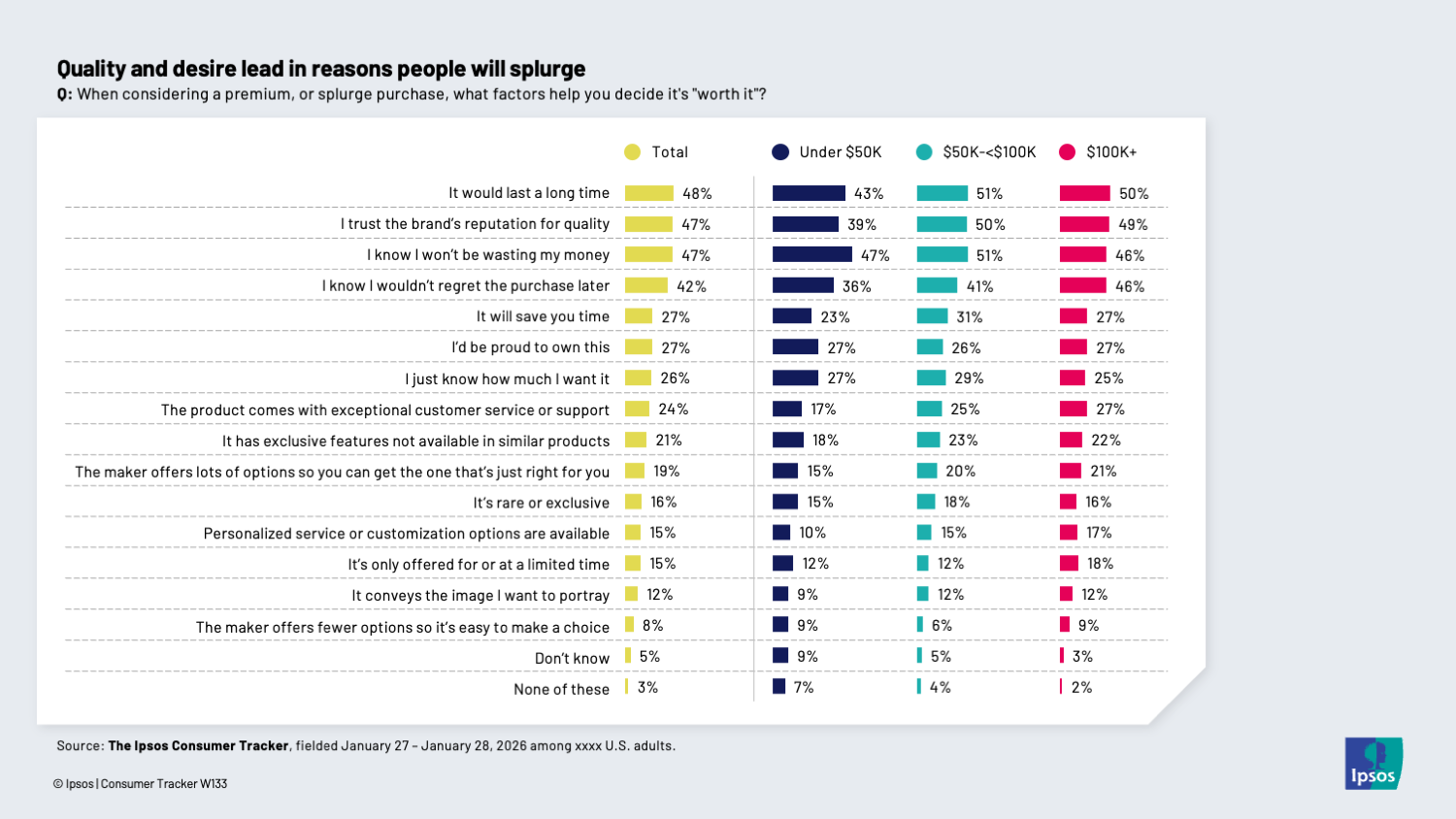
What we found: When considering a premium or "splurge" purchase, Americans prioritize substance over style. Nearly half (48%) say a factor in deciding if a splurge is "worth it" is that it would last a long time, followed closely by trusting the brand's reputation for quality (47%) and knowing they won't be wasting their money (47%). Far fewer consumers are motivated by exclusivity or image: Only 16% say being "rare or exclusive" makes it worth it, and just 12% factor in whether it "conveys the image I want to portray."
Splurge certainly means a lot of different things to different people and even at different moments in the day. But in today’s Human Economy, where half of Americans don’t have any money left over when they pay their bills, even small treats can mean something else gets sacrificed in exchange. The trust that they won’t second-guess either because it later seems like a waste of money or they might just regret the purchase can easily be tied to brand reputation and to perception of value and quality. Those are strong drivers across age and income.
But there’s nuance.
The definition of "worth it" shifts significantly with age. For older Americans aged 55+, longevity is the ultimate metric, with 54% citing it compared to 41% of those aged 18 to 34. Conversely, the younger generation is more likely to splurge for a "vibe": 21% of 18- to 34-year-olds care if a product conveys a certain image, compared to just 3% of those over 55. Young adults are also twice as likely as seniors to say they'd be "proud to own" the item (38% vs 16%). But even for younger Americans the quality still trumps the style. Social media cred from ownership, or even just short-term spark of joy, might fade quickly, so the item itself needs to last.
Since he inspired the question, I shared the results with Westin first (note, this is a great perk of posing good questions for the Tracker — you not only get actual data but you can get a sneak peek at the data). He says, “ultimately, my gut is that private label is the most ‘recruitment’-oriented proposition on most shelves these days (and a K-shaped economy is a great clarifying lens…)”
More insights from this wave of the Ipsos Consumer Tracker:
AI skepticism is still high, and ads could hurt trust even more
Lack of need and lack of trust are still barriers for AI adoption
A partisan split has opened in the need for government to play a role in AI regulation
Americans think we’re handy. Here’s why that could be handy
One in three don’t plan to celebrate Valentine’s day
The Ipsos Vibe Check: Here's how Americans feel about the government this week
The Ipsos Care-o-Meter: What does America know about vs. what does America care about?