Americans want banks to do more to prevent scams
The Ipsos Consumer Tracker, fielded on Ipsos' Omnibus platform, asks Americans questions about culture, the economy and the forces that shape our lives. Here's one thing we learned this week.
Why we asked about scam prevention: Count scammers among those using AI for their benefit. It’s hard to find totally credible data on this, but reports generally acknowledge something that seems obvious: if scammers can use a technology cheaply and at scale, they will. Fraud and scams have been a problem forever, but could get a lot worse. Banks, however, are also using AI to try to foil these scams.
What we found: Issues of autonomy and corporate responsibility are often divisive political issues. But across party lines, people are aligned. They are more likely to blame the victims of scams as either entirely or mostly responsible for being scammed.
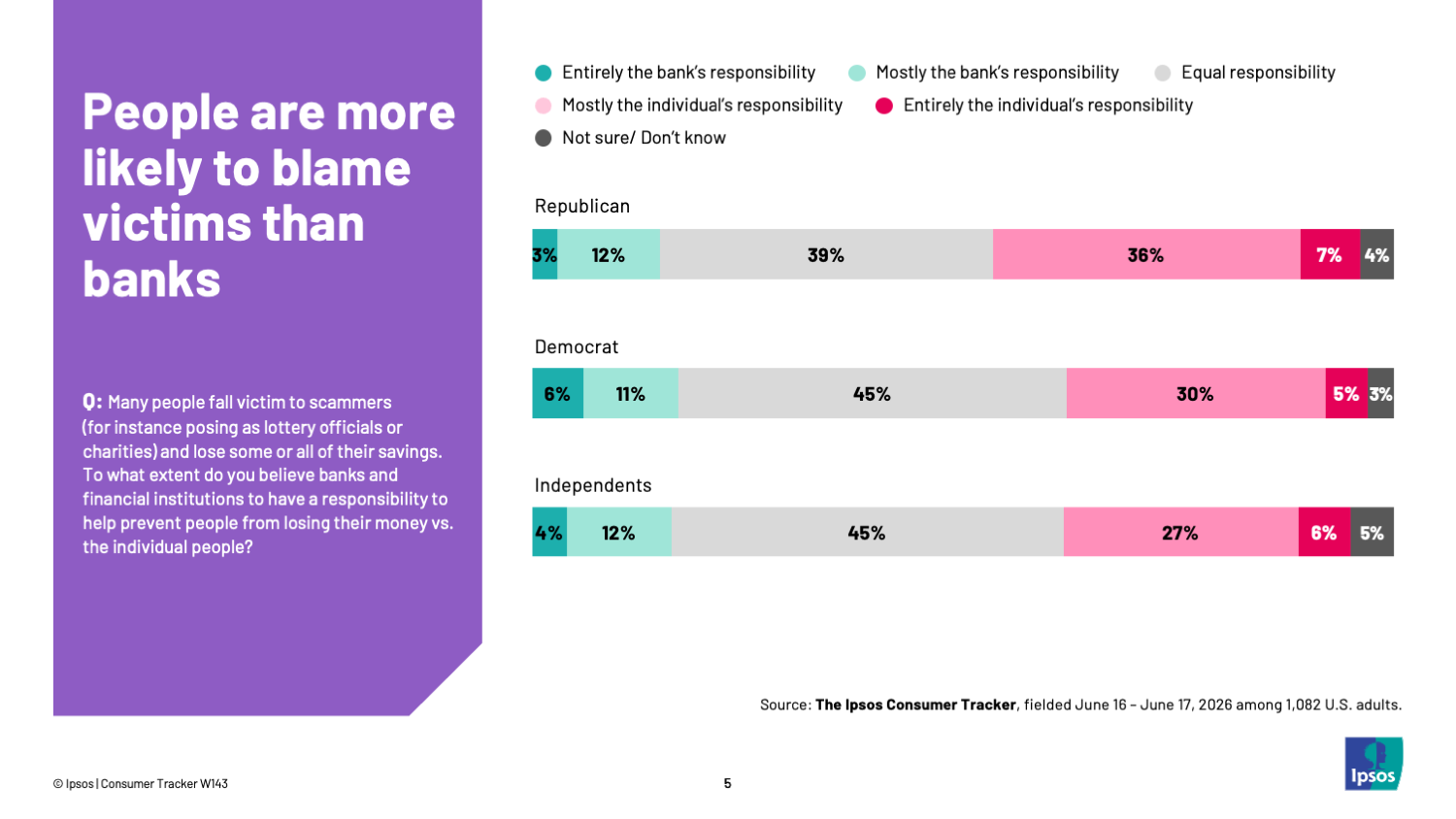
But at you could also read this data that most people think banks bear most, or at least equal responsibility for fraud – and here we’re talking scams where people hand over money actively rather than passive identity theft where people’s credentials are stolen. Democrats and Republicans are almost equally likely to say that banks are entirely or mostly responsible (17% and 15%). A plurality of each party thinks that banks and individual victims are equally responsible (39% and 45% respectively).
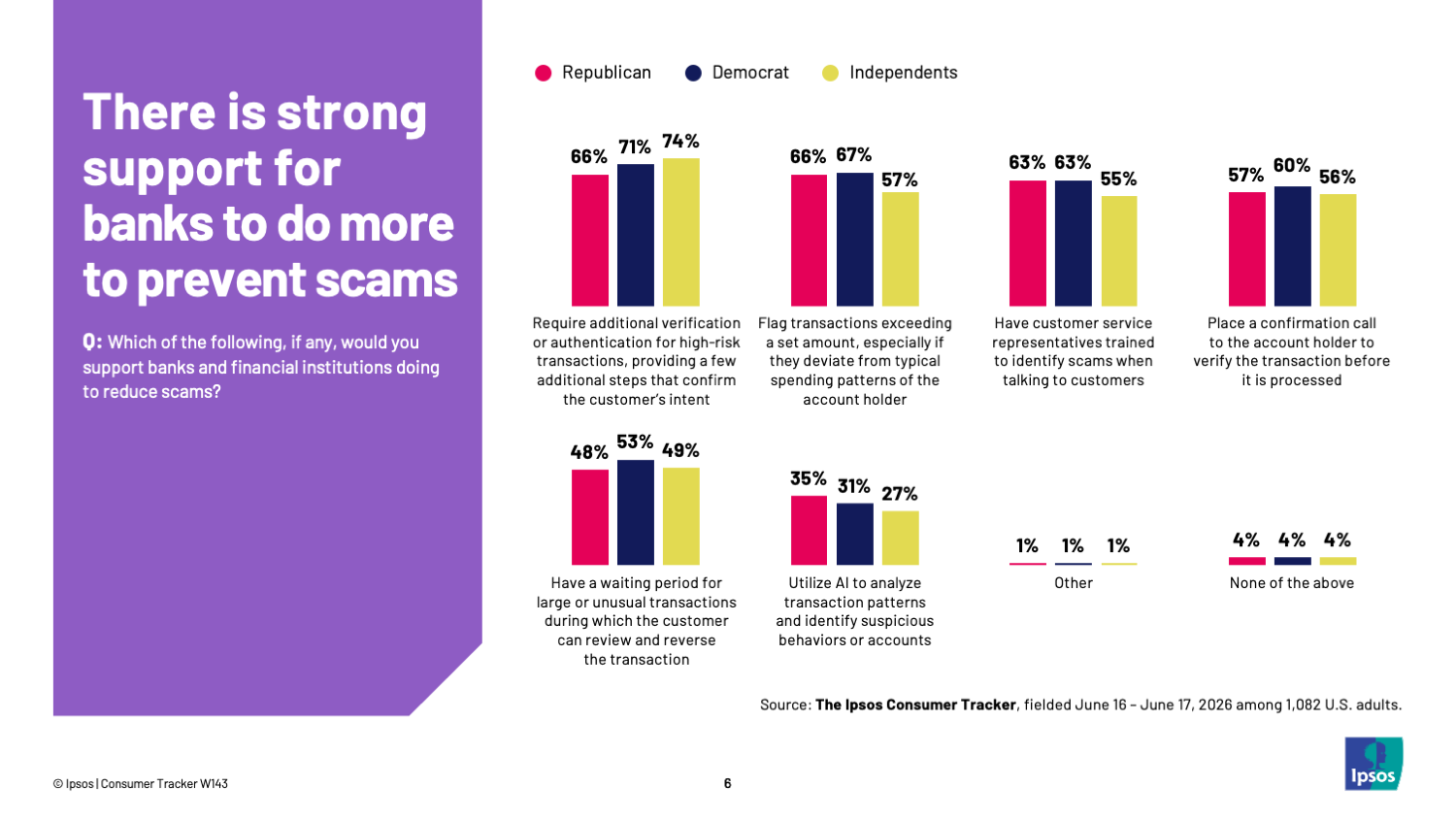
Regardless of the level of responsibility, a very bipartisan 96% think that there are steps banks should be taking to help prevent scams and protect customers. About two in three Democrats and Republicans would like to see: Banks require additional verification or authentication for high-risk transactions; flag transactions exceeding a set amount, especially if they deviate from typical spending patterns of the account holder; and, have customer service representatives trained to identify scams when talking to customers. Most would also favor the banks calling to confirm transactions with the account holder.
More insights from this wave of the Ipsos Consumer Tracker:
AI has a PR problem with Americans
We are more satisfied with our commutes this year
The Ipsos Care-o-Meter: What does America know about vs. what does America care about?