From Floundering to Flourishing
The mental health of many Americans is in a precarious place. Half of the population have been living their lives in the middle, languishing somewhere between depression and thriving. Made popular by Adam Grant in a 2021 New York Times article, languishing describes how many people feel as the pandemic nibbles at our well-being.
How long will this feeling last? Ipsos identified four opportunities for brands to help lead the way out of languishment. Download our latest POV featuring detailed insights gleaned from the Ipsos online community, and strategic tips brands.

The mental health of many Americans is in a precarious place. Half of the population have been living their lives in the middle, languishing somewhere between depression and thriving. Made popular by Adam Grant in a 2021 New York Times article, languishing describes how many people feel as the pandemic nibbles at our well-being. How long will this feeling last? Recent Ipsos online community research shows one thing is clear— people are ready to lighten up, and there is a role brands can play in helping them.
Key Takeaways:
- Nearly half of the population feels like they are languishing, with many describing the emotion as feeling stuck, stagnant or idle.
- Uncertainty around when the pandemic will end, combined with a perpetually just-out-ofreach finish line, amplifies this effect.
- People are tired of hearing about the intensity of the pandemic—they’re living it. They want to celebrate normalcy and “lighten up” their newsfeeds.
- Consumers say it is enormously important for brands to take a stand and publicly encourage vaccine adoption.
- Brands who can communicate with a sense of optimism and give people a purpose will be positioned for stronger post-pandemic growth.
More than a rough patch
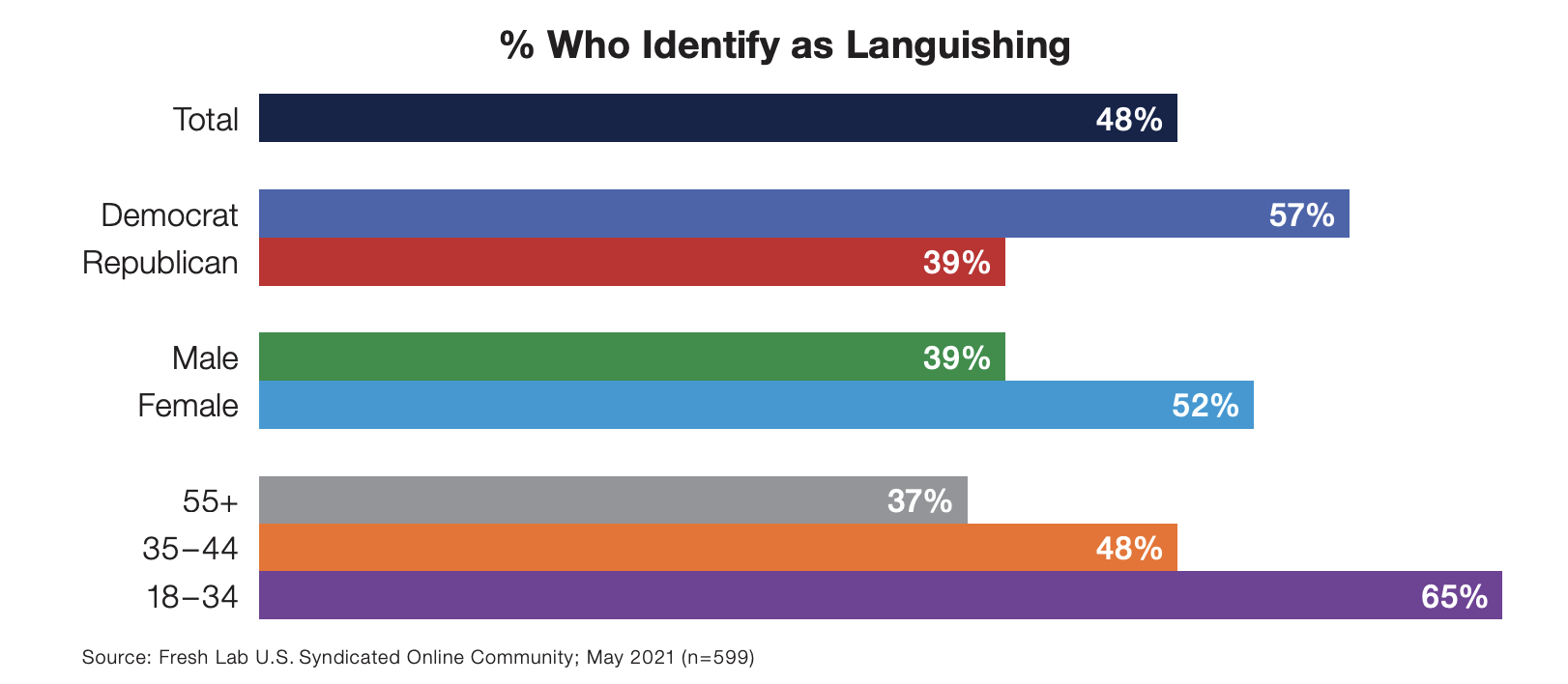
Ipsos’ recent online community survey on “languishing” focused on several issues: The survey first explained the term “languishing” as the New York Times described it, then asked participants how they felt. Nearly half (48%) of respondents confirmed they feel like they are “languishing.”
Ipsos then took a deeper dive into the mental health of Americans and came away with several findings. In our research, we learned that languishing isn’t an equal opportunist feeling—it has a much higher prevalence among younger vs. older cohorts and women vs. men. We even see differences between Republicans and Democrats.
One of Ipsos’ respondents said languishing “describes what I felt most of 2020. I felt the sense of aimlessness and the feeling that we were all just stuck. We were stuck at home. We were stuck trying to figure out what to do to manage caring for children at home while working from home. Forgetting what day it was, because every single day sort of felt the same.”
Among the “languishers” we interviewed, nearly half (45%) said they didn’t know when these feelings would go away. We did see exceptions among men (37%), who were more likely to say the end of the pandemic would bring a close to languishing.
Layering the uncertainty of an end on top of the feelings of languishing compounds the problem, and the vaccine isn’t necessarily providing relief. “I just got burned out by the grind of doing nothing, missing people, and the hate of the election,” one respondent said. “Things are certainly better now with the vaccine, and a more positive leader, but I am still just uncertain about a lot of things.”
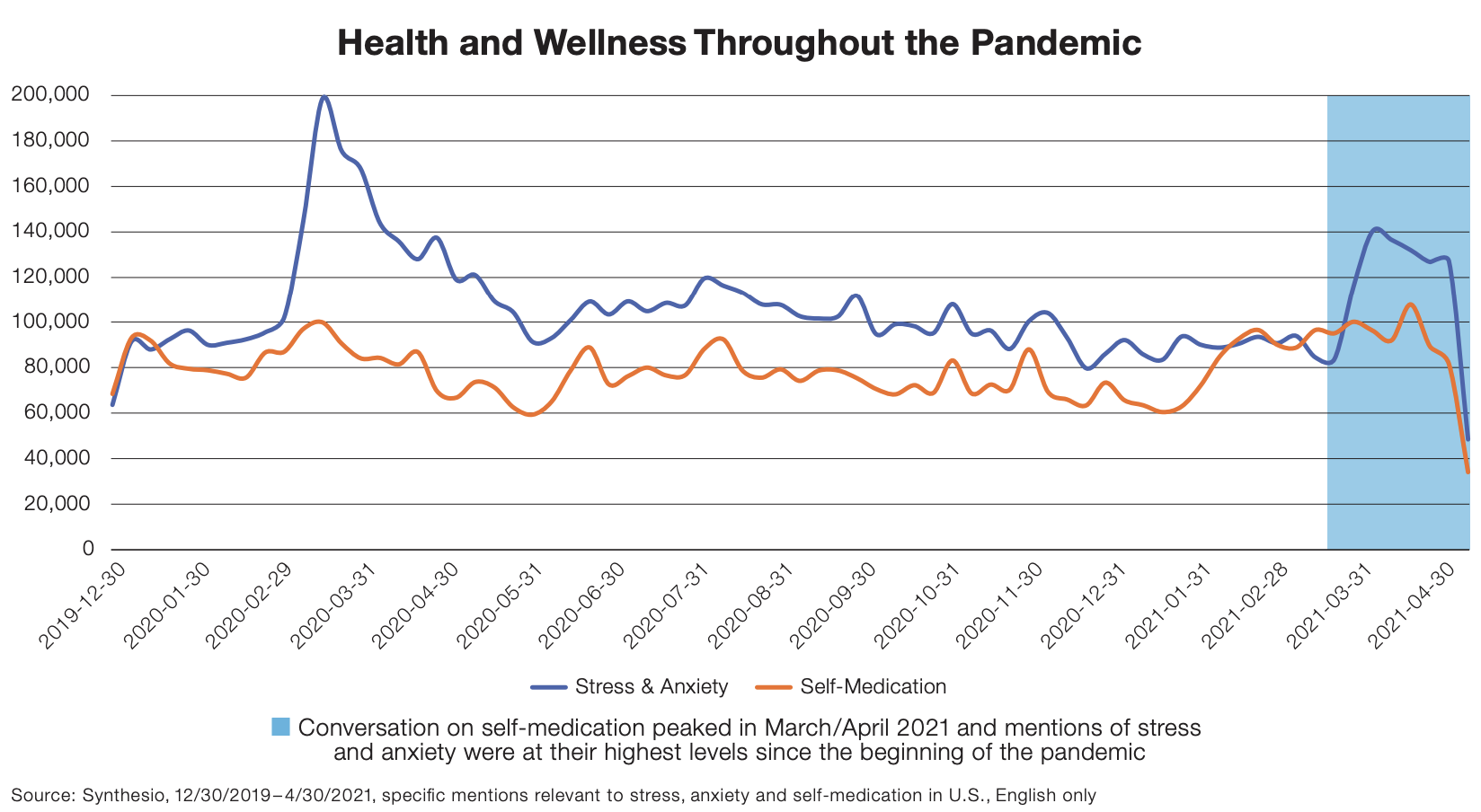
The stress and anxiety people are feeling is also observed in social data. People have gone online to share how they are feeling, with many revealing they are self-medicating to feel better. We saw this conversation on self-medication peak in March and April.
 Amid these findings, Ipsos identified four opportunities for brands to help lead the way out of languishment.
Getting the word out
With vaccinations providing a path to normalcy, consumers believe there is a role for brands to play in encouraging them. In our survey, one respondent praised Amazon. “They got me through the pandemic. They should advertise that EVERYONE eligible should get the vaccine and that this is not a political issue. It’s a life-saving issue.”
Some brands like Samuel Adams are using humor and their largess to promote vaccination through humorous ads and a program in which they offer the newly inoculated $7 toward a celebratory beer. Krispy Kreme is giving away a free doughnut to those with a COVID-19 vaccination record card. The Samuel Adams ad has raked in more than 2.2 million views on YouTube, while Krispy Kreme earned 25,000 retweets and almost 56,000 likes compared to a more typical engagement of likes in the hundreds and retweets of less than 100.
Communicate with authentic optimism
During the height of the pandemic, people were looking for a sense of community. Brands pivoted their messages to showcase a (now ubiquitous) message that “we’re in this together.” A year later, consumers are tired of hearing that message. They appreciate knowing they’re not alone, but many have reached a saturation point and are looking for brands to break through the monotony with a sense of positivity and humor. As one respondent wrote: “I appreciate (brands) having a sense of humor and not trying to be like, ‘We’ll get through this together, capitalism can be inspirational!’”
In Ipsos’ languishing study, nearly half (46%) of “languishers” said brands could help by communicating that it’s going to get better. Consumers pointed to recent examples from brands like Budweiser, Extra, and Google for positive ads that celebrate a return to the outside world. Each of these examples demonstrates a brand-appropriate message that answers the longing for optimism in a genuine and honest manner. Much like toddlers who are tired of hearing about all the things they can’t do, people are ready for messages about what they can do, even if they might need to wait.
Up and out
People are ready to get out and are looking to bring more fun back into their lives. In a recent Ipsos survey, 40% of consumers expressed a desire to get outside; for many, this means festivals and concerts. There is also an itch to start traveling again, bringing vacations back or setting out on an adventure, both locally and abroad.
70% of Americans plan on going on an overnight trip by car more than 100 miles away this summer. Another 46% plan to travel by plane in the U.S., while 26% will fly internationally. By connecting with local music festivals or offering a chance at travel getaways, brands can help consumers let loose and regain a sense of freedom.
Support holistic wellbeing habits
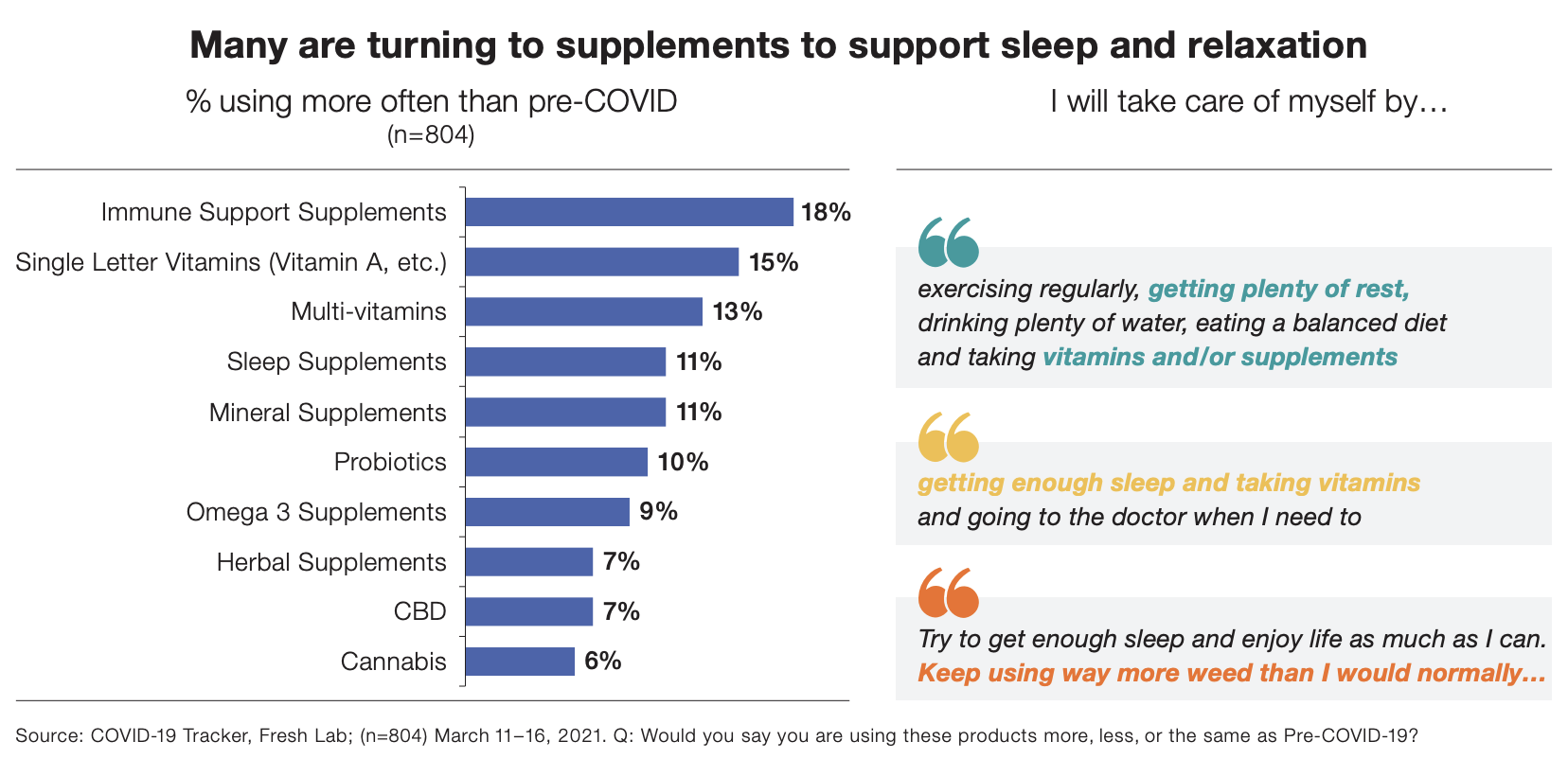
Consumers are looking for tactics to provide relief from stress and anxiety. Social conversations around mental health during COVID focus primarily on how people are coping with the pandemic stress and how these coping mechanisms are becoming habits. One of those habits has been an increased adoption of supplements that support sleep and relaxation as part of the broader focus on health.
“I have really been all about focusing on wellbeing and preventative health,” one respondent told Ipsos. “Not getting sick, not getting colds, boosting the immune system, getting a good night’s sleep, etc.”
Brands have an opening to reposition wellness products and supplements as part of larger wellbeing routines and expand use cases for items that may have previously been limited in scope and reach. Vitamin brands, for example, could create Zoom events that showcase how their products help with mood, vigor, vitality. These brands could also provide some consultation. Consider the way newly-launched Cosmos Vita has positioned its supplements as a form of self-care, rather than a way to take added nutrients.