
How can food brands better link synthetic biology to purpose?

Much of the work in synthetic biology today as it relates to food is in creating alternative versions of foods that already exist, like burgers and nuggets.
These efforts are focused on getting new products to look, smell, taste and feel like their analogs, but free from allergies, animal farming or environmental impacts. These are hugely important considerations for food buyers, to be sure. And it’s easier to make a leap from cheeseburger to something pretty close to a cheeseburger than it is to go from cheeseburger to an innovation like, “Here’s the meat of an animal that we imagined wholly in the lab.”
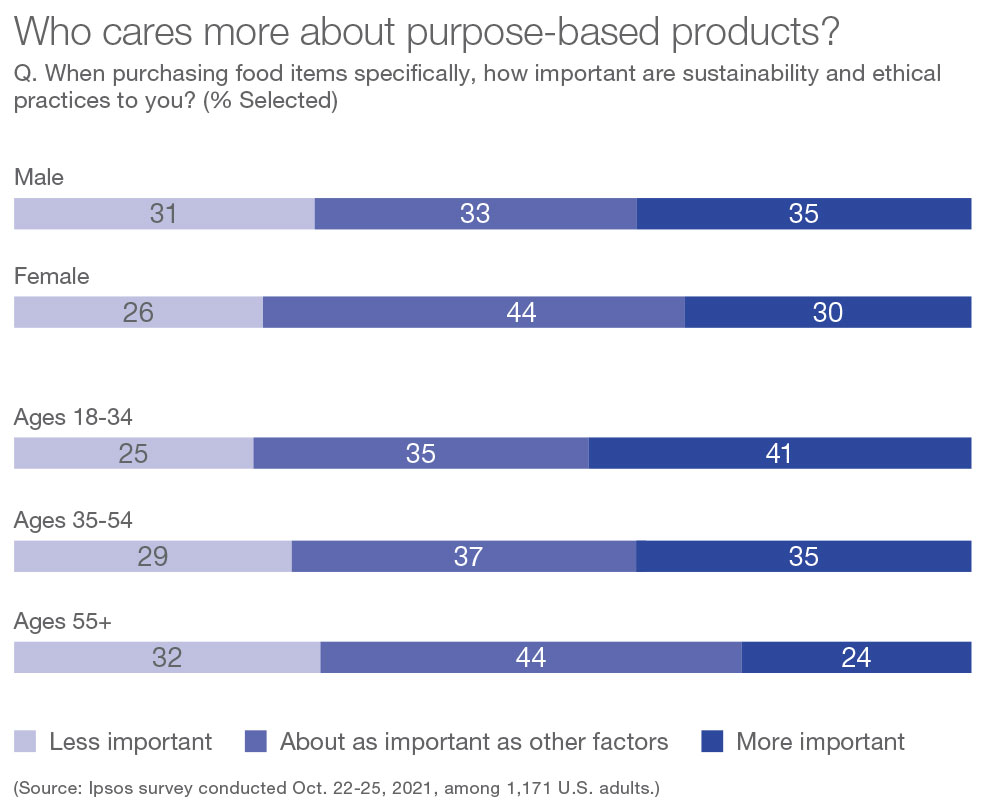
These aren’t, however, the only purchase considerations. Ipsos data shows that for most people (71%) sustainability and ethical practices are at least as important as traditional factors such as price, size, and quality when purchasing food products.
Most people (56%) say they purchased a food product labeled as sustainable or ethically sourced in the past three months. That’s much higher than any other retail category.
In general, Ipsos data shows that sustainability is a very important issue for people, but that they don’t know how they can make a big impact themselves. In the U.S., where many feel the governmental “system is broken,” they are looking to companies to help take a lead in solving problems with the environment and climate.
These are considerations companies and brands should bake into their process, not just in packaging and marketing, but earlier in the innovation stages.
Here are three questions brands can ask as they think about their future food products:
- Is there a broader purpose-driven initiative our product can align with authentically?
- What is our competition doing, and what does the market expect when it comes to purpose-driven initiatives?
- Should we set different expectations for purpose-driven initiatives with our engineered food products?
For example, while creating alternative meat products, a brand might consider how to align potential personal health benefits with animal welfare factors. Or, as Conagen is doing, the environmental benefits of synthesizing key ingredients without the waste of growing and harvesting the foods that contain those ingredients naturally.
Once the products are developed, the marketing and packaging can then link these concepts for the consumers who will enjoy the purpose-driven benefits, and a tasty burger to boot.

![[WEBINAR] The Modern Twenty-Something: How Gen Z Thinks About Money, Milestones, and More](/sites/default/files/styles/list_item_image/public/ct/event/2026-07/thumbnail-templates_0.png?itok=GNEHIkP1)
