Supply Chain Pain and Social Media: Lessons for Brands
Ipsos Social Intelligence Analytics (SIA) has surfaced conversations around supply chain issues transitioning from fear and uncertainty at the onset of the pandemic, to shock and anger around the state of inflation today.
Consumers’ initial focus on shortages of essential goods, such as canned food and toilet paper, has morphed into increased buzz around shipping delays and spikes in everyday expenses, such as gas and menu items. While both social conversation and Google search data around the supply chain among American consumers has declined dramatically since the peak in volume at the onset of the COVID pandemic, supply chain-related conversation experienced an even larger spike in October of 2021, driven by pre-holiday shortages and perceived lack of government response. Further, concerns about the crisis in Ukraine, global oil supply, climate change, and inflation have caused the conversation to crawl back up.
Addressing supply chain challenges is an immensely complicated task. However, as seen in this paper featuring specific examples, brands that are delivering creative solutions rooted in consumer needs can address both these challenges while winning praise and recognition from across social. Take a look!
KEY TAKEAWAYS:
Social conversation and search data around supply chain issues in the U.S. reveal key consumer challenges and opportunities for brands to help address pain points.
- Initial panic around the shortage of essential goods at the onset of the COVID pandemic has shifted to frustration and anger around shipping delays and the increased cost of everyday and non-essential items.
- People more easily understood how “panic buying” caused these initial shortages, but are less clear about what’s driving the current supply chain disruption. They’re actively seeking a scapegoat in brands and the U.S. government.
- Consumers are increasingly relying on more cost-effective, alternative and sustainable solutions.
- While frustration is widespread, brand efforts to help both consumers and employees are not going unnoticed.
Social media conversations around supply chain issues in the U.S. have transitioned from fear and uncertainty at the onset of the pandemic to shock and anger around the state of inflation today. As COVID variants rebound and inflation and war dominate headlines, Americans are voicing worry, despair, and the financial pains of inflation.
Consumers across social media are highlighting steps they are taking to manage rising costs while acknowledging brands they feel are delivering innovative solutions to the shortage crisis and helping people keep a few extra dollars in their pocket.
From Empty Shelves to High Gas Prices
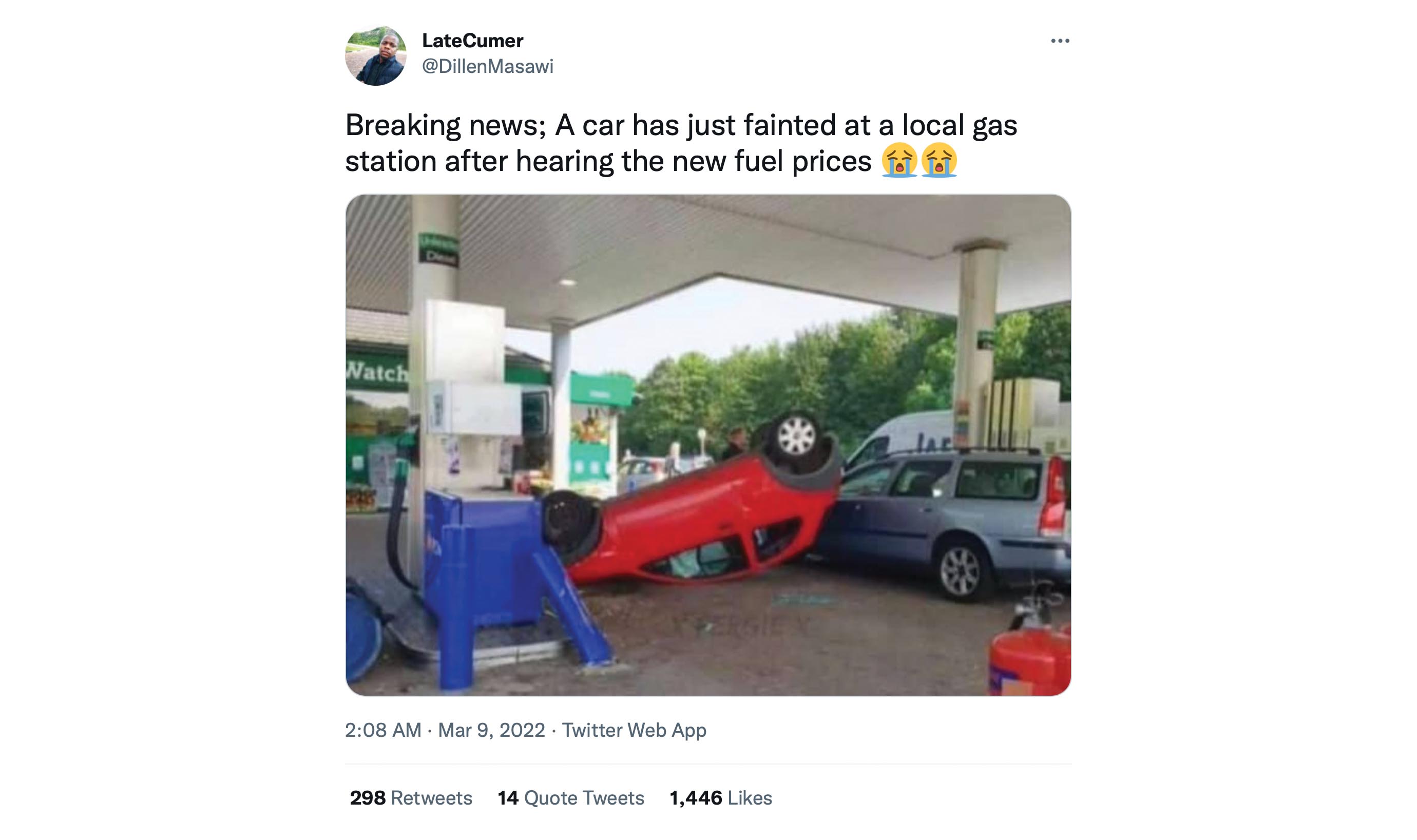
The nature of the supply chain conversation has shifted dramatically as the pandemic shifts. Consumers’ initial focus on shortages of essential goods, such as canned food and toilet paper, has morphed into increased buzz around shipping delays and spikes in everyday expenses, such as gas and menu items.
While both social conversation and Google search data around the supply chain among American consumers has declined dramatically since the peak in volume at the onset of the COVID pandemic, supply chain-related conversation experienced an even larger spike in October of 2021, driven by pre-holiday shortages and perceived lack of government response. Currently, concerns about the crisis in Ukraine, global oil supply, climate change, and inflation have caused the conversation to crawl back up.
Consumers are Emotionally Charged and Looking for Someone to Blame
While many easily understood how the underlying fear of the global pandemic transformed into “panic buying” at the onset of COVID, it is more challenging for people to wrap their heads around the underlying cause of the supply chain disruption today.
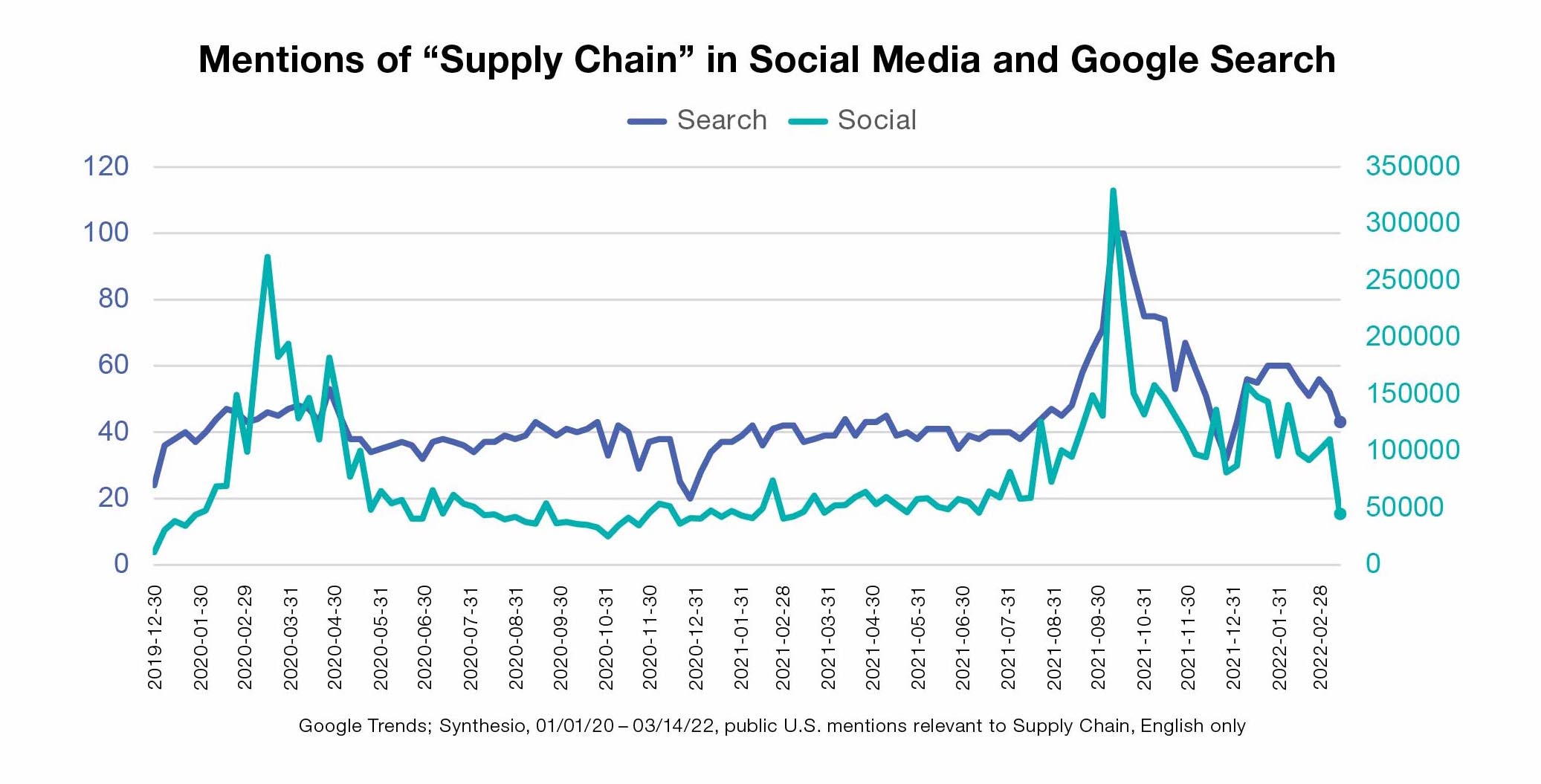
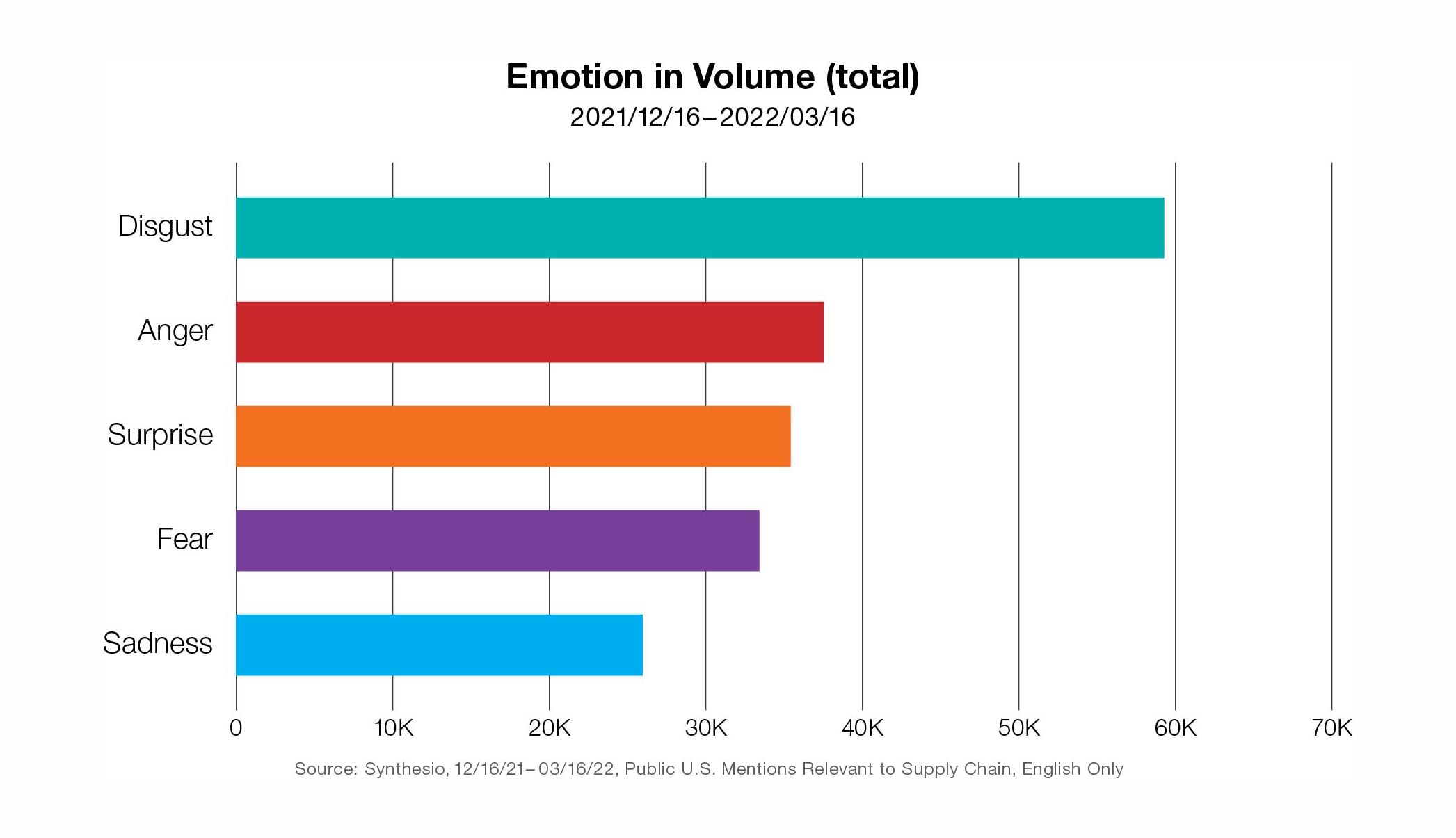
Within the last three months, Disgust, Surprise, Anger, Fear and Sadness represent the top five most prominent emotions as identified by Synthesio’s social listening AI platform. Inflation represents the underlying top driver, as Americans are noticing nearly every facet of their life being impacted, including both everyday staples and non-essential items.
“Inflation has affected my grocery shopping on everything. My $45-50 weekly trips are now $60-75.”
“I was curious why Sony isn’t making more PS5’s, and I’ve found out it’s due to the supply chain shortage that’s happening. Not enough components to manufacture the console because there’s not enough people to manufacture the components or the materials needed to create them.”
While some criticize brands for raising their prices, many blame the government as the root of the issue particularly comparing Biden’s leadership to Trump’s. In line with the political divide in America, views on Biden’s leadership are mixed. Brands are receiving less blame than the government, but consumers are also looking to brands to address rising prices.
“U.S. Faces Shortages Of EVERYTHING, Supply Chain Failures Cripple Economy, Biden Policy Made It WORSE.”
“Take note, the inflation is not because of Biden. It’s not only because of supply chain issues, it’s also because corporations are arbitrarily raising their prices. From Starbucks to Netflix to AT&T and a lot of others. They are all raising their rates if you haven’t noticed.”
Emerging Alternatives: Electric Vehicles and the Creator Economy
While cost-effective solutions are top of mind, many are also relying upon more sustainable and eco-friendly alternatives to improve both the supply chain and the planet. Electric vehicles were initially a hot topic related to the supply chain crisis—consumers even discussed how Tesla and Elon Musk were “immune” from supply chain issues. While electric vehicle supply was eventually impacted as well, Tesla did outperform many established automakers in 2021, in part attributed to greater control of its supply chain that helped to curb impacts from the industry-wide chip shortage.
“Competition between automakers is becoming a battle over the supply chains behind electric vehicles. Car companies are forging new partnerships with raw-materials producers and investing in facilities that make chemicals for batteries (WSJ)”
In addition to electric cars, the creator economy that fuels independent artists and creators is also soaring. As the workforce has learned to adapt to work-from-home, remote and hybrid life, people were able to rely on digital connection and monetization strategies to pay their bills leading to increased use of creator-centric platforms like Patreon. While many Creators were driven onto these platforms to monetize their passions and side-hustles, a new wave of Creators is joining these platforms to bring in extra income as inflation continues to eat into their purchasing power.
Creative Solutions are Necessary and Rooted in Consumer Needs.
Supply chain challenges will not be resolved overnight. Sanctions on Russia for its war on Ukraine have been rattling global markets and many across social are raising alarms about Russia not exporting fertilizer and the resulting impact on this year’s harvest. Despite the uncertainty, several brands are taking decisive and transparent action and garnering praise across social.
- Intel is organically mentioned within the top 15 brands most discussed on social related to supply chain-related conversation. This year they announced a $20 billion initiative to build two microchip factories in Ohio. The initiative will result in 3,000 permanent jobs while addressing severe global shortages of computer chips used in everything from cars to home appliances. The initiative is meant to reduce U.S. reliance on global production of computer chips and help stimulate advanced manufacturing.
- Uber recently implemented a fuel surcharge ranging from 45 to 55 cents per ride in the U.S. to help counteract the rising gas prices. Despite the negative and controversial response from both drivers and riders, other ride-share and delivery services, such as Lyft and Instacart are following suit.
Addressing supply chain challenges is an immensely complicated task. However, as the examples above show, brands that are delivering creative solutions rooted in consumer needs can address these challenges while winning praise and recognition from across social.