
Here's how many Americans have money left after they pay their bills
The Ipsos Consumer Tracker, fielded on Ipsos' Omnibus platform, asks Americans questions about culture, the economy and the forces that shape our lives. Here's one thing we learned this week.
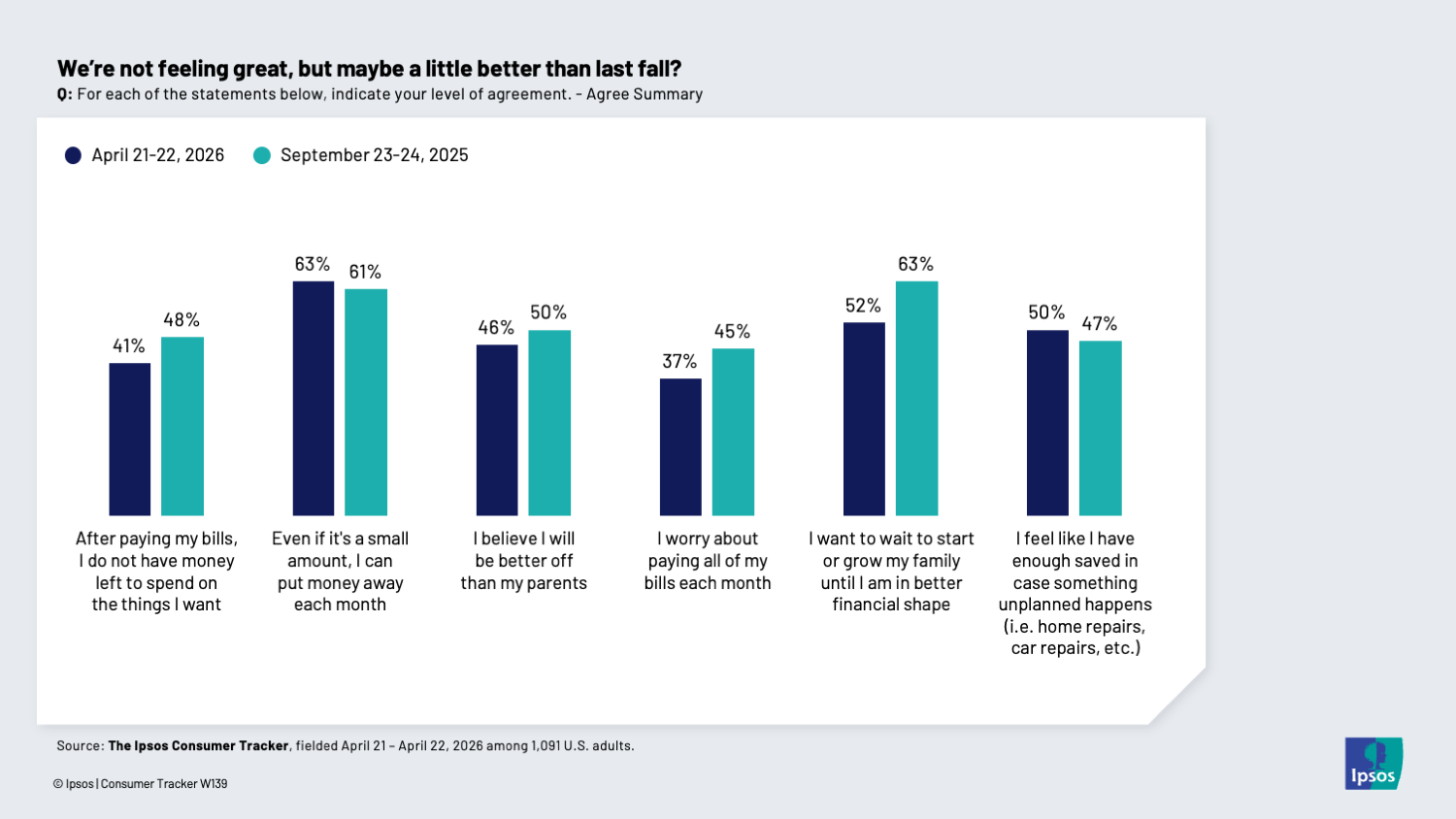
Why we asked: As we keep thinking about the zero-sum economy it was time to update some data from last fall. Gas prices are up — what levers are people pushing in their day-to-day shopping to account for that?
What we found: We’ve seen a slight improvement in terms of the number of folks who have nothing left over when they pay their monthly bills. We’re back to 41% saying that, similar to where we were in early 2025, and down from last September when we were at nearly half (48%). That’s still not a great thing. And as President Trump’s economic advisors have noted on Fox Business, credit card spending is “through the roof” as consumers spend more on gas and … everything else. I recently heard an economist talk about this as a good thing, in that it’s keeping the economy chugging along. I am not an economist, but I countered with, “Sure, but are they getting more?” Or might this be why consumer sentiment is really low and getting lower?
One thing to keep in mind is that this isn’t just an issue for low-income Americans (which would be bad, don’t get me wrong). But it’s also an issue for one in three (31%) of households earning $100k or more.
So, what happens when that happens?
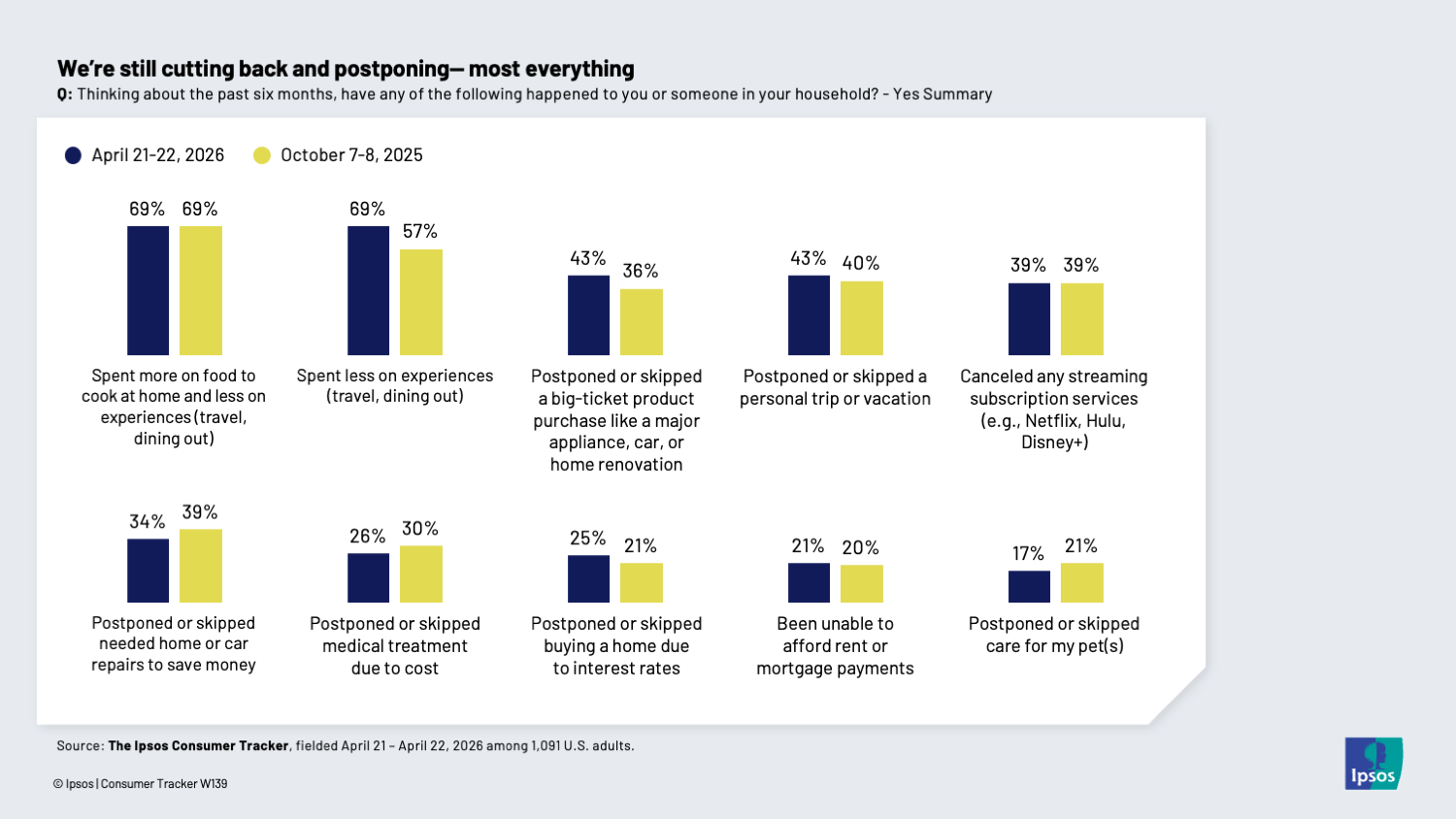
We’re still cutting back or postponing just about everything
Why we asked: When we ask the question about having money left over, we also like to see what, if anything, people are doing about it.
What we found: First, we cut back on the day-to-day like eating out and travel, which 7 in 10 people (69%, up from 57% last October) say they are cutting back on. Then we postpone big things, like major purchases or vacations. Then we cancel recurring things like streaming services (although elsewhere in this wave, we find that most Americans still subscribe to three or more services, consistent with a year ago and up slightly from previous years). And then we postpone or skip everything else. All-in-all, it’s not a great picture, but also a fairly consistent one over the past few years. The zero-sum economy is a reality for many Americans, and if gas prices stay super high, something will have to give in people’s household budgets.
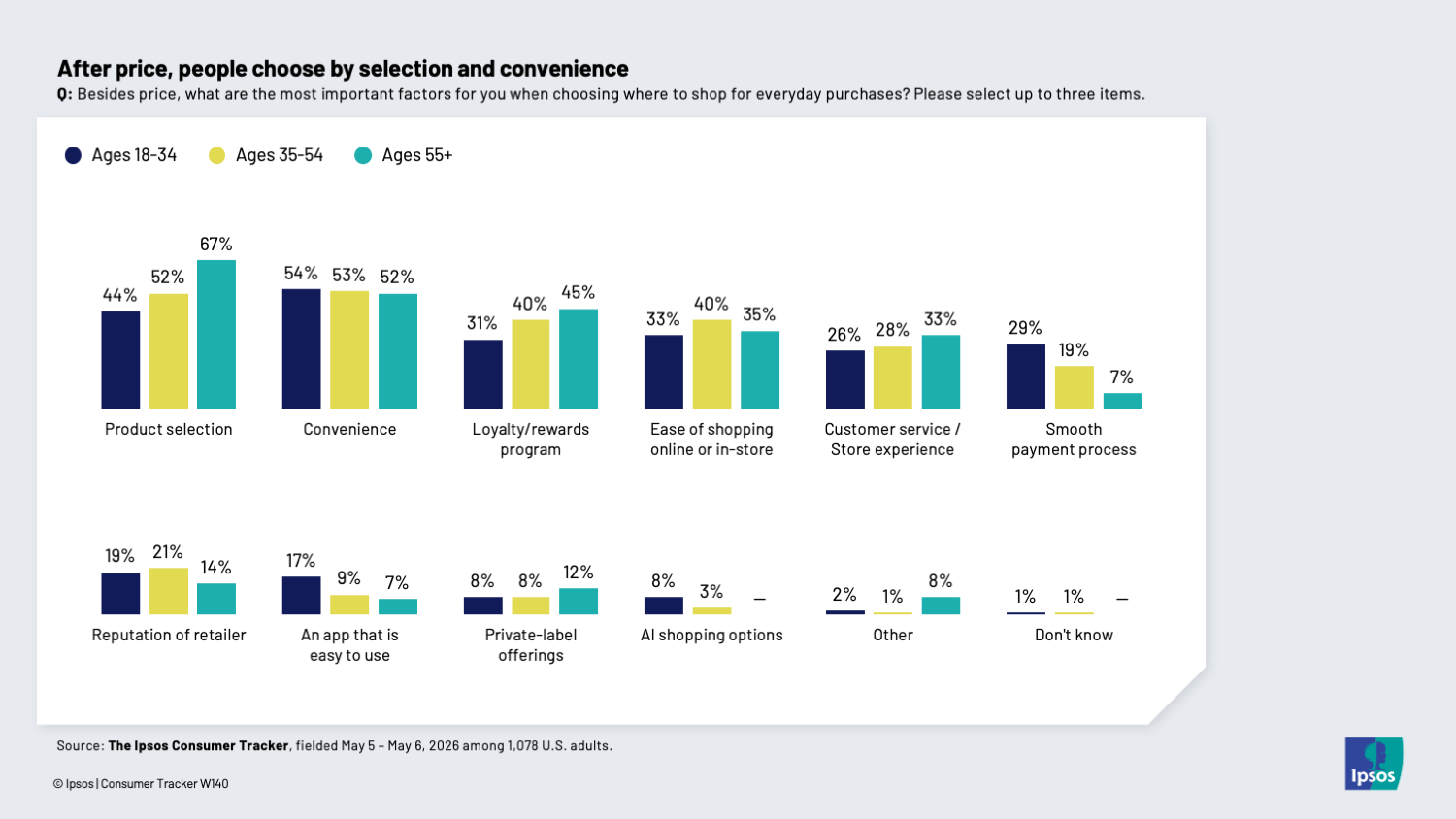
After price, people choose by selection and convenience
Why we asked: We all know price is king, especially in this zero-sum economy we keep talking about. Heck, price is the whole royal court often. But beyond that, how are buyers making their decisions?
What we found: Since we knew price is the main factor in decisions, we explicitly excluded it from the question options and asked, “Besides price, what are the most important factors for you when choosing where to shop for everyday purchases? Please select up to three items.”
A majority cited product selection (55%) and convenience (53%) which constitute the top tier. The second tier is loyalty/rewards programs (39%) and ease of shopping online or in-store (36%). And then there was customer service/store experience (29%). Everything else got cited by fewer than one in five folks. There weren’t a lot of demo splits of note. Women were much more likely to list ease of shopping, 43% vs. 29%. Younger folks listed selection less strongly, but it was still their second choice at 44%.
And in the verbatims people listed price, cost, sales… It’s so important, even when you exclude it, people want to put it back in.
More insights from this wave of the Ipsos Consumer Tracker:
Higher-income Americans were twice as likely to have a bigger tax refund this year
AI data centers are unpopular with most Americans
If you trust AI recommendations generally, you trust them for most things
Americans are well aware of gas prices' rise
Seven years in, few see COVID as a threat
The Ipsos Vibe Check: Here's how Americans feel about the government this week
The Ipsos Care-o-Meter: What does America know about vs. what does America care about?