![[WEBINAR] How American brands can win carts and minds](/sites/default/files/styles/main_image_612x500/public/ct/publication/2026-06/thumbnail-brand250.png?itok=5xcKELTL)
[WEBINAR] How American brands can win carts and minds
Learn how U.S. brands are leaning into their stories and winning Americans’ loyalty.
Revisit our live panel discussion to hear how America’s brands remain a source of pride and unity as America approaches its 250th anniversary. Listen in as we explore the opportunities and pitfalls American brands face in the changing world, and how brands can pivot to win the next 250 years.
And be sure to visit our Insights to Activate portal exploring a range of timely topics, featuring impactful insights that you can activate tomorrow.
Key highlights and takeaways from Brand America 250
Should brands lean into patriotism?
Chris Murphy explains that there’s some risk today in brands that choose to lean into American imagery when marketing themselves, with political division running extremely high.
Some clients will actually ask, “Should I be wrapping myself in the American flag these days?” Especially those that are more steeped in Americana and, and heritage. And the answer in the vast majority of cases is, ‘I'd be careful about that right now.’
It's a very, very different world that we're living in now where, you know, contempt for people who are of a different political party is quite high, which makes it very hard to be an All-American brand. Are you really going to try to appeal to all Americans? That's a tough thing to do right now. It doesn't mean it can't be done, but it's tough.
How corporations can stay grounded amid political turbulence
Anne Mitchell argues that brands are best served by staying grounded in their long-term purpose rather than reacting to short-term political currents.
To be American is political. And that's certainly true in this moment. I think that that's why that discussion is happening with our clients, right? Because they have some fear and anxiety, as well as understanding there may be some opportunity on the table.
I think our general advice is, ‘Don't attach yourself to a political figure or moment.’ You know, return to core business values and find ways to connect with your audiences in a way that's really credible and authentic to you, and that will be enduring. So, look for ways to meet that moment that you're experiencing around you socially and politically.
But I think the reminder to brands and businesses is: Stay focused on your strategy, your values over the long term. And then look for ways to sort of connect into that nuance and how your key stakeholders are experiencing the specific moment we're in. And find ways to show up really credibly and authentically that, you know, won't leave you in four years feeling isolated.
How the economy is shaping consumer behavior at America 250
Alec Tyson stresses the importance of understanding how economic realities shape consumer perspectives and decision-making.
The economy is always a perennial concern, but right now we're at a really acute moment. We've been living through what you could call an affordability crisis for about four years now. So the economic opportunities, the economic pressure is absolutely really salient right now.
And that's the context or backdrop for any brand engaging is to be aware, understand these dynamics and how deep they go and how they affect different cohorts differently. We could talk about generation, we could talk about income or education cuts. Everyone's feeling the pressure, but in different ways. And that's another area in which good research I think can help ground your initiative.
Full transcript
Ben Meyerson:
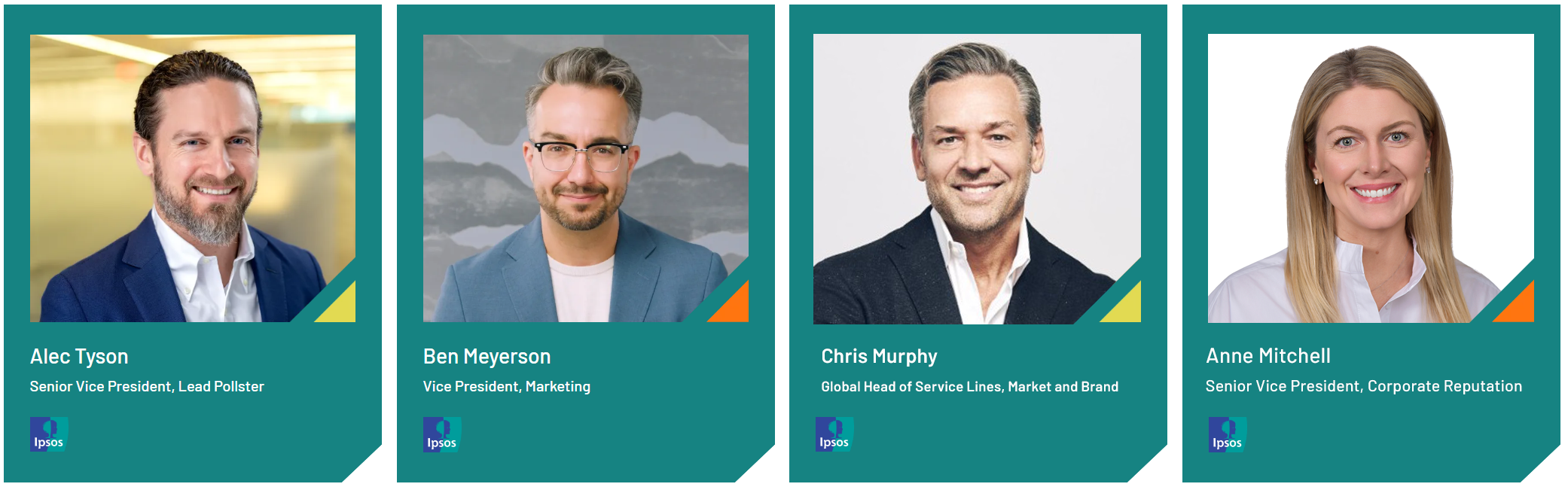
America, congratulations. You made it to 250. And you know what? American brands should be celebrating too. Pat yourselves on the back. You are a key part of what makes our country such a major influence around the world. But what comes in the next 250 years for American brands and for the people who buy them? That's a trickier question and one we're going to dive into today. Hi, welcome to Insights to Activate. Ipsos' series focusing on some of the biggest topics facing the world. I'm Ben Meyerson, Vice President of Marketing and Communications here at Ipsos, and I'll be your host as we talk about American brands and how they can continue to win the carts and minds of Americans. We have a great group of Ipsos experts here today to break it down for you. But before we get to our panel, let me set the stage by diving into the challenges facing American brands and how you can push ahead.
Ben Meyerson:
Last year, Americans trust in our homegrown brands was nine percentage points higher than international brands, but that advantage has evaporated. Americans now say they trust international brands roughly the same as they trust homegrown brands. So how can American brands connect with their own people, especially key younger audiences and gain that trust back? Leaning on Americana may be a difficult route. Younger Americans are far less likely than baby boomers to say that being an American is an important part of how I think about myself. But there are clear ways to lean into sentiments and gain trust at home. Americans still see the country's success as tied to the success of its brands. Nearly three in four Americans, including solid majorities of Gen Z and millennials believe this. And as homegrown brands reach for US audiences, those that have their products made in America get an extra chance to win.
Ben Meyerson:
While not all American brands make their products in the US, those that do tap into a premium aura that can be a powerful co-benefit. Solid majorities of Americans think American-made products are higher quality and they say they like buying American goods even if the cost is higher. Still, there are many more pitfalls American brands must deal with as they consider how to market themselves in America's next era. Minefields on everything from politics to pricing. So let's meet our experts and get into it.
Alec Tyson:
Alec Tyson, lead pollster at Ipsos Public Affairs. What we do each day is help our partners tell their story with confidence in the public affairs arena.
Chris Murphy:
And hi, my name's Chris Murphy. I lead our market and brand group globally and looking really forward to the forecast of the next 250 years for a, a way to set the bar high there, dude. Yeah, all right.
Ben Meyerson:
We'll get there. We'll get there. All right.
Anne Mitchell:
No pressure. Anne Mitchell joining from the reputation practice. My team works with organizations and helping them understand the state and dynamics of trust and how they optimize that for their businesses benefit.
Ben Meyerson:
Great group here. A lot of different expertise, so I'm really looking, looking forward to getting into this. Let's start with you, Alex. So your team was behind a big America 250 survey we did earlier this year. And we saw some major generational splits in that report. What do you think that means for the future of America and American values?
Alec Tyson:
Well, it's a big question and let's start with what we find. America 250 is this milestone moment for us, but it's also a time, as I think many people experience, where we're having some debates in this country and we don't necessarily agree on what our shared national story is. And in some sense, that presents challenges for brands. How do you engage with identity or connection to this country in the moment that we're living through? And that's what I really like about this research is I think it provides some insights or some help to navigate this pretty complex landscape. I think it's fair to say. And what we found at a top line level is some of the foundational ideals and values of the country, ideals like equality, economic opportunity, democratic governance, religious pluralism, they remain really widely resonant. And that's important because what it is 250 years later, the American idea, it remains resilient.
Alec Tyson:
At the same time, what we also see is not everyone is feeling a strong personal connection to the country today. And we really see that where you went with your question in the generations data. When you look at Gen Z, when you look at younger millennials, if you ask them, is being American an important part of how you think about themselves? It's a bit of a shrug. Fewer than half say, "Yeah, that's a really important way that I think about myself." And many of the younger generations are feeling other frustrations about how well the country is delivering on its promises. Not the promises itself, what they largely align with, but how well it's delivering for them. Things like economic opportunity or the job market day. Just think of the job markets debate. AI disruption, other challenges. It's a tough market for people starting their careers.
Alec Tyson:
And so what the research points to is really this nuanced landscape where OneNote efforts to say to prime patriotism and pride, they might meet with some limited success or maybe not as much success as you would've liked because not everyone's in that mood. Some are, some aren't. You need to know the landscape well with good research to know where to activate. And what I would say to bring the work together is there really is opportunity here. Some of these founding value and ideals are deeply resonant. There's hope in the country for the future. That's almost been a perennial sense. It's part of what it means to be American in my view at least is hope for the future. That's still out there. You just need to know the landscape to know where to connect to have the most impact.
Ben Meyerson:
The economic opportunity thing is really interesting to me. But, because I mean, ultimately today we are talking to our brand colleagues and how they tie into all this and what it means to be American. And again, we look at those generational splits and we saw that, like I mentioned earlier, thinking about being American is something that the younger generations don't think about as much, but they do think about American brands and the, the economic parts of success, even if maybe it's a little out of reach sometimes. What do you see in that?
Alec Tyson:
I think you're just right. You want to talk a little bit more broadly about what's going on in the country. The economy, of course, it's always a perennial concern, but perhaps right now we're at a really acute moment. You can even go back to COVID, post COVID price increases. We've been living through what you could call an affordability crisis for about four years now. So the economic opportunities, the economic pressure is absolutely really salient right now. And that's the context or backdrop for any brand engaging is to be aware, understand these dynamics and how deep they go and how they affect different cohorts differently. We could talk about generation, we could talk about income or education cuts. Everyone's feeling the pressure, but in different ways. And that's another area in which good research I think can help ground your initiative. Yeah.
Chris Murphy:
Ben, if we could, just to quantify the magnitude of a point that Alec made a moment ago, please correct me if I'm wrong. Keep, keep me honest here. Yeah. But I believe about two thirds of people my age would say being an American's a very important part of our identity. Yeah? Is that right? Yeah. But as you slide down to Gen Z, it's like, what, 38? Yeah,
Alec Tyson:
It's lower. Absolutely.
Chris Murphy:
Almost double. So I mean, this is a very real quantifiable kind of phenomenon, right? It's not, we're not just talking in generalities. Now also important to remember that just because two-thirds of, of boomers, Gen Xers might feel that's an important part of identity, and doesn't mean it's a universal truth, right? So let's, let's not go paint, painting generations with a, a perfect brush, right? Or a universal truth brush because that, that's not right. But yeah. Two thirds to one third, that's a real thing.
Alec Tyson:
It's a real thing and I couldn't, couldn't be better said. And that's just the landscape that the research points to is you can, you can over-index on these trends. And as Chris is suggesting, you can't paint with too broad a, a brush. You need to acknowledge the nuances. But even, even each group, there are limits. It's not a universal feeling. I would underline that point. I really agree with that. And there's
Ben Meyerson:
A question also of life stages, right? Is this like, is this something that younger people, because they have not been around as long because they have other concerns or they're, they're dealing with other challenges, they're less concentrating on that? Or is it really purely about when they grew up and like the circumstances in the world around them? I mean, these are things we evaluate.
Alec Tyson:
Well, I was, I was talking with Anne just before we started here and that was something we were discussing because it's an open question. There are two things. It could be that as folks age, the younger generations age, they deepen a connection with the country. We've seen that with some past generations, including baby boomers, but it, it's unknown at this point. So that's something for us as researchers, for brands to watch. What is the evolution of these younger generations? I don't think we know for certain. Yeah.
Ben Meyerson:
Chris, I'll, I'll throw this to you now. This is a pretty good segue, I think, into where you stayed. Obviously you're out there talking to our brands every day that we work with. And you've been working on the brand America research that we've been doing for the last year, year and a half or so. When you talk to our clients out there, what are you hearing about them as they think about how to position themselves as an American brand or what it means to be an American brand right now?
Chris Murphy:
Well, taking that question to its extreme, some clients will actually ask, you know, should I be wrapping myself in the American flag these days? Especially those that are more steeped in Americana and, and heritage. And the answer in the vast majority of cases is I'd be careful about that right now. Because as you noted in, in your preamble division is at an all time high even on what it means to be an, an American, right? So, so yeah, that's something we might want to take great care with right now. And I, I'll come back to the, the brand issue in a moment. But just to, to, to highlight the degree of division right now, you go back to 1960 University of Michigan study of, of parents with children who were about to, to be of marrying age.
Chris Murphy:
And the question is, if your child were to marry somebody from the opposing political party, would that bother you? The people who said, "Yeah, that would bother me. " It was like in the single digits, maybe 10%, eight, 10%. Just a generation later in the mid '90s that had gone up. Let's say substantially. <Laugh> Okay. It's a very, very different world that we're living in now where, you know, contempt for, for people who are of, of a different political party is quite high, which makes it very hard to be an All-American brand. Are, are you really going to try to appeal to all Americans? That's a tough thing to do right now. It doesn't mean it can't be done, but it's tough. There are some universal American properties that are still resonant here, and travel well abroad across the waters.
Chris Murphy:
Things like, you know, freedom, innovation, the notion of America is a melting pot. These are still very strong and generally universally, you know, kind of well, well-held qualities. And again, and they do translate overseas quite well too. But yeah, it, it's a, it's a tougher thing. And the, the data that you were referencing earlier it's, it's very powerful, right? So just one year ago, one year ago we do our little trust in American brands study. And right here on our own shores, if an, if a brand was perceived to be American, it had a nine point trust advantage across a, a series of brands, right? One year later, that's in a negative two. So it's actually a little bit worse <laugh>, right? So you got an 11 point swing in just one year.
Chris Murphy:
And, and that's right here on our own shores, you know, where more people are saying, you know that they would trust a brand if it were international as opposed to being homegrown. So that, I think that says quite a lot. Now, in terms of the international game, that's a very different question. You want to do that one later? Sure. No, let's do it. Yeah. All right. So looking across 15 countries, if you ask people the degree to which they trust major American brands and then go a layer deeper and say, all right, do you consider that brand to be American, international, or local? Go in and start making comparisons amongst those groups. People on international soil give 20 percentage points less in trust to brands they conceive or perceive as American compared to brands that they perceive as international.
Chris Murphy:
Same brand, same question, just whether you see it as an American brand or international. 20 point differential, that's pretty massive.
Ben Meyerson:
That has stayed consistent year over year though, right?
Chris Murphy:
Consistent. Yeah, exactly. Yes,
Ben Meyerson:
It did. And that was, it was, it was re-fielded in, was it 10 countries last year and 15 this year?
Chris Murphy:
Correct. Yeah.
Ben Meyerson:
So at, at the very least, that's not moving as compared to the drop in Americans trust in their own brands, which is particularly interesting. You know, international folks, obviously that's a big role in what we play. I mean, the story of American brands overseas is, especially in the post-World War II era, it's the story of America. I mean, that's, you know, that, in the era of soft power and transforming the way things work around the world. A big part of that was, you know, Hollywood, international culture, you know other large brands that we work with who might be sold in supermarkets and restaurants around the world. So the, the shift in trust there is interesting. But it, again, and I, I think one interesting rub to me is that we didn't declare Amer this is an American brand, this is an international brand.
Ben Meyerson:
We asked people to declare whether they thought the brand was local or international, which I think was an interesting exercise, right? It's like, because, and I, I, I'll leave to you whether we talk about the specific brands or not. But I mean, I think that allowing people to say, "Well, maybe this brand might be headquartered in the US, but I think of it as an international brand and thus I trust it more." That's an interesting wrinkle in, in terms of how brands position themselves going forward.
Chris Murphy:
But yeah, you, you got it right. So the, the question sequence was, okay, here's a collection of brands. Talk to me about the degree of trust that you have in each of these brands. And then at the very end of the exercise, okay, let's go through each of these brands. Now tell me, do you see it as international? So we didn't do anything to tip them off, right, before the trust exercise. So this is just, you know purely unbiased kind of read on, on each of these brands and then cutting it after the fact. And yeah. And, and that's what you see.
Alec Tyson:
Well, and, and I think we know something about why this might be, or what's behind the reason. Why is this the case, this trust differential? Why Alex? Yeah, why, exactly. That's a great question. So, you know, you look around the world and you do see some frustrations with America generally today, right? And there are different reasons for that. But that connects to this idea of brand American facing some headwinds internationally. So the question is, how do you navigate that? What do you do with that? And that's where I, I like some of the work that Anne has done in terms of knowing your audience authentically or what your brand stands for. I think that's part of the solution about how you navigate some of the headwinds that brand America is facing internationally.
Ben Meyerson:
Yeah. Anne, definitely. Let's jump in here. So let's talk about the corporate reputation side of things here. So obviously you're doing so much work on trust, but I mean, as companies navigate this, so much of it comes down to the importance of getting that messaging right. What are you hearing from corporate communicators about how they are dealing with geopolitics and brand present brand presentation around the world?
Anne Mitchell:
Yeah, absolutely. I think, you know, of course the, the main line of feedback we get is that it's more complicated than it's ever been in the past. It can feel like you can't say the right thing. And, you know, I think as what, you know, the two panelists here are alluding to is that you know, different stakeholders want different things from you. So I think we're also operating in a really challenging environment given you know, how fractured the media landscape is how the information environment is changing, how hard it is to understand what is true. You know, I think that, especially from a corporate communications perspective, that means that the narrative is much more challenging to control than it has been in the past. But I think kind of picking up on what Alec was planting there you know, I think we see corporate communicators tend to do two things in an environment like this and really all the time.
Anne Mitchell:
The first is understand what drives trust not just the state of trust, but what drives trust with different stakeholder groups that matter most to you. So that's more than just customers, that's investors, that's policymakers other, other groups that are important to you. And really understanding what they expect of you and what's going to drive trust in every transaction that you have with them. What will they be receptive to? What do they want to hear from you? So that's kind of one key component. And then the other seems so obvious but worth mentioning because we hear it in all of our work is that you need to have a clear and consistent framework that you follow consistently when you're determining what you speak up about and how you do that. So there are kind of three key questions that I hear our clients come back to most often.
Anne Mitchell:
Obviously this looks different in every organization. But the first is, is this related to my core business? So is this connected to how we have talked about our strategy historically over a long period of time? And the second big question is about credibility and authenticity, which I think we're seeing, you know, as a, a big American value across groups right now. People are really craving that. So from a corporate communications perspective, that's do we have something credible and authentic to say here? Have we talked about this in the past? How? and can we really show up in a unique and authoritative way? And then I think the, the third big question is, are we in a position to actually make an impact here? Whether that's delivering shareholder value or affecting the change that you're commenting on.
Anne Mitchell:
And if you can answer those three questions with a yes, I think that there is generally a case to be responding to an issue. But I think the truth is that a lot of things feel really noisy. Executives feel pressure to respond to the environment. But if it is not connected to something that you know drives trust and it can't pass that litmus test of, is this related to our core business? Do we have something credible to say, authentic to say and can we really make an impact? Then odds are you need to let that lie.
Ben Meyerson:
Yeah. one of the things that I love that your group does every year is the reputation council report. Where every year you go out and talk to dozens, more than 100 corporate communicators. Yes.
Anne Mitchell:
Yes.
Ben Meyerson:
Yeah. I mean, so you're in the middle of that right now. You're, you're, you're out there and you're talking to these folks every day who are on the ground dealing with this. Are you hearing anything specifically around how they're dealing with the geopolitical landscape right now and how that talks about how they communicate? How that factors into how they communicate?
Anne Mitchell:
Yeah, absolutely. I think that they're getting more pressure from more points in the organization than they have in the past to respond to things. But also in some circumstances to stay quiet. So I think a big concept that we hear from our clients is, you know, do I, do I need to practice strategic silence here? Where do I do that? And our guidance really kind of turns back to that same understanding I was just speaking about. You know, you really need to be rooted in what people expect to hear you talk about, what they expect to see you invest in and understand not just the perceptions, but the state and dynamics of trust with those various groups. And, and that becomes your filtering mechanism and really, you know, a focusing exercise of what you speak up about and how you speak up about it.
Chris Murphy:
Do you think the silence is temporary?
Anne Mitchell:
You know, it's interesting. So as Ben was mentioning you know, we have these conversations with heads of corporate affairs and corporate communicators every year. And, you know, I think you know, certainly if we look back a few years you know, maybe it's five, six years back, there was a moment where people felt you know, the expectation was to speak up on more. We've certainly seen that taper off over the last couple of years. But I wouldn't say that the, the things that we're hearing from these clients are, "You need to be quiet about everything." it's, it's really more about core business, credibility, and authenticity. I think there's really a return to that. I think most of them are relieved in a lot of ways to hear there's a, a reemphasized focus on that because that's where they feel they're able to actually make an impact.
Anne Mitchell:
So I think in, in some aspects, yes, strategic silence is here to stay, but really what that means, you know, said another way, it's let's focus on the core business, let's focus where we're credible.
Chris Murphy:
Okay. Selective silence. Yes.
Alec Tyson:
<Laugh> Very nice. Well, a question for Ben and Anne, but I wonder how many companies aren't quite clear on the drivers of trust or how they're different depending on the constituents as Anne has suggested because trust is used so ubiquitously in our field, but sometimes I wonder what that specific definition is. Are we talking about visibility? Are we talking about product quality or integrity? Or are we talking about something related to social stance? And I think that's what our work ends, where good research can help folks do is understand what the drivers of trust actually
Chris Murphy:
Are for your particular group. Yeah, and for, for what it's worth, for most commercial brands. Again, no universal truths here, but the general tendency when we go in and we play our little structural equation games and figure out what's driving what you know the drivers of trust are usually repetitive good moments, you know? Being able to do good things to deliver consistently but yeah, repetition's a big part of it, right? So yeah, nine times out of 10, trust is built on the back of repetitive good behavior.
Anne Mitchell:
Yeah. Absolutely. Yeah. We, we say often in our team that trust is built through a million moments, a million transactions over a very long period of time. So I think that consistency, credibility, authenticity is so, so important. But you know, I think to what Alec is saying too, you know, we tend to think about it at, in sort of, you know, trust is what do you do? How do you do it? And why do you do it? There are so many dimensions and attributes that sit beneath that and they look really different. What matters looks really different for a pharmaceutical company versus an oil and gas company. And even then still it depends on sort of your, your track record, what has happened to you in the recent past and sort of the macroeconomic environment, the social political environment.
Anne Mitchell:
So there's so many factors. You know, there's certainly a framework that all companies can consider when they're thinking about how to diagnose trust in their organization, but we certainly feel that there's, there's a lot of nuance depending on your specific stakeholder and business environment. I will
Chris Murphy:
Say this. If I'm trying to build trust with you, I would rather miscommunicate than misbehave, if you know what I mean. <Laugh> I like that. The point being, you know, yeah, what you put out there in terms of advertising or PR where it, I would much rather have a mistake there than in your day-to-day interaction with a brand and it, and its performance. You, you, you might tend to forgive me a little bit more if I have a stumble at the tongue. You know what I mean? Yeah.
Ben Meyerson:
And so let's, let's go back to the, the brand America aspect of this, right? Like, so is would you categorize tying into, let's say, an America 250 campaign? Would... There's, there's larger... There, there's certainly brands that are evaluating whether or not this was the right place for them to play as the anniversary came. How do you think that those those played? In your conversations out with brands, have you talked to any specifically that have been weighing whether or not to go into this?
Chris Murphy:
Yeah. How hard to play the 250 card? Yeah. I think... Didn't you have some research that showed, like, 19% of Americans said they intended to goose their purchases around it? Well,
Alec Tyson:
Absolutely. That's exactly right. His, his facility with numbers is, is, is amazing, but that's exactly right. And, but yeah, one in five saying that this is a, this is a moment where they are more inclined to either purchase or change their behavior around the 250 anniversary or marker.
Chris Murphy:
Yeah. Yeah. Now, is that a big number or is that a small number? Let our audience decide. Yeah. <Laugh> Yeah. But, -
Ben Meyerson:
It's not zero. Maybe behavior changes. Maybe you're picking up some folks that were already planning on doing it anyway or letting us know. But it's not, you know, I think a lot of brands would be happy for a 20% lift depending on what they're, what they're looking at if indeed it was that.
Alec Tyson:
Well, again, back to how can research help, help partners is 20% at the top line level, but as we're talking, we know that segments operate a lot differently. So if you're, if, back to what's your who's your audience, how are you expected to show up? What are they looking for from you? It may be that your demographic, that's 30% or it may be that for your demographic it's 5% and that can really shape your decision making.
Chris Murphy:
And I, I think if, if you want to go there on, on the 250 thing, if I turn back the clock to my commercial brand management days, if I did it, I would want to be very careful to tie it to my brand's role in the construction of this country. I would make it about the country would not make it about leadership affiliation.
Alec Tyson:
I, I mean, I love that answer because it just speaks to what we found, which the founding values and ideals are deeply resonant and continue to be so. And we have some strong conversations ongoing elsewhere. But these founding values and ideals, they endure.
Ben Meyerson:
Well as we get into the next phase here, let's, let's see if our, we've got any questions from our audience here. All right. And, you know, I'm going to go right back to you with this one, Chris. Some of the strongest American brands spent decades trying to look international. If they want to win here in America, should they change gears and focus on audiences at home again?
Chris Murphy:
If they want to win here In the US. Should they, should they focus on audiences? Yeah. That, that's a question.
Ben Meyerson:
Yeah. We, we talked about how there's a Yes. An uphill, an uphill climb internationally and increasingly in, in the in America as well.
Chris Murphy:
These formats don't lend themselves very well to one word answers, do they? But the answer is yes. Yeah. <Laugh> but, but here's the deal. I'm going to go back to your data yet again. I really liked your study. <Laugh> As you could probably tell. But you know, there's not that many Americans who do get all wrapped up in, in the American flag. Well, like, 31%. Yeah. So that's a big deal to them, right? Yeah. But 68% of Americans will say, you know, "Hey, help me achieve my goals." Absolutely. Right. "Help Me get ahead." that is still a very American concept. So to tie it back to, to that question yeah, it, it is very important that American brands, or any, anyone marketing on our soil for that matter, really understand how their brand is facilitating their customer's story.
Chris Murphy:
Their goal. What are, what are their goals? How am I facilitating the accomplishment of those goals? That's huge, okay? But, but that's a very different thing than, than, you know, waving the stars and stripes around and, yeah. Make sense?
Ben Meyerson:
Yeah, absolutely. Yeah. Alec, what are you seeing? I mean, are you seeing any interest in people looking at those brands and what kind of opportunities that could be?
Alec Tyson:
Well, I might pick up on our last answer, which is it's hard to understate this economic moment. And if there's an aspect of the promise of America that Americans maybe are most frustrated right now, it absolutely is that economic mobility piece of that, or how can I achieve success? We can talk about a lot of things. We can talk about housing, cost of education, just the daily cost of living. But to the extent that you can address people's concerns in a, in an authentic way and yes, the economy is always a perennial issue, but it's at a particular moment right now where folks are really frustrated. It's connected to how they feel about the country. It's connected about how they feel about the promises and ideals of the country. So it's, it's a challenge and an opportunity. It's a challenge because you need to be careful because people have strong feelings, but it's an, it's an opportunity, as we just talked about, if you can connect authentically with them about their story and their story of success, it's a powerful thing.
Ben Meyerson:
Yeah. I mean, in corporate comms, obviously, there's a, there's so much discussion and there's obviously discussion lately about how much closer comms folks are getting to the CEO because of this Yeah. The importance. When you look at that layer of messaging, like, when you're talking to comms folks, are they mostly focused on the international aspects? Are they focused on, like, appearing more in the country that they're from? What are they, what are the comms folks looking at in terms of this?
Anne Mitchell:
Yeah, you know, I think something that, you know, we talk with them a lot about is how do you balance you know, kind of managing a global master brand and then your local market brands? And that comes from everything of, you know, just how you talk about the table stakes of the business here versus abroad. But also, you know, what do decision rights look like when something goes wrong somewhere else in the world? So I think that there's you know, what we tend to see is that there's a little bit of both but perhaps more than in the past. You know, that local lens really matters a lot. You know, the messaging that, you know, a large technology company is having with this US audience doesn't look like it looks in in the EU, for example for a lot of reasons.
Anne Mitchell:
So I think that we're, we're certainly seeing more nuance there than there has been in the past. But, you know, I think it kind of goes back again to what we've been talking about here, is it really, you really have to do the work of understanding what the expectations are in the market of very specific stakeholders and look at you know, not just the, the economic or political environment in those markets, but specifically at what specific stakeholder expectations are in those markets.
Ben Meyerson:
So it's less about focusing on one country and identifying your brand with that one country, but it's really about meeting the moment in the, in the, each place in which you're operating. So you're, you've got folks that are experts in this place, this place, this place, so you can make sure you're optimizing and just connecting in the right ways.
Anne Mitchell:
Right, right. Core values should of, of course, be consistent across across the board. You know, your business strategy doesn't look wildly different in one place versus the other, but how you talk about very specific policies certainly will look really different.
Ben Meyerson:
Yeah. Great. That's another question here. Yeah, I mean this, this one is for you again, and I'd say for sure. So how, how can corporations make any kind of play on being American when it seems like the country's mood shifts every four years? Now, obviously, this talks a little bit about what you're talking about, and that's maybe more of a brand messaging thing, but you know let's, let's talk about how, how corporations deal with shifts in the way politics work every four years and how they can operate
Anne Mitchell:
In a pure sense. Yeah. I was going to say, I think the subtext of the question is sort of to be American is political. And, and, and that's certainly true in this moment. You know, I think that it, that's why there's some hesitation around is, that's why the, that discussion is happening with our clients, right? Because they have some fear and anxiety as well as understanding there may be some opportunity on the table. You know, I think our general advice is obviously, you know, don't attach yourself to a political figure or moment. You know, return to core business values and find ways to connect with your audiences in a way that's really credible and authentic to you that will be enduring. So look for ways to meet that moment that you're experiencing around you you know, socially, politically.
Anne Mitchell:
But I think the reminder to brands and businesses is stay focused on your strategy, your values over the long term. And then look for ways to sort of connect into that nuance and how your key stakeholders are experiencing the specific moment we're in. And find ways to show up really credibly and authentically that, you know, won't leave you in four years feeling isolated.
Alec Tyson:
I love that answer. And, and what, what, what I see on the research that comes across my desk is to really emphasize that there's a hunger in this country for a more unifying message, for more uplifting messages. There's still this optimism, this quintessential American optimism, that when we're united, there's almost nothing we can achieve. So I think brands can be too scared off to engaging with these American themes because of some of reasonable considerations they're having. But when you look at the data, there's also a lot of opportunity, a lot of upside there.
Ben Meyerson:
We've got time for one more question here. So yeah, Alec, let's, let's throw to you here, Alex. So the I, this is a key one. So one of the things that, that, that you do, I'll throw this to you because you, your team handles a lot of our consumer confidence data. The economy is flailing right now. You talked about American brands and premiumization and just being out there in terms of being an American brand that might cost a little more. But how do brands play there in this kind of economic climate?
Alec Tyson:
Well, I've learned a lot from my Ipsos colleagues in my time here on, on just these questions. And part of what we're seeing that reflects the social and political trends, but also consumer behavior is, to some extent, a, a bifurcation. Big word, right? But that there's still an appetite for premium products and experiences and sort of underlying experiences. But also consumers are really feeling the price pressures, high prices, this affordability moment that we've talked about. So both can be true at the same time. And I'm really curious to hear Chris and Anne on this one because I see that data every day and how you activate on that, how you strategize on that, I think is an important question. Absolutely.
Anne Mitchell:
Yeah, absolutely. You know, I think that, you know, it kind of comes back to what we were talking about and understanding expectations and really understanding specifically what drives trust and you know, ffor some cost matters a lot, but it's also how do you communicate your value? You know, how do you sort of connect to you know, what your value is in an authentic way and communicate that?
Chris Murphy:
So we got to the closing question I know. <Laugh>... Without bringing up the Donald, but we're going to do it now. So you talked about price pressure. If you think about the last time he took office job on was not a series of tariffs, right? <Laugh> but in 2025, they came fast, they came furious, and they came in many, many places. And what does that do? I mean, that, that hits people square in the wallet. And for most people, that runs counter to those goals they're trying to achieve that we talked about before. So yeah, when, when we talk about fading trust is that the number one causal factor or the only... No. but it's part of it. Come on. So it, it, it is a, a piece of the equation here. So I think as you've seen presidential approval ratings dip and seeing trust in American brands dip a lot of it is tied to the, the economic suffering that a lot of our, you know colleagues out there feel.
Chris Murphy:
Yeah.
Ben Meyerson:
Yep. Lots to consider. And lots for brands, I think, to think about as they decide how to progress going forward. But I don't know if we got through the whole 250 years today, but, we didn't.
Chris Murphy:
Thanks for letting us off the hook on the forecast.
Ben Meyerson:
I tried to get as close as we could. But thank you all for your insights and for your feedback. I really enjoyed this conversation. So, thank you all.
Chris Murphy:
Thank you.
Ben Meyerson:
And thank you all for joining us. If you haven't yet, you really should read our companion report, Brand America 250, which shares more great, fresh data on how American brands are seen and can succeed at home and around the world. And in just two weeks, make sure to come back and explore how to make it in America in the future with the new issue of our award-winning magazine, What the Future? Focused on the future of success. I'm Ben Meyerson, and this is Insights to Activate with Ipsos.
Other events
-
07
Oct 2026[WEBINAR] How winning brands are making themselves essential in a tight economy
- 10amPT/1pmET
- Events replay
![[WEBINAR] How winning brands are making themselves essential in a tight economy](/sites/default/files/styles/200x112/public/ct/publication/2026-09/thumbnail-templates%20demo_3.png?itok=uX4_RzNA)
-
01
Oct 2026
-
21
Oct 2026