

What midterm projections tell us about Trump’s central struggle
In this article, we explore five different midterm election projections, each based on different variables:
- Historic gains/losses by the incumbent party
- Off-year election results in New Jersey and Virginia
- Generic ballot polling
- A Monte Carlo election projection
- Redistricting effects
These projections are mostly independent of one another. One comes from long-term history. One from recent statewide elections. One from national polling. One from post-war modeling. One from structural map changes. Yet, all five projections converge on the same conclusion: 2026 looks to be a Democrat year.
Below are five charts on what these projections say about the Republican Party’s chances in the 2026 midterms, why Trump and the Republican Party have faded in polling, and what this says about Trump’s central struggle.
1. History doesn’t favor the White House. In 18 of the last 20 elections, the party in the White House has lost seats in the House, averaging around a loss of about 25 seats. The past is not always prologue, but it often lays the foundation.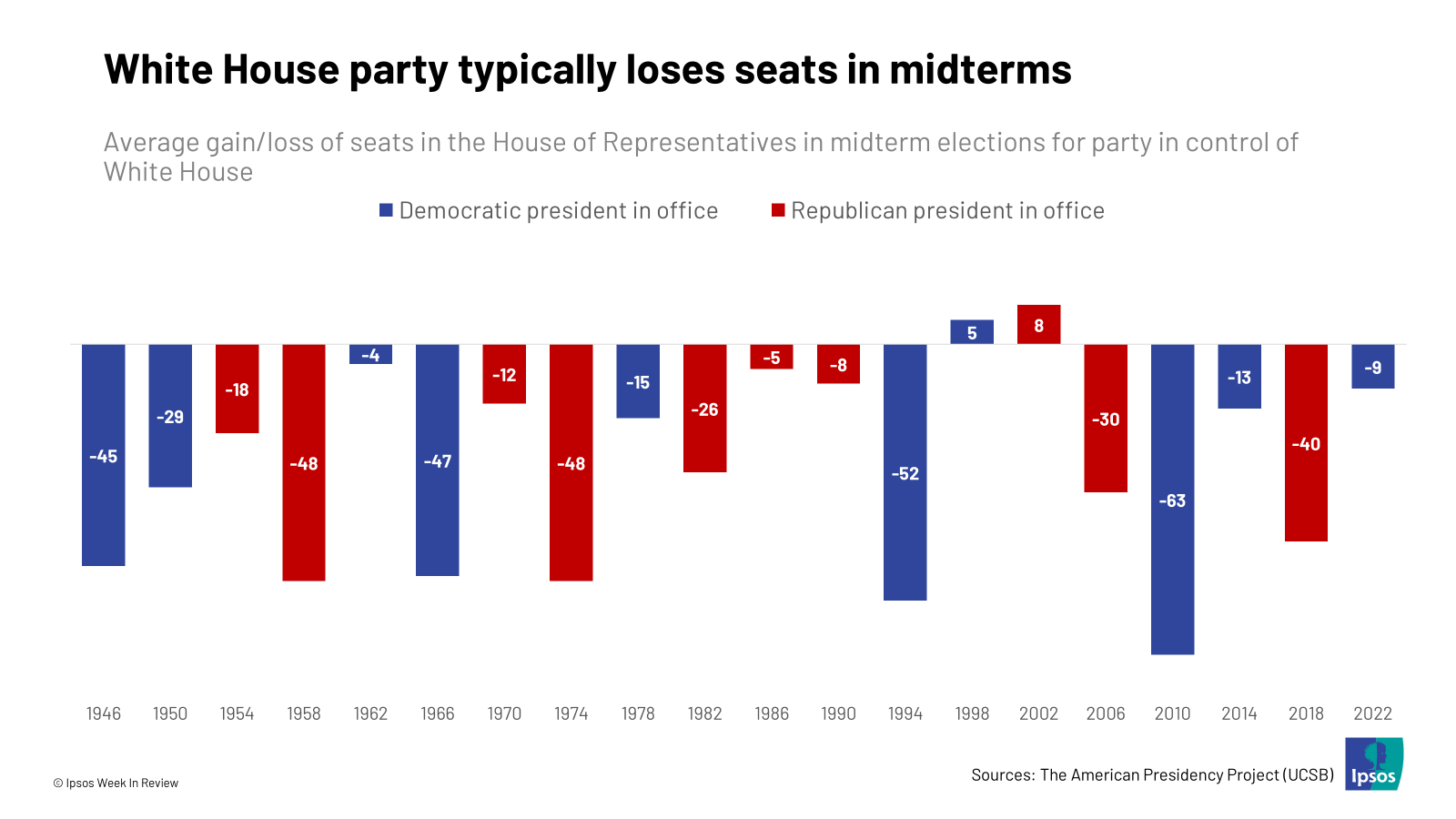
2. Where the generic ballot stands now. We should expect the generic ballot polling to change from now until election day. But the five-point advantage Democrats have on generic ballot polling right now would point to a Democratic victory this November.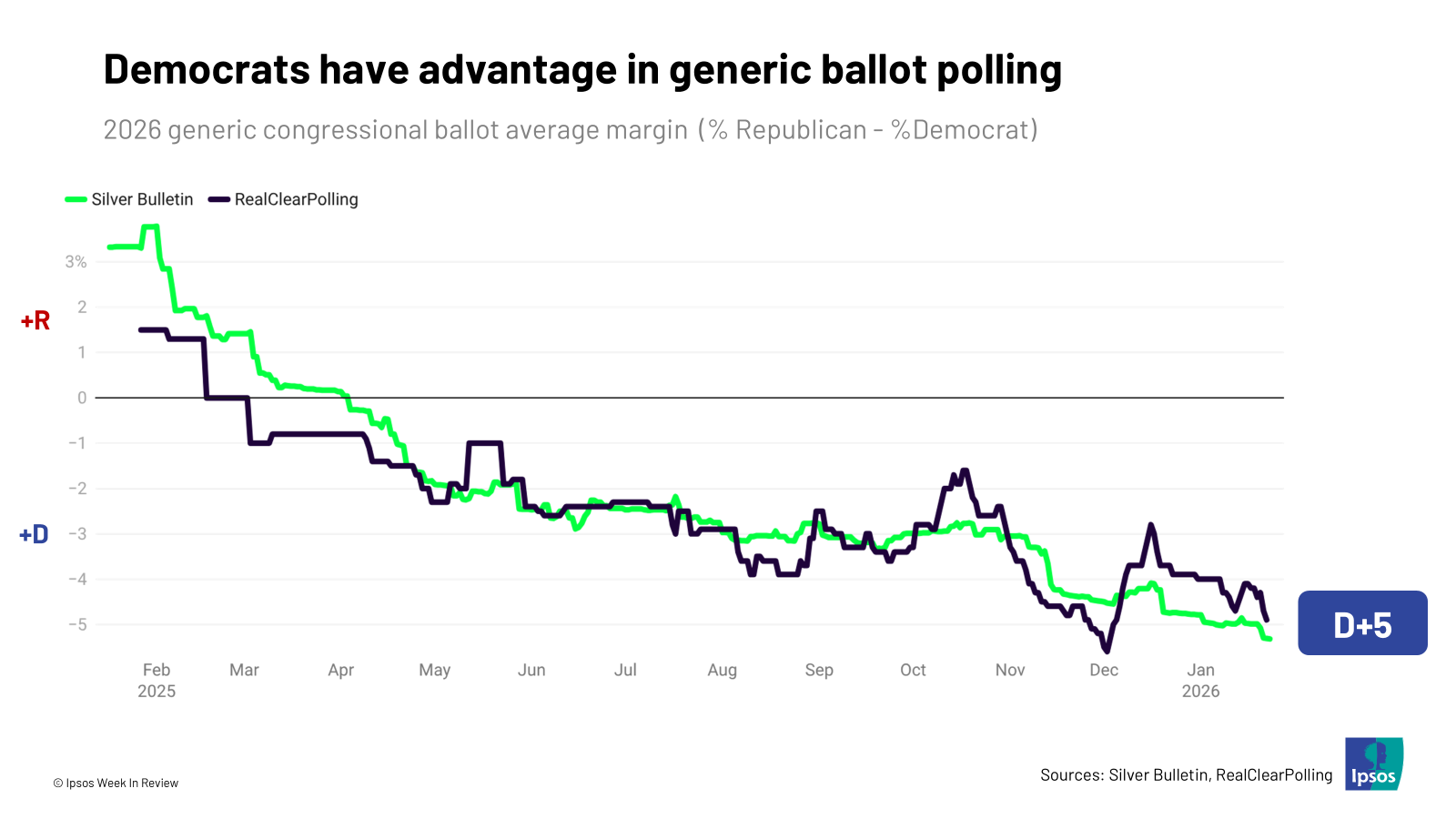
3. Consolidating four signals. Let’s consider four projections using four different factors: the historic midterm swing, off-year election results in New Jersey and Virginia, generic ballot polling, and an OLS-based Monte Carlo projection. These four projections all give Republicans less than a 40% chance of victory in the midterms. The average of the four projects that Republicans will end up with 204 of the necessary 218 seats to reach a majority.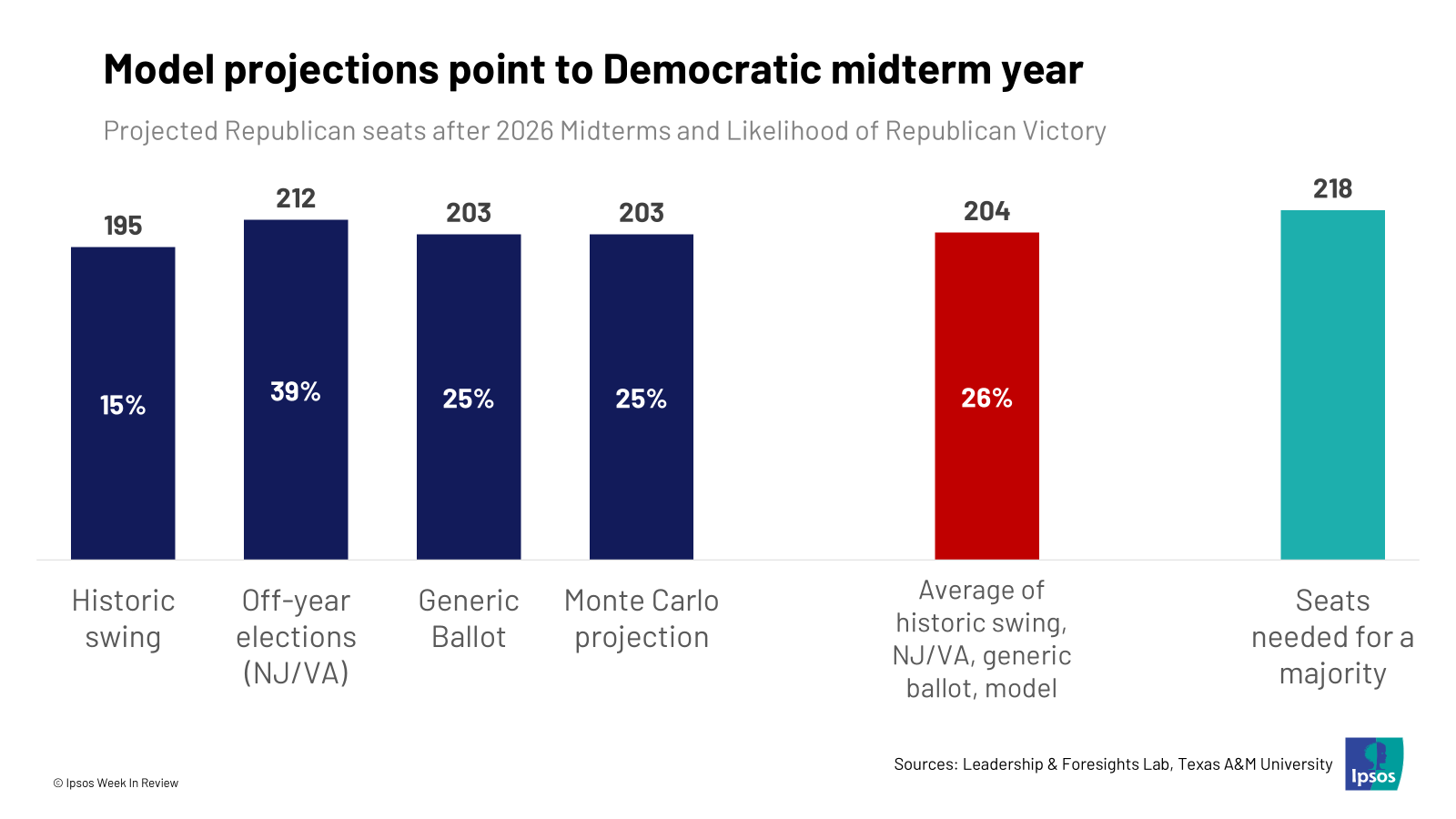
4. Redistricting effect. The eventual impact of the redistricting battle remains undecided. But even in scenarios where redistricting favors Republicans between three and eight seats, the odds still don’t tilt Republican. Redistricting certainly raises the projected number of Republican seats, but the current environment still favors Democrats.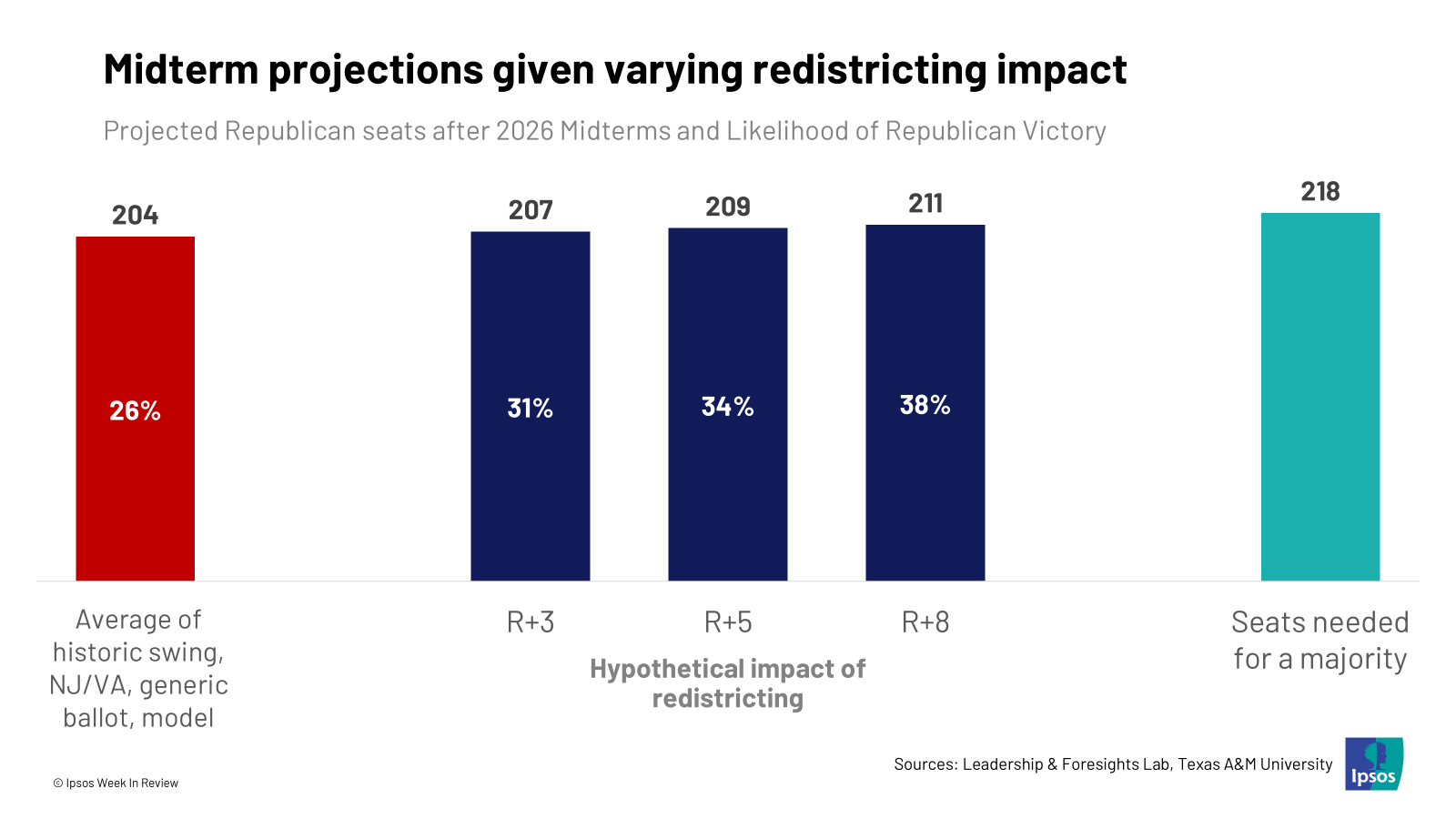
5. Why have Trump and the Republicans faded? There are many factors, but one of the biggest is Trump’s fading performance on the economy and the cost of living from the start of his presidency to now. Cost of living is poised to be the top issue in deciding Americans’ votes in the 2026 midterms. Trump has struggled to retain the broad coalition he won over in 2024 in large part because perceptions of the cost of living have not improved. Without this support, his polling numbers – and his party’s chances in 2026 – have faded.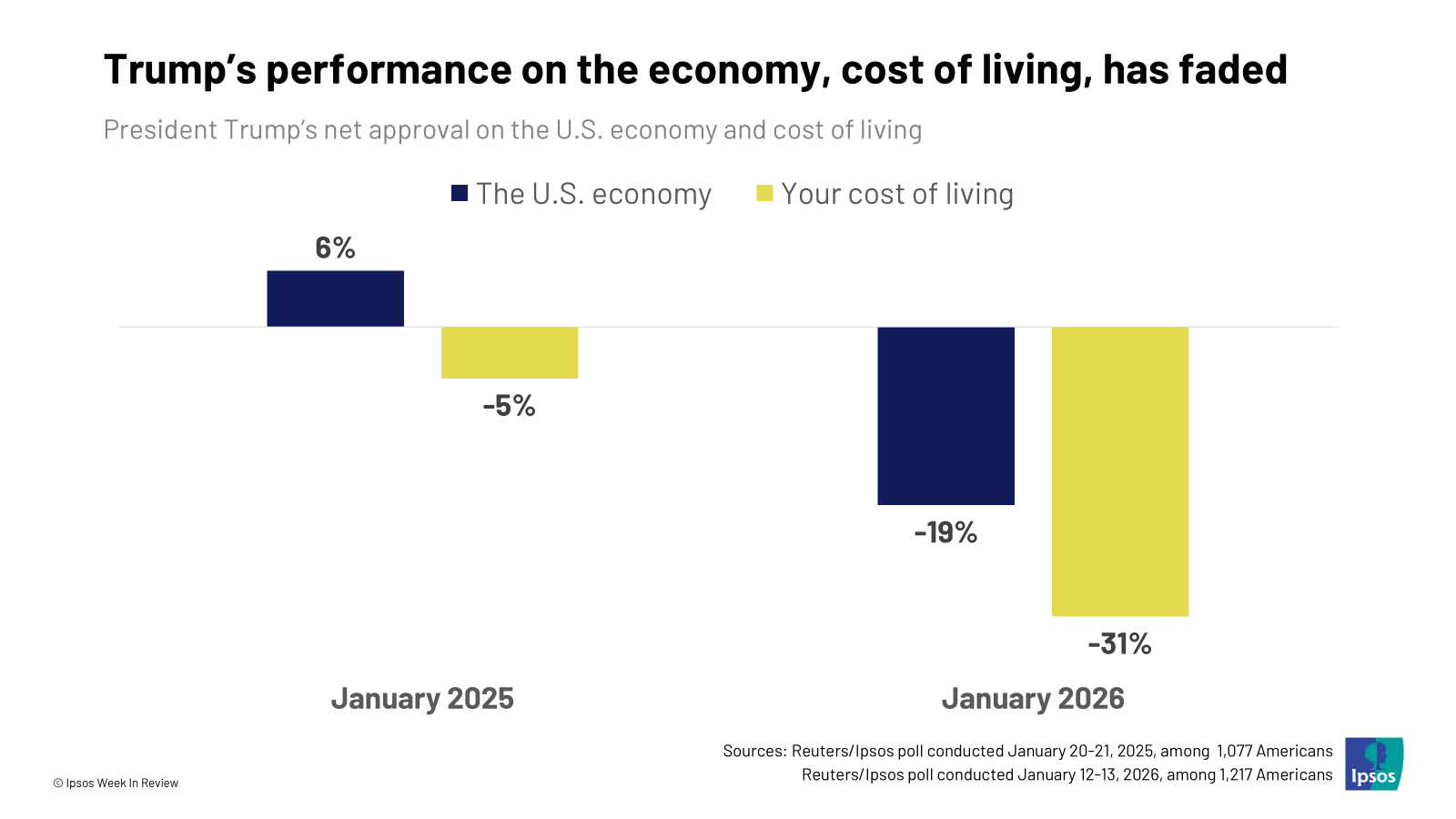
Trump began his second term in (relatively) good graces with a public that hoped he’d immediately improve the economy and the cost of living. Polling conducted at the start of Trump’s administration showed that Americans felt that tariffs would likely have a negative impact in the short-term but could potentially have a positive payoff in the long run. So far, in the public's eye, only the short-term negative impacts have materialized. And thus, the good graces have faded.
Trump’s fading performance on the economy and the cost-of-living points to his central struggle: in building out a long-term vision, he has so far failed to win over Americans’ views of the present. And if you aren’t winning the present, it becomes hard to win the future.


