Cannes 2026: From Augmented Intelligence to a Surge of Humanity
Amid fears surrounding AI, the search for meaning, and the necessity of empathy, creativity finds its balance in what defines us: our imperfections, our emotions, and our ability to inspire. Let’s take a look back at the lessons from an edition where technology took a back seat to humanity.
AI on the surface, humanity in reality
For several years now, artificial intelligence and tech platforms have taken centre stage at the Cannes Lions International Festival of Creativity. The 73rd edition was no different, at least on the surface. However, upon closer examination of the keynotes and the award winners, humanity has emerged as the new competitive advantage for brands and creativity.
Certainly, the new frontiers opened by artificial intelligence cannot be ignored. Take, for example, the virtual worlds created by Google Genie:
With a simple prompt - playable and fully customisable - which could revolutionise the video gaming industry. Demis Hassabis, CEO of Google DeepMind, reassures us that the short-term impact of AI is exaggerated (though he also warns it will become significantly more drastic in 10 years, better buckle up).
Globally, there is now more anxiety than excitement about AI developments among the public - a sentiment reflected in the Ipsos AI Monitor, which indicates that a majority of Americans (65%) are worried about AI advancements. Artist Daniel Arsham likens AI to humanity's discovery of fire: “It is both a blessing and a curse”. It's in this context that Claude, standing against ChatGPT, wins the Film Grand Prix by highlighting the dangers of advertising embedded in Large Language Models (LLMs), promoting a more ethical approach with refreshing humour, and distinctively positioning Claude vs its rivals. This is also a strong signal that technology must be at the service of humans, and not the opposite.
Reality to escape technology
Is there an alternative to this AI world? More importantly, is it desirable, necessary, and imperative? Perhaps Polaroid has the best response. Patricia Varella, their Artistic Director, notes: “We used technology to escape reality. It's likely now time to use reality to escape technology.” Listening to her elaborate on the impact of screens, networks, and AI on our cognitive abilities, burnouts, and the standardisation of creativity, one might readily agree with the need for imperfection that defines our humanity. Ironically, this is the story that a tech platform, Coinbase, winner of the Grand Prix Film Craft, beautifully narrates, liberating oneself from virtuality to live freely and at one's own pace.
Vaseline, winner of the Bronze Film Lion, also celebrates this humanity through the morning caress rituals of African mothers with their children. Creativity is not just about innovating with technology, it is fuelled by human empathy.
Trust: the new oil for creativity and brands
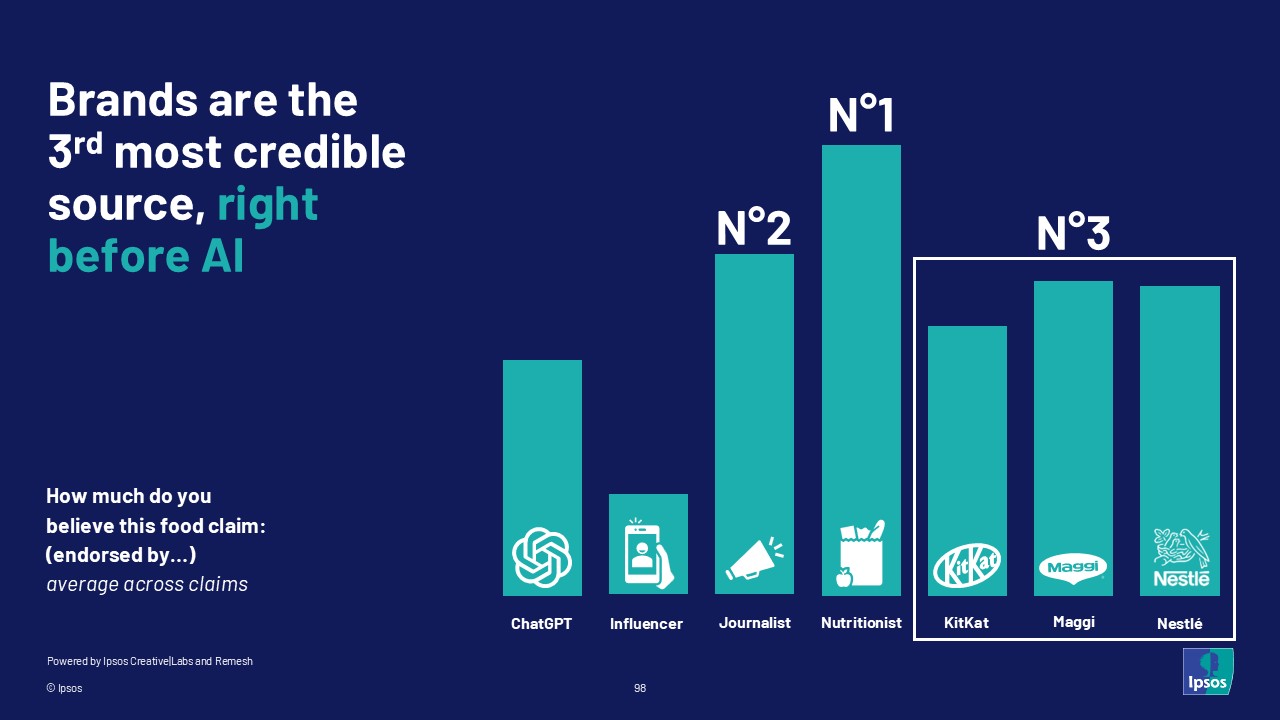
This added humanity is also a strategic concern and a point of distinction for brands. Mélanie Brinbaum, CMO of Nestlé Europe, points out: “Let's stop talking about consumers, let's talk about people.” An exclusive study conducted by Ipsos for Nestlé in the UK reveals that brands are a credible source of trust for people, coming after journalists and nutritionists, but ahead of ChatGPT and influencers. This is understandable. Faced with economic and political uncertainties, the proliferation of conflicts, and the abundance of fake and artificially generated content on networks, people seek reference points and reliable sources of information. Brands, guided by their economic stakes, can be a source of trust if they act transparently and with an increasingly relevant superpower: empathy.
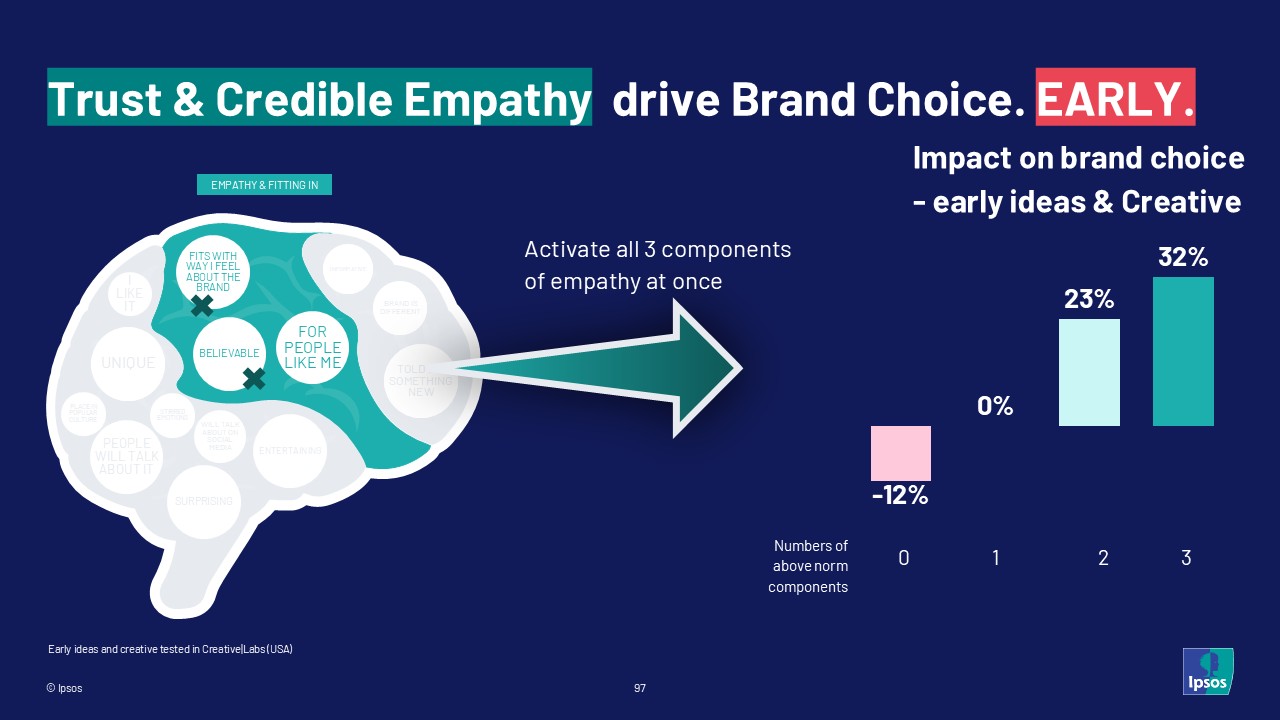
“The Misfits Way”, a meta learning based on Ipsos’ twenty of years of experience in comms strategy research, suggests that creative ideas that activate the dimensions of brand resonance, credibility, and relevance can achieve up to 32% more effectiveness. Building trust with credible empathy starts at the big idea stage.
When purpose drives growth
AXA illustrated this brilliantly with its '3 Words' campaign, which had already won the Grand Prix Titanium in 2025 and was awarded the Grand Prix Creative Effectiveness this year, showing a 9% uplift in acquiring new contracts.
This somewhat contradicts two of the most renowned Cannes gurus, Mark Ritson and Byron Sharp, who view brand purpose as a distraction to be sacrificed for mental availability and the primary objective of brands: driving business and profit. AXA demonstrates that an alternative approach is possible: a brand can successfully express and act on a higher societal dimension if it first meets the category's expectations and is legitimate to carry this message. By aligning the brand's purpose with the audience's values, a purpose-led campaign like '3 Words' can be a source of additional growth.
Humans after all
Beyond growth and differentiation, is this surge of humanity what advertising, creativity, marketers, and advertisers need to showcase to differentiate themselves from machines and the system? A new campaign by AXA and Publicis exemplified by Ulrike Decoene and Agathe Bousquet, supports and amplifies the journey of Afghan rapper Sonita in highlighting the new apartheid faced by women in Afghanistan, and seeking to shift global perceptions. A beautiful reminder for all Cannes Lions attendees that the greatest risk, whether we are talking about technology, creativity or the wider world we live in, is taking no risks at all and losing our human touch.
This is the true imperative: nurturing bold and brave creativity, as well as creating more distinctive empathetic connections between brands and people. So let’s make sure we augment intelligence with AI – leveraging its capabilities to expand our knowledge depth and analytical capabilities. But let’s keep on embracing our humanity and leverage that as a springboard for growth and meaning.
And here is the best (Misfits) Way to do so - getting into the shoes of people, early on: exploring how they relate to your big idea and how much this credibly connects with the brand, finding out how your early creative expressions make the brand distinctive and tell a unique story.
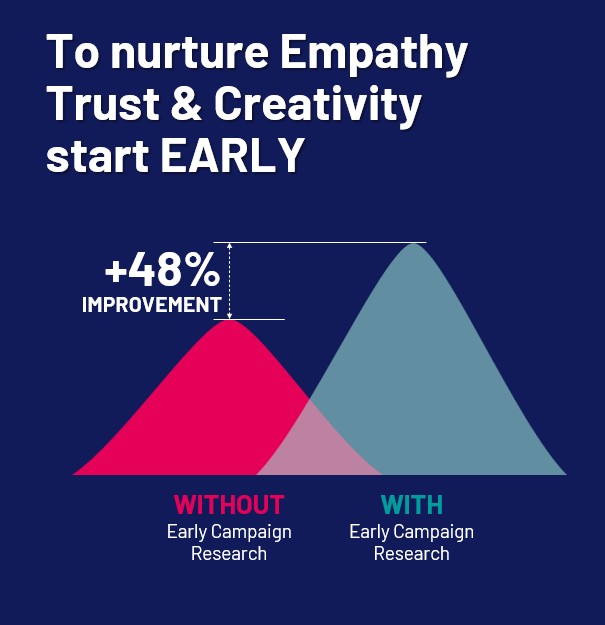
Research on research shows that brands that run early campaign research with Ipsos see a 48% improvement in Creative effectiveness vs those who don’t – this is clear evidence again that humanity provides the best fuel to augment creativity.
- Do you want to know more about Cannes 2026 winners and deep dive on specific Cannes insights? Don’t hesitate to reach out!
The author(s)
-
 Arnaud DebiaGlobal Service Director, Creative Development, Ipsos

![[Webinar] Augmented Creativity: Turn Cannes Lions inspiration into creative effectiveness](/sites/default/files/styles/list_item_image/public/ct/event/2026-09/cannes-2026-augmented-creativity-carousel-main.webp?itok=dIVqWne_)