• Indian Public Relation industry grew 11% in FY26 to reach ₹3,230 crore; accounting for 12.6% of the Asia-Pacific market.
• Government's share of top client categories has nearly tripled, from 4% in 2022 to 11% in 2026, even as private corporates slip and start-ups surge nearly 4X, marking fundamental shifts in who is buying Public Relations in India
• Reputation now drives real business outcomes; 96% credit PR with building investor confidence, an equal 96% with customer loyalty, and 83% with crisis resilience
• AI investment has more than tripled in three years, from 2% to 7% of revenues, yet giants to mid-sized to emerging firms are placing entirely different strategic bets
Ipsos Survey reveals 59% of Indians plan to watch the tournament, strong backing for Argentina, and high anticipation shaped by iconic players, late-night viewing, and weather uncertainties
Western Markets Show Greater Skepticism;
India Sees Strong AI Adoption and Optimism, Alongside Nuanced Trust Dynamics;
New insights reveal Urban Indians are embracing artificial intelligence at scale while calling for transparency and responsible deployment
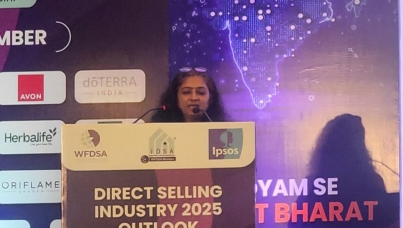
Industry Records Sustained CAGR of 6.5% Over Six Years
• Women direct sellers increase from 44% to 48% of the total direct selling workforce
• Northern region leads with 27.6% share in gross sales, followed by West at 25.5%
• Wellness products dominate sales; cosmetics and personal care remain second-largest segment
• Maharashtra records the highest state-wise contribution with 15.3% share in gross sales