Large surveys and survey transformation
Scotland’s ‘big surveys’ are key parts of our national data infrastructure. They provide crucial information to policy makers, academics, charities, journalists and others about who we are, how we live, and our experiences. They inform decisions about public policy and help assess whether those policies are working, and who they are working for.
Ipsos is incredibly proud to have delivered Scotland’s largest continuous random probability face-to-face survey, the Scottish Household Survey, since it began. We also deliver the Scottish Crime and Justice Survey, in partnership with the Scottish Centre for Social Research. In recent years, survey commissioners have been increasingly interested in how surveys can be improved and ‘future proofed’ to deliver maximum value to the public purse. Ipsos has been at the forefront of methodological research around survey transformation, including mixed mode surveys, response rates, and more.
Senior Team
 | Chris Martin, Research Director, has directed the Scottish Household Survey since 2012 and the Scottish Crime and Justice Survey since 2018. Chris is highly experienced in both managing large datasets and complex statistical analysis. He has led a number of studies on data quality and how survey approaches shape results. In recent years, these have included examining the changing the mode of the SHS from in-home face-to-face interviewing to remote interviewing during the pandemic: and examining the impact of response rates on SCJS and SHS estimates. He strongly believes in evidence-based making and understands how analysis can inform policy. |
 | Rachel Ormston, Research Director, has worked on all the major Scottish Government surveys over the last 20 years. She was co-director of the Scottish Social Attitudes survey for a decade and has a particular interest in questionnaire design and in presenting survey findings in an accessible manner. Recently, Rachel has led cognitive testing on new questions around domestic abuse on the SCJS, and directed a number of methodological studies examining options for survey transformation (including the LTSS study below). |
Case studies
The Scottish Household Survey
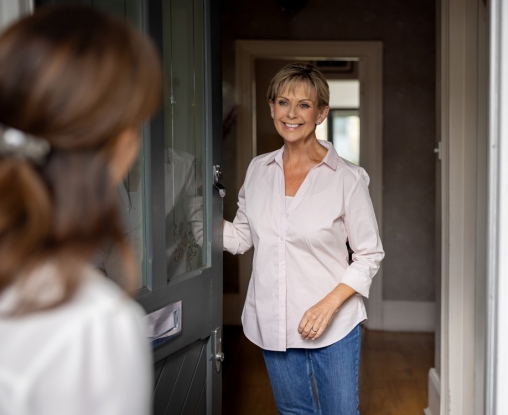
The Scottish Household Survey has been run by Ipsos on behalf of the Scottish Government since 1998. Our face-to-face interviewers speak to around 10,500 households each year on a wide range of topics (including transport, household income, participation in culture and sport, volunteering, and many others). Its central purpose is to provide robust evidence on the composition, characteristics, attitudes and behaviours of households and individuals. A sub-sample of respondents take part in the Scottish House Condition Survey (SHCS), which also involves a surveyor visiting their home to collect data which, among other things, underpins estimates of fuel poverty in Scotland. Over the years, Ipsos has helped evolve the survey so it continues to provide robust data to inform Scottish policy, including transitioning the survey temporarily to remote interviewing during the Covid-19 pandemic.

The Scottish Crime and Justice Survey
The Scottish Crime and Justice Survey involves face-to-face interviews with around 5,000 adults each year. It provides key information on victimisation rates, the impact of victimisation and fear of crime. Crucially, it provides an independent measure of crimes that may not be reported to the police providing important data to be read alongside police recorded time statistics. A self-completion section (collected during the interview, with interviewers passing their device to the respondent to complete particular questions) collects information on particularly sensitive crimes (such as partner abuse or sexual crimes). Ipsos delivers the SCJS in partnership with the Scottish Centre for Social Research. We also lead on cognitive testing of new questions, including recently testing revised questions on experiences of domestic abuse.
The Scottish Climate Survey
The Scottish Climate Survey is a nationally representative survey for Scottish Government, exploring Scottish adults’ awareness, understanding and experience of climate change-related issues. Findings are used to inform decision-making and ongoing monitoring and evaluation of relevant policies. The survey is conducted using a ‘push-to-web’ approach, drawing on Ipsos’ considerable experience of designing and implementing such surveys. Respondents are invited to participate by post and complete the survey online or through a paper postal questionnaire. Findings from the baseline survey of over 4,000 adults across Scotland were launched in April 2025 and referenced in First Minister John Swinney’s Earth Day message.

Mixed mode surveys
Our research on Mixed mode surveys, to inform the Scottish Government’s long-term survey strategy, explored the key issues, potential mitigations, and trade-offs involved in moving the Scottish Government’s large-scale surveys from primarily face-to-face to another mode or combination of modes. Drawing on literature, interviews with methodologists and commissioners, and case studies of similar surveys out with Scotland, the report provides a detailed framework for future conversations and decisions about Scotland’s big surveys.