
The Vanishing Front End as a Threat to Impulse Purchasing
Ipsos has done a lot of research over the years to help clients optimize their impulse sales across a variety of categories at the front end of retail stores. Recently, we have been receiving more questions from clients about the impact of self-checkout and new shopping technologies on impulse purchases of products sold in front end checkout lanes. With the implementation of new technologies, some front end categories have experienced sales declines, and past strategies for impulse product merchandising are becoming out of date.
What are these new shopping technologies and how are they affecting impulse purchases at the front end?
Self-checkout is today's challenge to impulse sales
The use of self-checkout lanes has grown dramatically over the last ten years, posing an increasing threat to sales at the front end of the store. The time waiting, and possibly shopping, as the cashier scans and bags shopper's products has been eliminated with self-checkout lanes. There may also be less retail space and fewer products presented with self-checkout than there is with traditional checkout lanes. Self-checkout does provide labor savings for retailers, and it can speed checkout for shoppers. But it also reduces the physical opportunities for impulse purchasing at the front of the store.
Mobile scanning is an emerging threat
Mobile scanning technology eliminates the need for traditional cash registers as product scanning is done by the customer while shopping.
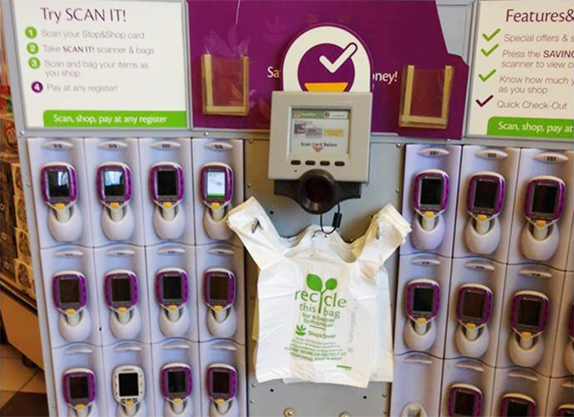
Two current examples of this are Ahold's Scan-It technology at Stop & Shop and Giant supermarkets in the Northeast and Fetch Rewards in the Midwest.
Ahold's Scan-It technology is available in over 300 stores today. Shoppers can either pick up a handheld Scan-It device at the front of the store, or they can download the Scan-It mobile scanning app to their smart phone. With Scan-It, shoppers both scan and bag their groceries as they shop. Scan-It keeps track of their shopping total, facilitates budgeting, and offers personalized coupons and discounts. When finished, shoppers take their groceries to the self-checkout area, upload their bill, and pay.
Fetch Rewards is a privately held company based in Madison, Wisconsin that expects to be in more than 100 stores by the end of 2015. Similar to Scan-It, the shopper uses the Fetch Rewards app to scan products as they shop. Fetch Rewards tallies what has been spent and offers exclusive coupons to users. In addition, the Fetch Rewards app searches for available coupons and automatically applies these discounts. Users accumulate points based on their spending, which can be redeemed for store products. When finished shopping, the customer goes to a dedicated Fetch checkout lane where they upload their bill and pay.
With both Scan-It and Fetch Rewards, the checkout process is significantly accelerated. Due to this, the use of automated coupons and discounts impacts shopper product selection in a way that may reduce impulse purchasing.
Online grocery shopping is small but growing
Peapod and a few other retailers have offered online grocery shopping for many years, but it has yet to catch on in a big way. However, a growing number of retailers are developing their online shopping capabilities, and it represents another threat to impulse purchasing. With groceries delivered to homes or curbside at the store, the customer does not see products in the checkout lane as they may not even enter the store.
Amazon is currently testing grocery delivery on the East and West Coasts. Target delivers groceries in Minneapolis, and Kroger is expanding delivery beyond Cincinnati. Walmart has made online shopping investments in home delivery, and has recently expanded curbside pickup in eight new markets. With curbside pickup, shoppers order their groceries online, reserve a same-day time slot for curbside pickup, and retrieve their groceries at a nearby Walmart without ever entering the store.
What does the front end of tomorrow look like?
The front end of tomorrow may look quite different. With more efforts to shape shopper behavior in ways that may reduce impulse purchasing, the traditional method of checkout will be in strict decline.
Many stores already have wireless infrastructure that can recognize the location of shoppers. Wireless sensor beacons can also transmit messages to mobile devices. These and other technologies offer the potential to recognize shoppers as they enter the store, send personalized offers, and provide the most efficient route through the store.
Furthermore, NCR has a patent application for a "whole store scanner" system that may eliminate the need for traditional checkouts entirely. The system would use dozens of cameras in each store to help recognize a customer when they enter the store and keep track of items put in or taken out of their shopping cart. This would eliminate the need for retailers or shoppers to scan products. Finally, to check out, shoppers would just pick up their electronic or paper receipt.

Implications for the future of impulse shopping
Two converging trends are changing the grocery shopping and checkout experience. These trends threaten impulse sales, particularly at checkout, where impulse purchasing has traditionally occurred.
- On a physical level, self-checkout, mobile scanning, and online grocery shopping are reducing the retail space and shopping time spent in checkout lanes. This consequently reduces the selling opportunities for impulse purchase items.
- On a behavioral level, mobile scanning with the integration of automated coupons and discounts is impacting shopper behavior and may reduce impulse purchasing, particularly during checkout.
Of course traditional checkout lanes are still prominent in most stores today. However, it is critical to anticipate the impact of key trends on the grocery shopper's experience and behavior. This is particularly urgent with regard to impulse purchase items sold during checkout and therefore the most vulnerable to sales loss. The following must be assessed:
- How is self-checkout and new technology changing the shopping and checkout process?
- What is the impact of self-checkout, mobile scanning, and other new technologies on shopper behavior, specifically with regard to impulse purchase items?
- How do digital tools for list creation and automated discounts impact impulse purchasing?
- How can new shopping technologies be harnessed to support unplanned, impulse purchases?
By answering these questions, manufacturers and retailers can develop informed, shopper-centric solutions to ensure that sales of impulse products can thrive.

![[WEBINAR] TOAST 2026: Under Pressure - Fewer, Fragmented, Fought-For](/sites/default/files/styles/list_item_image/public/ct/event/2026-07/thumbnail-templates_1_0.png?itok=MxL-wPJW)
