
Why charging logistics and infrastructure could be a game changer in making electric vehicles more accessible
KEY TAKEAWAYS:
- Cost and convenience are the two main hurdles keeping most people from considering an EV.
- When non-EV owners are asked what would encourage them to buy or lease an electric or hybrid vehicle, free public charging stations is the most popular incentive, meaning that policy-makers may have an important role in helping the EV market to mature in the U.S.
- Some demographic groups remain resistant to getting an EV, even when presented with solutions to existing EV adoption barriers.
Electric vehicle ownership is just beginning in the U.S. Only about 2% of Americans currently own electric vehicles. But with upcoming EV mandates in California and New York, an influx of subsidies and spending from the Inflation Reduction Act and growing climate change concerns among consumers, with the right infrastructure, the EV market is set to take off.
The question is how to supercharge the EV market? Affordability and charging logistics are the main barriers to entry for consumers, creating an opportunity for policymakers, particularly through infrastructure, to remove some of those hurdles. Given the influx of more affordable electric vehicles coming onto the market, infrastructure solutions like a comprehensive network of fast-charging stations, will be crucial in maturing the U.S. EV market.
But solving issues around affordability and practicality may not drive everyone toward EVs, according to a nationally representative survey from Ipsos’ KnowledgePanel. Lower-income respondents and people living in rural areas report being unlikely to consider buying EVs even if issues around charging logistics and accessibility are solved. These populations represent areas where policymakers and legislators may need a more targeted and strategic approach to encourage an equitable EV rollout for the industry.
A snapshot of the electric vehicle market: Who is buying EVs?
Electric vehicles overall remain uncommon at the macro level among consumers. The vast majority of vehicle owners (96%) still drive gas-powered cars, while only about 2% own fully electric vehicles.
The people who currently own or are most likely to consider buying or leasing an EV are more likely to be white, make more than $100,000, live in an urban area or live in the western region of the United States.
Taken together, this reflects the strong appeal the EV market already has with wealthy, urban residents while also underscoring the inroads the industry must carve out when courting consumers outside of that narrow demographic.

The current EV infrastructure landscape
Right now, at-home charging is a crucial way EV owners fuel their vehicles. Not surprisingly, nearly all EV owners (87%) have electrical outlets within 20 feet of their parking space, allowing them to charge their car at home.
The groups that do not have access to at-home charging are also least likely to seriously consider driving EVs. For example, people in the Northeast, lower-income respondents, and Black or Hispanic Americans are all less likely to have access to charging at home. Given how important at-home charging is to EV owners, not having access to these outlets poses a significant infrastructural hurdle for convincing non-EV owners to make the switch. Policymakers, who can influence the direction of the nation’s infrastructure, are uniquely positioned to help address these logistical challenges for consumers.
What is keeping consumers from buying EVs? Infrastructure concerns loom large
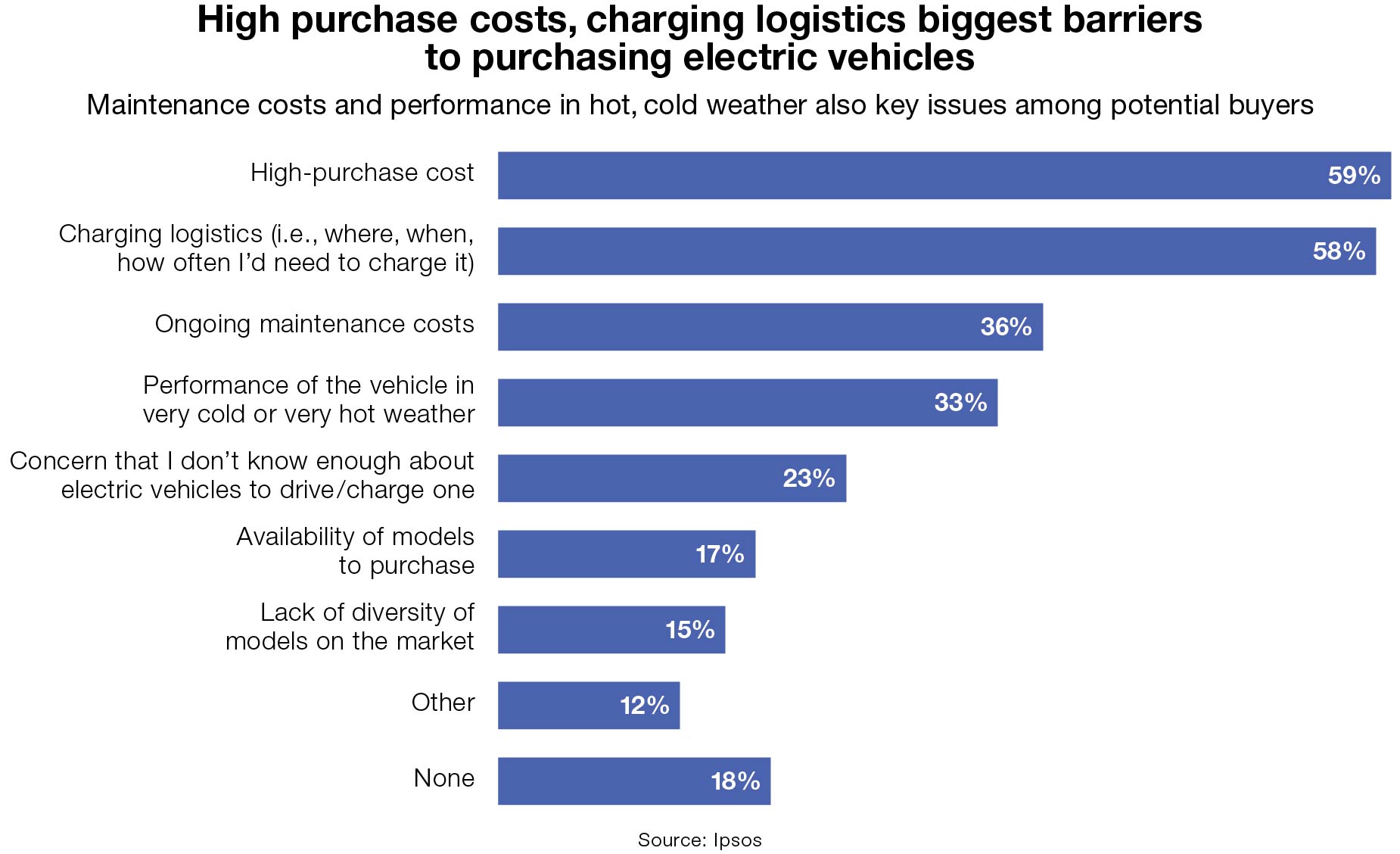
Cost and convenience are the two hurdles keeping most people from considering an EV. Three in five respondents say they are concerned with the high costs of EVs (59%) or charging logistics (58%) when considering whether to buy an EV in the next two years. New subsidies like the Inflation Reduction Act may relieve this—though they also introduce new headaches with limitations on which vehicles are eligible—but more affordable electric vehicles are also set to hit the market in the foreseeable future. That may leave charging logistics as the stickier issue to solve for consumers.
Investing in EV infrastructure would encourage more people to go electric
When non-EV owners are asked what would encourage them to buy or lease an electric or hybrid vehicle, free public charging stations is the most popular incentive, with 41% of respondents saying it would encourage them to buy EVs.
Notably, more urban than rural respondents would consider EVs if they could access free public charging stations. Interestingly, urban Americans are less likely to have access to at-home charging, indicating that legislators investing in public charging could also help ease some of this infrastructural burden.
Public charging stations and fast public chargers offer policymakers an opportunity to set the stage for greener roads. Ipsos Director Joann Lynch feels that, “with the right funding, insights, and policy, legislators can be the heroes in this next phase of electric vehicle adoption in the U.S.”

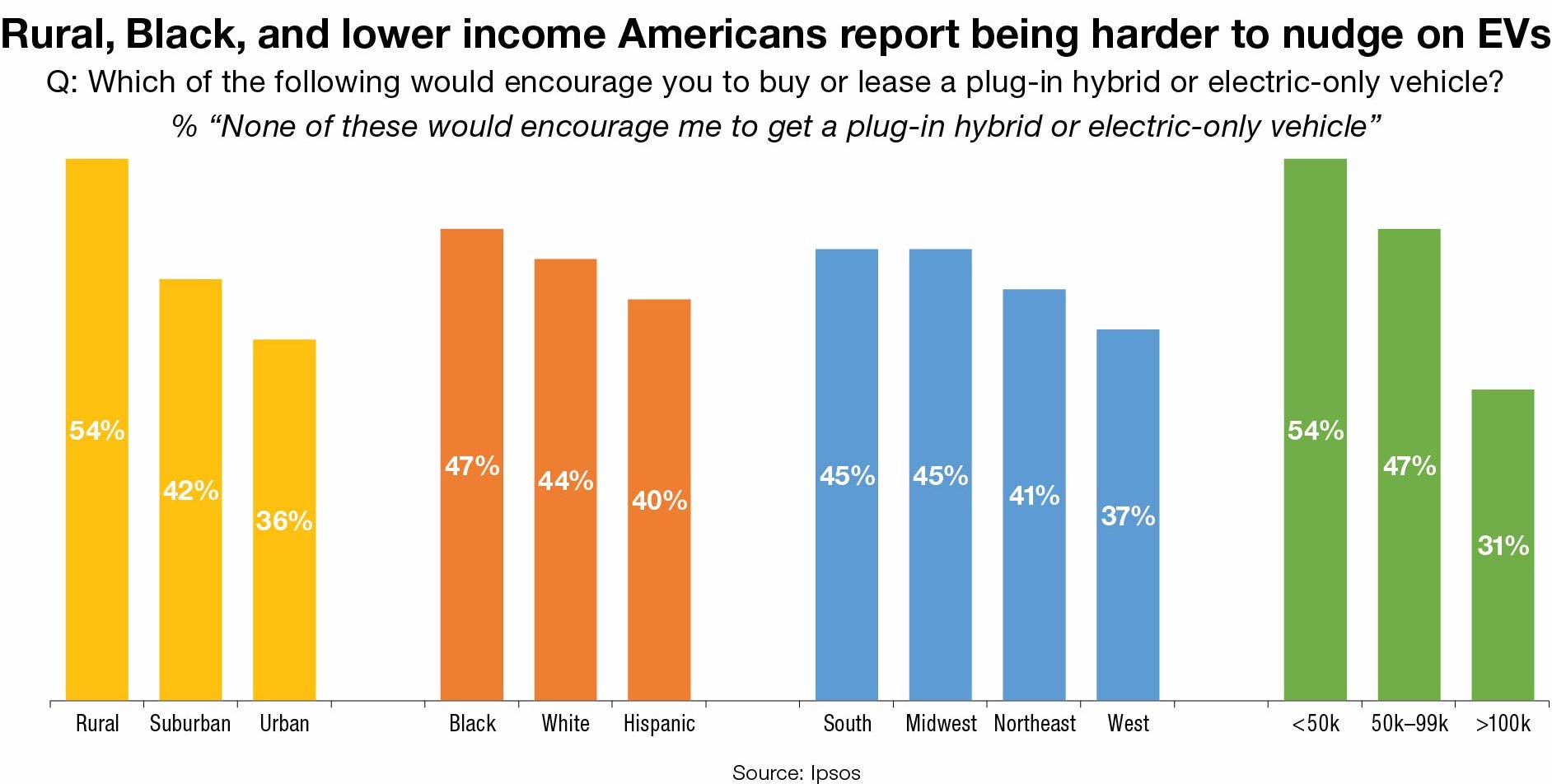
Even when presented with many ways of addressing the problems of owning an EV today, some parts of the public remain more resistant to getting an EV. Black (47%), lower income (54%), and rural (54%) respondents are the most likely to say that none of the solutions listed would encourage them to buy or lease a plug-in hybrid or electric-only vehicle. While making improvements to the practicality of owning an electric vehicle may drive more people towards EVs, more needs to be done to ensure there is a more equitable rollout of electric vehicles.
Conclusion
With the right infrastructure, the ubiquity of electric vehicles is poised to explode in the near future. New government requirements, an influx of affordable EVs, and an increasing level of concern about the environment are driving early adopters towards EVs. Now policy needs to be developed to reshape America’s roads and communities to ensure the rest of the country can choose electric vehicles too.
Cost and charging logistics are the two things holding non-EV owners back from considering these vehicles. Since many companies are already working to provide affordable EVs, it may be beneficial for legislators to concentrate on improving charging infrastructure. Though, as this data shows, racial, geographic, and income disparities are present in the EV market, an issue that may persist and require more proactive policy solutions to address in the near term.
![[WEBINAR] AI in Higher Education: How AI Is Reshaping Teaching and Learning](/sites/default/files/styles/list_item_image/public/ct/event/2026-10/How%20AI%20Is%20Reshaping%20Teaching%20and%20Learning.png?itok=XYdLaI-4)

![[WEBINAR] Winning B2B Buyers: AI Gets You Considered; Trust Gets You Selected](/sites/default/files/styles/list_item_image/public/ct/event/2026-10/Winning%20B2B%20Buyers%20AI%20Gets%20You%20Considered%20Trust%20Gets%20You%20Selected.png?itok=Q4kElwY2)