The country is still in heading in the wrong direction to 94% of Brazilians, repeating the result of previous months. This decline in confidence in Brazil was trigged in January 2015 and stabilized at very high levels since then.
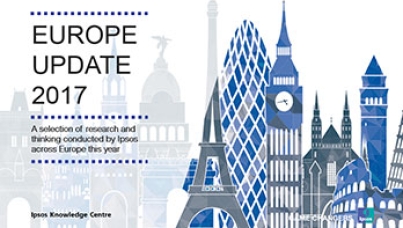
Happy New Year! January’s edition of Ipsos Update features new papers on Audience Measurement and Sensory Spatial Segmentation, Canada's "critical numbers", the Digital Gov' Barometer, Perils of Perception, and a round-up of some of our research in Europe over the past year.
The average global economic assessment of national economies surveyed in 26 countries is down one point this wave with 46% of global citizens rating their national economies as ‘good’.
A research report for Her Majesty's Inspectorate of Constabulary and Fire & Rescue Services (HMICFRS) provides insights into current perceptions of crime, safety and local police, along with public interactions with the police.
The 2017 Climate Change Report report provides the findings of the annual climate change research conducted in Australia by Ipsos Social Research Institute.
Some people like a sweeter soft drink while others prefer an aromatic flavor profile. Correctly identifying consumer preference segments is key to driving sales success.
With the pace of change quickening, we ask Council members about the challenges they face in their day to day activities; when it’s right to pursue corporate activism, and the risks and rewards of doing so; the importance of the ‘employer brand’; and whether Millennials truly a different audience from a communications perspective?
We are entering the Fifth Age of Audience Measurement. It is an age where methodologies are being re-calibrated in response to a fast-changing media environment and where the quest for total understanding of audiences is higher than it has ever been. It is also an era where politics and economics are far greater barriers to progress than technical concerns.
In this paper we’ll outline what we have identified as the four key reasons we are seeing a crisis in trust, and importantly what brands and advertising needs to do to rebuild that trust.