Know the New America & Beyond: November 2026
Americans spoke loud and clear on midterm Election Day, America’s chance to change political leadership halfway through a president’s term: They wanted change from Donald Trump’s Republican party, and they got it — as Democrats took over both the House and Senate with the biggest margin of victory in 50 years.
Now what do they want Democrats to actually do?
A new Reuters/Ipsos poll conducted in the immediate days after the election shows that some of Americans’ top priorities are to ease international tensions. A strong majority of Americans (71%, including 51% of Republicans) want Congress to end the Iran war. A majority (61%) also want Congress to repeal the Trump administration’s tariffs.
What Americans don’t want? More political conflict. Two in three Americans (64%) are concerned that the new Congress will spend too much time investigating Trump according to the Reuters/Ipsos poll — including half (50%) of Democrats.
Yet conflict between the two sides is all but inevitable. That leaves many unknowns for businesses to prepare for. If you’re trying to figure out what to do next, here are nine questions companies doing business in the U.S. should be asking after the midterms.
Read on to discover the latest insights on America from Ipsos — please contact us to help you navigate this uncertain environment.

9 questions companies should be asking after the U.S. midterm elections
After Democrats retook Congress, there’s plenty of uncertainty for brands operating in America. Here’s what you should be asking if you want to find success.
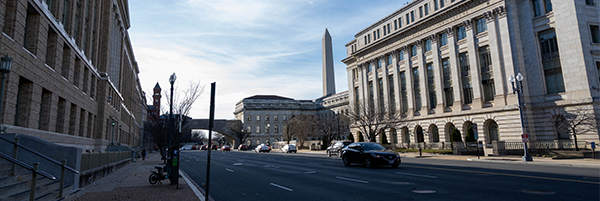
Americans want Democrats to end the Iran war, repeal tariffs and work with Trump
Majorities of Americans want the newly elected Democratic-majority U.S. Congress to act to end the war with Iran and to repeal tariffs put in place by President Donald Trump, signaling demand for quick action to address the high cost of living, a new Reuters/Ipsos poll found.
- Five takeaways from the midterms and an early look at factors that will shape the 2028 election - Read more

Americans are more willing to give up data for discounts
While the vast majority of Americans (86%) assume companies are tracking them, they’re also willing to trade some privacy for deals, according to new data from the Ipsos Consumer Tracker.
- How will we shop in the future as technology evolves? - Read more
Trump’s approval isn’t budging from its low point
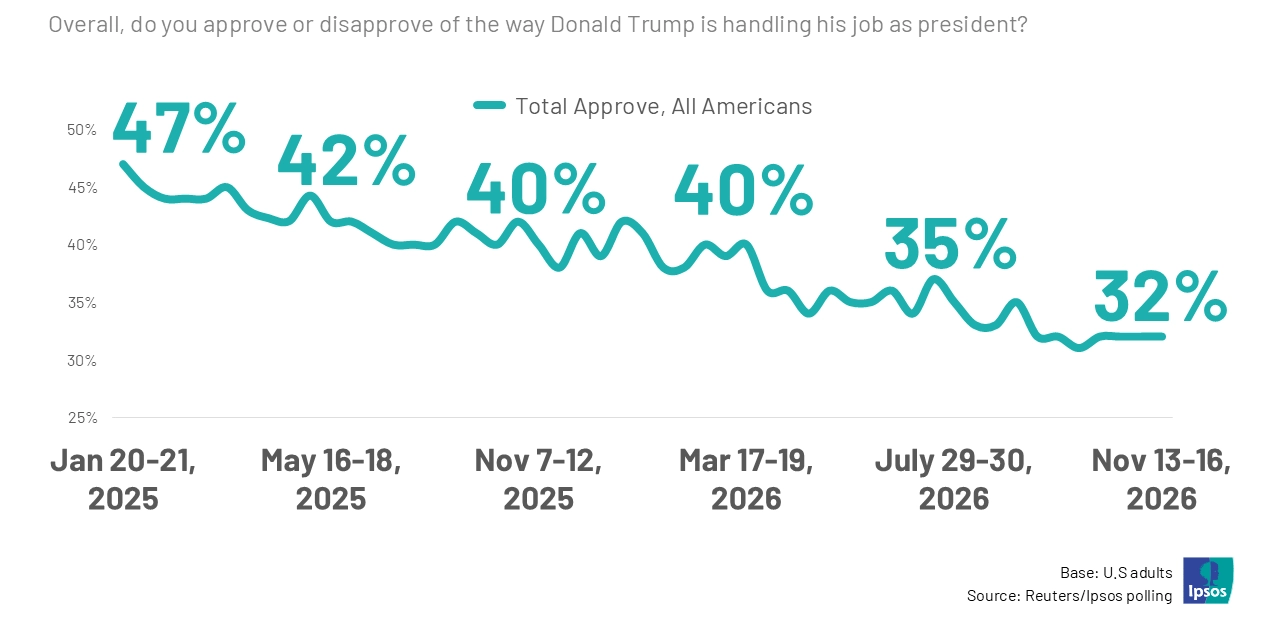
President Donald Trump’s approval rating hasn’t budged in the wake of the midterm elections: It’s sat solidly at 32% for two months, with just one reading at 31% in between — lower than any point in his first term.
As attention begins to turn toward the 2028 presidential election, this low approval may shape what people want in the next Republican presidential nominee: 52% of Republicans and independents who lean Republican say they want their candidate to take a different approach to governing than Trump, while 46% want the next nominee to follow the same path, according to Reuters/Ipsos polling.
American consumer confidence rebounds, but remains low
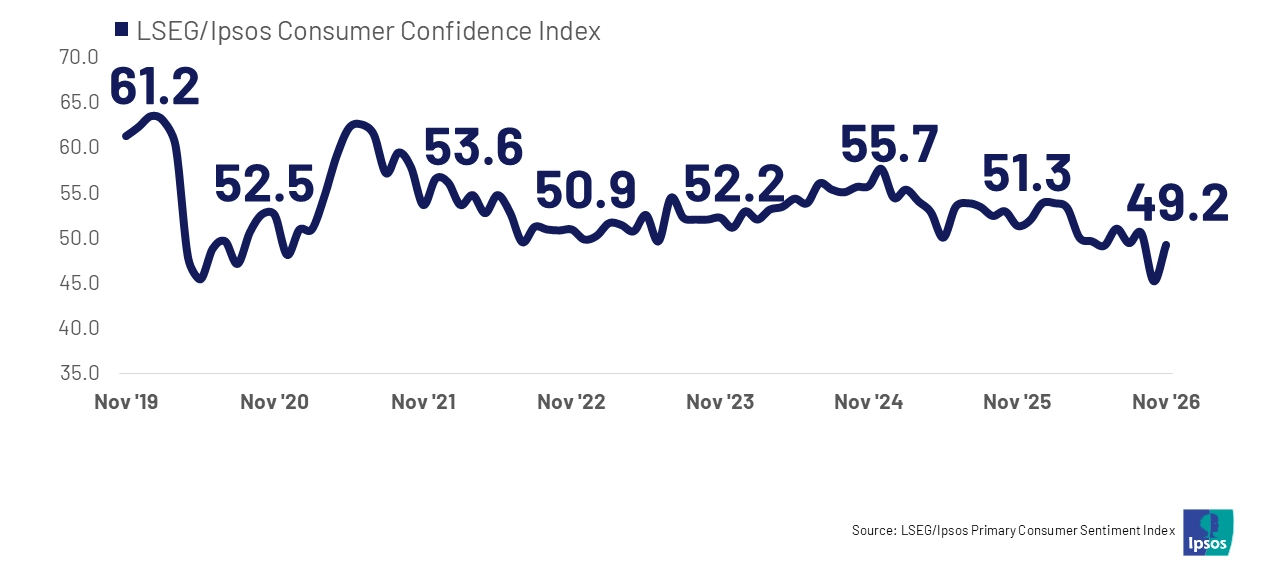
Americans’ confidence in the economy bounced back in the days before the U.S. election, after a major drop the month before.
But the LSEG/Ipsos Consumer Confidence Index’s reading of 49.2 in November means that six months of the year have been at or below 50 — an unfortunate mark that matches what we saw after COVID in 2020, and hadn’t seen since 2013 before that.
What the rest of the world thinks
The view from Brazil
Brazilians increasingly distinguish between the United States as a country and the actions of its government. While recent developments under the Trump administration have contributed to a more critical perception, overall attitudes toward the U.S. still lean positive. A majority describe Brazil’s relationship with the United States as good (59%), and 57% hold a favorable opinion of the country.
At the same time, views of President Donald Trump are considerably less favorable: Brazilians give him an average rating of 4.0 out of 10, 61% disapprove of his administration, and 60% believe the global impact of his policies is negative.
Recent Ipsos findings suggest that these perceptions are increasingly shaping how Brazilians interpret U.S. actions. Three in four believe the tariffs imposed on Brazilian products were politically motivated rather than driven by trade concerns, while many express discomfort with what they perceive as external interference in Brazilian affairs.
Overall, the United States continues to be viewed as an important and influential global actor. However, Brazilians increasingly expect the relationship to be based on mutual respect and national sovereignty, while also supporting a more diversified set of international partnerships.

Marcia Cavallari
Head of Public Affairs and Corporate Reputation, Ipsos Brazil
Canada
- Half of Canadians more optimistic about trade deal following U.S. midterms - Read more
- Three-quarters of Canadians believe the country should reduce its reliance on oil exports to the U.S. - Read more
- 14% of Ontario residents say their household considered medical care in the U.S. or elsewhere - Read more
Norway
- How the World Cup changed the way the U.S. and the world see Norway - Read more
And finally, other Ipsos global reports this month
- What Worries the World: Conducted monthly in 30 countries among around 20,000 adults for over a decade, the Ipsos What Worries the World study offers an exceptional snapshot of world opinion on pressing global issues. Australia, Canada, France, Japan, Singapore and Türkiye sit alongside the U.S. in having inflation as their No. 1 issue.
- The Advocacy Ripple Effect: Customer experience is more than just a driver of retention and loyalty — its impact also extends far beyond existing customers. When customers actively recommend a brand, they become a powerful acquisition channel, influencing future customers and creating a self-reinforcing cycle of growth.
- Retail Future: The Blind Spots: Retail is changing faster than ever. Yet many organizations are still missing one critical factor: the gap between strategy and what customers actually experience.
- Beyond AI Adoption: As AI becomes embedded in recruitment, workforce management, customer experience and infrastructure, understanding its effects will become increasingly important. Here’s how to get beyond deployment and discover what’s actually happening in your workforce.
- Beyond the Aisle: Why Food Brands Are Showing Up in the Shower: In an era where consumers increasingly seek meaning, agency, and moments of optimism in their everyday lives, learn why brands with the greatest growth potential may not be those that own a category, but those that own a feeling.
- Ipsos Update: Our regular round-up of research from around the world features a poll digest alongside short summaries of the latest releases. Available in English, French, Spanish and Portuguese.