
How business can help families through the looming caregiver crisis
 Download the full What The Future: Family issue
As unpaid family caregivers surged 50% in the last decade to 63 million, America is approaching a caregiving cliff. Demand will further rise while available family members shrink, leaving a care gap, says Rita Choula, senior director, caregiving of the AARP Public Policy Institute.
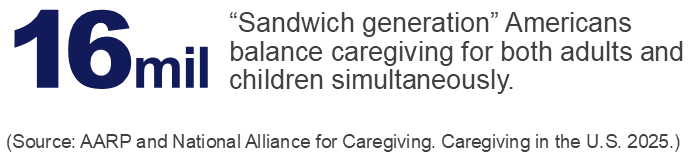
Already, one in three adults who care for other adults are “sandwich generation” caregivers juggling the care of children, according to the 2025 Caregiving in the U.S. report from AARP and the National Alliance for Caregiving, powered by Ipsos research. Choula says immediate policy action, technology innovations and corporate involvement are urgently needed.
Kate MacArthur: How do you expect the growth of caregivers in the U.S. to evolve?
Rita Choula: The need for caregiving is going to increase but the availability of family members to provide care is likely going to decrease. There's also a potential decrease in availability of paid care. Then where does that leave the older adult that needs that care? We also know that as this need continues to grow, that caregiver is getting younger. One in three caregivers is under age 50.
MacArthur: What will be the needs for these caregivers over the next five or 10 years?
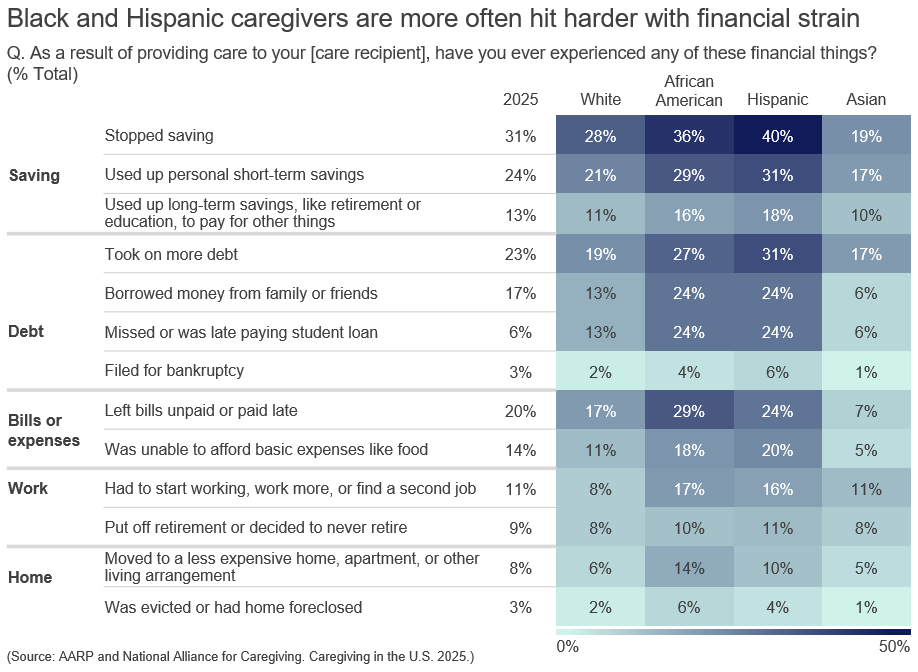
Choula: Nearly half of the caregivers face major financial consequences. They are paying over $7,200 a year in out-of-pocket costs. They're draining their savings. They're falling into debt. Oftentimes they're struggling to afford basic needs like housing and food. Some states have paid opportunities for caregivers through Medicaid waiver programs. That is not a high amount of income coming in, but it does provide some supports to individuals. AARP also advocates for things such as paid family leave, which is very critical, as well as federal and state tax credits.
MacArthur: How urgent is it to fix this?
Choula: The time is now.
MacArthur: What other support is needed?
Choula: Family caregivers are managing high-intensity, complex care. They're preparing specialized medical diets, and they're doing things such as advanced wound care. Almost half are saying, “We are not getting the supports and the training we need to feel confident.”
MacArthur: What else are people giving up?
Choula: Many face a high level of stress. They face a high level of mental health challenges, and they're not even really going to see doctors and other providers for themselves. They're giving up care of themselves, which is very significant, particularly when we're talking about “sandwich generation” caregivers. Particularly in Millennial and Gen Z ages, they are sacrificing their careers. We're really concerned about caregivers that quit working altogether and give up their contributions to Social Security and other financial standing. They oftentimes are giving up the opportunity to be in relationships with others to build friendships, to nurture marriages.
MacArthur: Are there products or services from corporate America to support caregivers?
Choula: This is an area where there is much opportunity for growth. For far too long, caregivers were not necessarily seen, especially those ages 50 and up, as being a strong consumer base. Family caregivers contribute billions of dollars a year from a consumer standpoint. AARP is looking to do more with consumer retailers and others to feature what these caregivers need in their shopping experience.
 Family caregivers contribute billions of dollars a year from a consumer standpoint.”
MacArthur: In your report, you mention emerging technologies that could alleviate pressures for caregivers. What has the most potential impact for the future?
Choula: Technology resources that allow caregivers to have some control over how care is coordinated are highly sought after. From an assisted devices perspective, as more caregivers are providing that complex care in the home, how do you use a Hoyer lift to get someone out of the bed? These devices are becoming more technology-based, and individuals need to know how to utilize them.
Another resource is around management of medications. There are technology advances that allow you to see if a pill has been removed from the pillbox for the day, or if the refrigerator has been opened. Another important thing, especially around technology, is privacy considerations, ensuring that that individual is comfortable and aware of the monitoring that may be going on.
← Read previous | Read next → |