
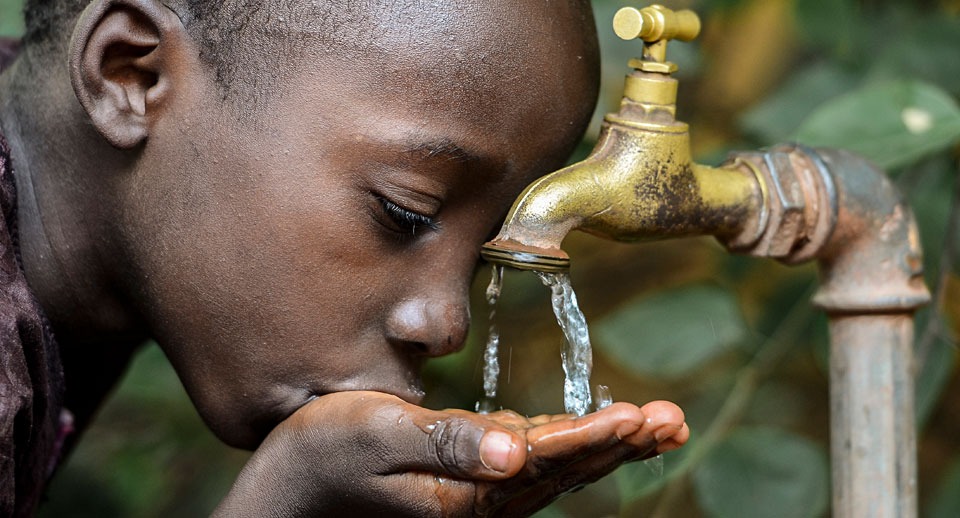
How global companies can make a local difference on sustainability
Love issue
To Westin Grabow, director of innovation at global alcoholic beverage giant Diageo, a lot of purpose’s present and future hinges on definitions and marketing. He says it’s hard to specify what broad terms like “sustainability” mean, and it’s harder to convince consumers that a brand is actually doing good, and that their purchase decisions matter. These are big challenges — and exactly the kind Grabow is excited by as he works on the “purpose portfolio” at Diageo.
Matt Carmichael: Diageo’s environmental, sustainability and governance plan focuses on shaping a more sustainable and inclusive business and society. How does that drive your approach to purpose as brands?
Westin Grabow: Diageo’s purpose is celebrating life every day and everywhere. Essential to that is our ability to continue to do that into the future. ESG for us is a critical vector of the total business mission. We know the reality of the climate. We know we need to better and more efficiently align to the natural systems we live in. It’s not a separate element; it is a foundational context for doing our mission.
Carmichael: How does brand purpose fit into corporate missions, ESG and purpose?
Grabow: Diageo is about seeking sustainability, inclusivity and positive drinking across our business.
But I talk about a portfolio of purpose. Brands have the best ability to drive impact when they really take ownership of a singular part of a broader agenda. An example of Crown Royal’s purpose is around generosity. One of the outcomes is the Crown Royal Purple Bag project that sends care packages to military service members. Or Smirnoff is “vodka for the people,” so inclusivity is more integral to the brand purpose.
Carmichael: With a portfolio as broad as Diageo’s, it must be hard to differentiate.
Grabow: We’ve seen that a lot of brands want to be a part of a lot of conversations. But we've heard loud and clear from consumers that lip service on every issue is the last thing consumers want from brands. They want impact. We have hundreds of brands in the broader Diageo system, and being able to give our biggest brands clear swim lanes helps us drive more value overall, like Bulleit, which has our first carbon-neutral distillery in the U.S.
Carmichael: Water shortages are all over the news today. How does that affect your calculus as a manufacturer that relies on water in many ways?
Grabow: Our business doesn't exist if water doesn't exist. We are not just committing to our Society 2030 goals to gain relevance with consumers. We're doing it to protect our ability to do business. It’s everything for us. It is essential to build our business and the broader category of the future that operates in harmony with our world.
Carmichael: Are we going to get dehydrated bourbon or like a SodaStream kind of thing, except with Smirnoff?
Grabow: The interesting dynamic is about creating something that has consumer demand and appeal and aligns to the way people want to celebrate while also reducing our impact on the planet. In terms of specifics, you'll have to wait and see.
Carmichael: As a global brand do you activate your purpose on these big issues like sustainability in a way that humans feel it in their own worlds and lives?
Grabow: One element is that we as big brands are able to create massive impact. We have a scale that is unmatched by local businesses and while the salience of a local business doing a local thing can feel more intuitively beneficial for the person living there, the real challenge is helping people feel connected to the scale impact that's happening. The marketing challenge is to help consumers feel that they are a part of the good that's being done wherever it's happening.
Carmichael: How do you do that?
Grabow: We can't overcomplicate what we're doing. It’s a struggle. We have so much that we want to talk to consumers about, but ultimately we need to drill down to what's essential. The takeaway that we want consumers to realize is that choosing our brands is a path to creating the good that they want to see in the world.
Carmichael: What is the future of sustainability?
Grabow: We get most excited about the shift from sustainability just being about taking less away from the environment and seeing emergent culture where it's aspirational to give more back to the environment. There's kind of a reframe. We are trying to build that future because we believe everything should be less damaging to the environment, but more so we want to be doing good for the world we live in. There's so much upside to making that flip.
|
← Read previous |
Read next → |