
How expressing love will change ‘putting a ring on it’
Love issue
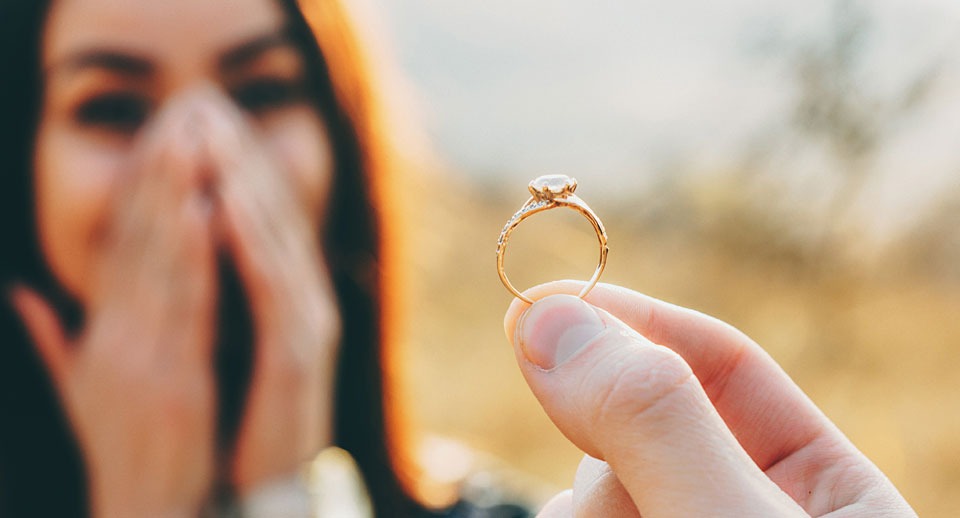
With societal shifts, people are reexamining how they express and commemorate love. When and how people “put a ring on it” is an enduring ritual, even if the relationships they symbolize are evolving. Luciano Rodembusch, president of Pandora Jewelry North America, has seen these changes first-hand over the past dozen years, including during his decade at Tiffany & Co. As Pandora expands its focus on charm bracelets to rings and other creations, he sees potential for people to create their own stories and meanings.
Kate MacArthur: How are you seeing the calculus evolving for gifting and tokens of love?
Luciano Rodembusch: Clearly, you can see that society is trying to find new rites, new norms and a nice balance during this transition as a society between the past and the future. We are seeing that valuable token of celebration in jewelry is still very strong, but we see it stronger in young Millennials, and for sure Gen Z is coming. You see them looking for meaning, looking for content, looking for more than just a thing. What’s the substance of that gesture?
MacArthur: Younger generations are into grand gestures like “promposals.” What signals are you getting about how they factor into social media?
Rodembusch: We see our jewelry, our creations, having a completely different meaning sometimes than we expected. At the beginning of 2021, this group of girls posted on TikTok one of our wishbone rings as a promise ring. That’s why for me the physical token is so important, because clearly others could just copy the event or the video or the music or the feeling. But that generated a huge amount of people coming to the stores and made our wishbone ring a huge success. It was not only trying to replicate the feeling or the moment; it was buying the same ring and having the same kind of moment with your friend or loved one.
MacArthur: Diamonds have long symbolized how marriage is forever. Yet at least half of marriages fail, and fewer people are marrying. How does that shift how brands respond to people’s needs?
Rodembusch: Affordability is in the core of our brand. When we launched diamonds, we had that conversation about how we would like to present diamonds. If you see our campaign, it’s the “Just Because” diamond. That’s what we believe, that with lab-grown diamonds — and especially our diamonds because of the quality of them — you shouldn’t need permission to buy them.
MacArthur: People are marrying at a later age, and some have children already before they marry. How does that change the gifts that they’re looking for?
Rodembusch: If you look at specific jewelry, I don’t believe it changed a lot. The way we set up our room, our houses, the way we set up our life was very much more formal in the past, right? It’s not anymore. That is about the furniture, about all the other things around that, because the vision was it will be eternal. Today it’s much more aspirational. Because of that, jewelry took a different role, which is a celebration of the moment. The way we connect today is driving that. And, of course, the fact that women more than ever have a stronger voice in the society and more [believe] “I don't need to wait for you. I don’t need to wait to be given, I don’t need to drop a hint. I want this, and I have the purchase power and I will go there, and I will buy.”
MacArthur: Do you see a need to create identity-specific — like LGBTQ-specific — gifts or categories?
Rodembusch: In a truly inclusive world, everything is for everyone. If any type of client, any gender, any age comes to us and says, “I think it’s missing something in your portfolio. I like more color, more sparkle, more bold.” That’s fantastic, right? We love to create for them and that’s what we do constantly. But not because we believe we are going to create something niche for someone.
MacArthur: When the world is trying to figure out their presence in the metaverse, what does that mean for gifting?
Rodembusch: The moment the world became so accessible, so easy, you see that Gen Zers and Millennials are looking for more substantial memories, correlations, relationships, things that have a bit of meaning that are not so fast to disappear. The data we have shows that more than 80% of our client journeys start in the digital space. So, we need to be strong there.
But in our specific case, and in the case of our industry, it’s an industry where memories are encapsulated in physical things. Every single piece of jewelry has a memory attached to that. I still believe that that correlation between the physical thing and the memory will continue as part of this industry. Brands like ours will be more present in the avatar world, where you can have your Pandora bracelet on your Fortnite avatar and things like that. But that’s not going to be the core of the conversation.
|
← Read previous |
|