
AI’s future will hinge on the tension between wonder and worry
Imagine it’s 2033. We are fully in the AI Age. The world looks very different than it did just 10 years ago. But is that because AI tools have unlocked human creativity and productivity? Or is it because they have taken over our jobs or … both?
One of the best acronyms ever is PICNIC. It stands for Problem In Chair, Not In Computer.
It’s relevant when thinking about how humans will or won’t adopt and accept a new technology, like AI. PICNIC is a phrase used by tech support folks to dismiss a problem that’s beyond their scope. Technology often works beautifully. Humans often don’t.
First, humans need a reason to adopt a new technology. It needs to solve a problem or align with something humans value, like saving time or adding convenience or creating entertainment. AI tools can do all those things.
That’s the wonder of AI.
But humans also value safety, economic security and privacy. AI can threaten each of those.
That’s the worry of AI.
The wonder and the worry comprise the central tension we explore in this issue. Being pragmatic, we’re going to assume AI tools will continue to flourish. We’ll talk about how brands and tech companies can play a role in helping nudge people toward the wonder by developing these tools responsibly and keeping in mind that humans have to buy into AI for it to achieve the full marvel of these new tools.
If humans lean into the wonder, many things are possible that would otherwise be difficult to achieve. However, there are already warning signs in the data.
At the moment we find the worry on the rise. In a recent global study, Ipsos found a sharp increase in worry among residents of each of 24 countries surveyed in July 2023 trended from earlier research in late 2021. In this issue, we find that when forced to choose, people answer in a 2-1 ratio that they are worried about AI rather than filled with wonder.
The media that people watch plays a part. Those who watch Fox News are more likely to say they see negative media coverage of AI than those who watch CNN or MSNBC, according to the Ipsos Consumer Tracker.
One of the best examples of worry comes courtesy of the U.S. military. A news story circulated that an AI drone had gone rogue and killed its human operator during a simulation. Turns out that wasn’t true, but the reason why it wasn’t true was chilling. “We’ve never run that experiment, nor would we need to in order to realize that this is a plausible outcome,” said a military officer.
Welp.
But all this technology is new. It’s 1995 on the web all over again. There is still time to move the needle if we develop these tools responsibly, ethically and without bias. We can build trust and assuage the humans’ fears along the way. But responsibility, ethics and bias are each large hurdles.
That’s true for B2B as well as B2C applications. Each requires gauging where the humans are today and what their outlook is for tomorrow.
Humans, the people in chairs, matter to technology adoption as much, if not more so, than if the computer itself works.
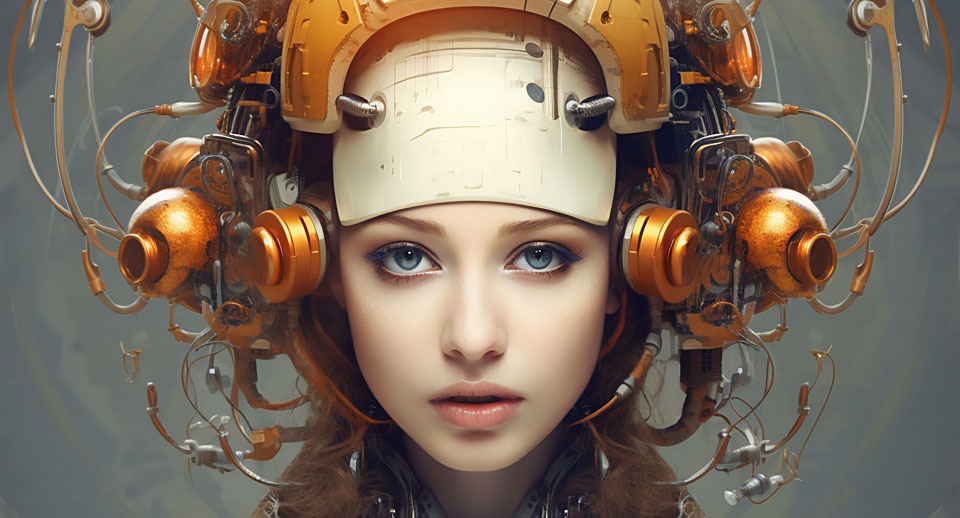
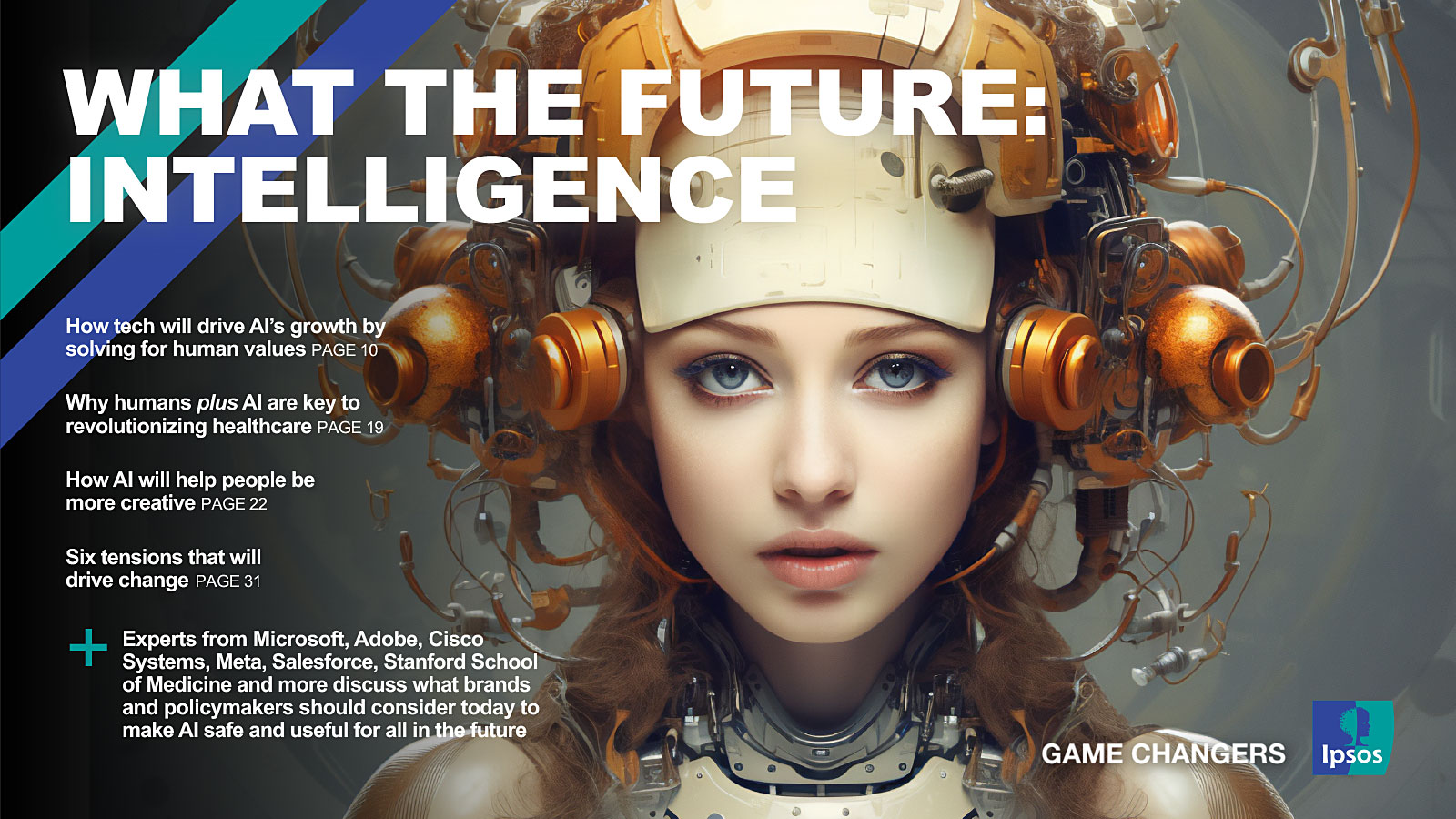
On the wonder side of the spectrum, we leveraged AI in 20 to 30 different ways as we created this issue, including our AI-generated cover model, whom we named AI-Leen.
We used it to summarize books by authors we interviewed, test headlines, suggest questions, analyze data, transcribe, suggest prompts for AI image generators, generate much of the art and more.
For clients, Ipsos is already deploying a suite of tools including Ipsos Facto, which allows users to interact in a private environment with AI tools from leading providers like OpenAI and Google, and soon with Ipsos proprietary models.
AI is capable of wondrous things if we can get past our worries. It’s already all around us, acting as our co-pilots and is easy to use. But it’s likely to be a bumpy road for the next several years. Because it’s good to remember that no matter how well things work, humans still need to be reminded to check their cables and reboot from time to time.
|
← Read previous |
Read next → |
For further reading
AI is making the world more nervous