

Why foresight, tech and ethics education can better prepare us for uncertainty
Technology is dramatically reshaping the future of training and education, including for the military. Col. Chris Mayer is a futurist and a department head at the U.S. Military Academy at West Point. Looking ahead, he emphasizes the importance of incorporating foresight skills, technological literacy, and a deep understanding of ethics and humanities in education. He believes these elements are essential for both military personnel and civilians to effectively navigate uncertainty and adapt to evolving environments.
Kate MacArthur: How does futurism shape your curriculum and influence other leaders?
Col. Chris Mayer: We are looking at a document and concept called Army 2040. We’re thinking about how’s the world going to change and then what do we need to do today to help our students prepare for that world? Not just West Point, but a lot of colleges and universities would benefit from a capstone course that brought together all they learned in general education that was grounded in foresight. Students would have a chance to bring together all the different perspectives, historical, economic, social, ethical, legal into one course, but also gaining that grounding and foresight that they could use later on, and to get the mindset that you can’t predict the future, but you can explore it and use it to make decisions today.
What’s the most critical shift you’re seeing going forward for education and training?
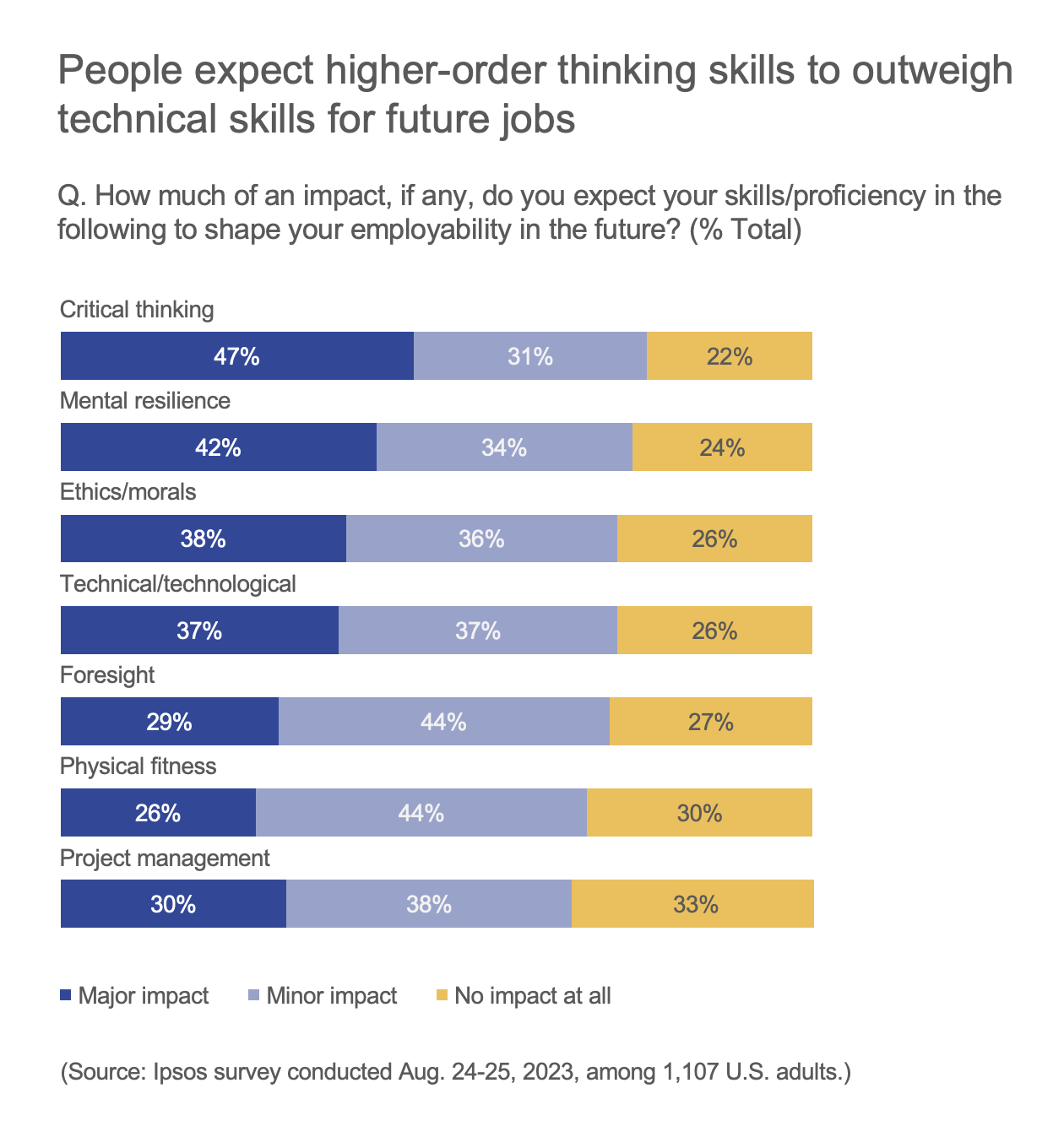
Mayer: I view training as gaining specific skills and knowledge in a predictable environment for a routine task. Whereas education is more focused on the broader competencies. People talk about critical thinking, communication, creativity, and these are much more applicable to dealing with uncertain environments, where you have to read the situation and understand what’s appropriate.
MacArthur: What would be a military example?
Mayer: The Ukrainian army’s ability to adapt and understand and to think faster than the Russian army, and to be able to delegate decisions down to the lowest levels. Even the Russians putting tires on their planes to protect them against drones. The ability to do creative things and to do them quickly highlights the importance of education more than training. It’s applicable to organizations in the civilian sector as well, given the complexity of the world, given that when COVID-19 hit, you had to train on protocols for dealing with masks and hand washing. It was the education that prepared companies to adapt to that new environment.
MacArthur: What does the technological evolution of defense change for moral and ethical best practices?
Mayer: Technology has always caused an ethical concern. Even when the crossbow was made, people thought it was unfair because it allowed such a distance between the target and the, and the person shooting the crossbow. All our cadets take a core philosophy course, and they start with critical reasoning, then they do ethical theory, then they do ethics of war so applying it to war. It’s important that they understand the foundational ethical principles of war, going to war, and in war. In war, it’s discrimination between combatants and non-combatants and then necessity of engaging a target, like is it necessary for the military objective? You look at these new technologies like AI that could [one day] target on its own without a human in the loop. Understanding the key ethical principles and seeing how they’re applied in this new context is extremely important.
MacArthur: How are you developing the critical skills to use these technologies as a human-machine team?
Mayer: Even in training now, [cadets are] using a lot more technological things like the Boston Dynamics dog that walks so that the first time they see things like that, it’s not when they leave here.
“Being able to evaluate what technology is doing and understand generally how it works and its weaknesses and its strengths is important — not just for cadets in terms of their Army careers, but also just everyday life.”
MacArthur: What skill gap is the most critical that not only military but companies and brands to shore up?
Mayer: One is being able to systematically think about what’s possible in the future and then use what you come up with to inform current decisions. You’re seeing more companies using foresight, but many companies rely on one view of the future rather than looking at worst case and other possible futures. Data literacy is a challenge for many. Related to that is using technology to pull information and to make better and faster decisions than others and then adapt more quickly than others. Finally, this civil discourse piece. It’s building cohesive teams of different people that are committed to a purpose. So many of the political and individual conversations now are so divisive and people who have differing views just questioning each other’s motives and block one another rather than enjoying the debate.
MacArthur: Is there any other best practice that might be applicable to the business world?
Mayer: The future will be shaped by technology, but we cannot forget that technology should serve humans. Being able to evaluate what technology is doing and understand generally how it works and its weaknesses and its strengths is important — not just for cadets in their Army careers, but also just everyday life. Not following the GPS into the lake is a good thing.
The views in this interview are Col. Mayer's and are not the views of the Army or the Military Academy.
|
← Read previous |
Read next → |
For further reading
People more likely to think their education system is poor than good