

How companies can prepare for the changing status of pets in the future
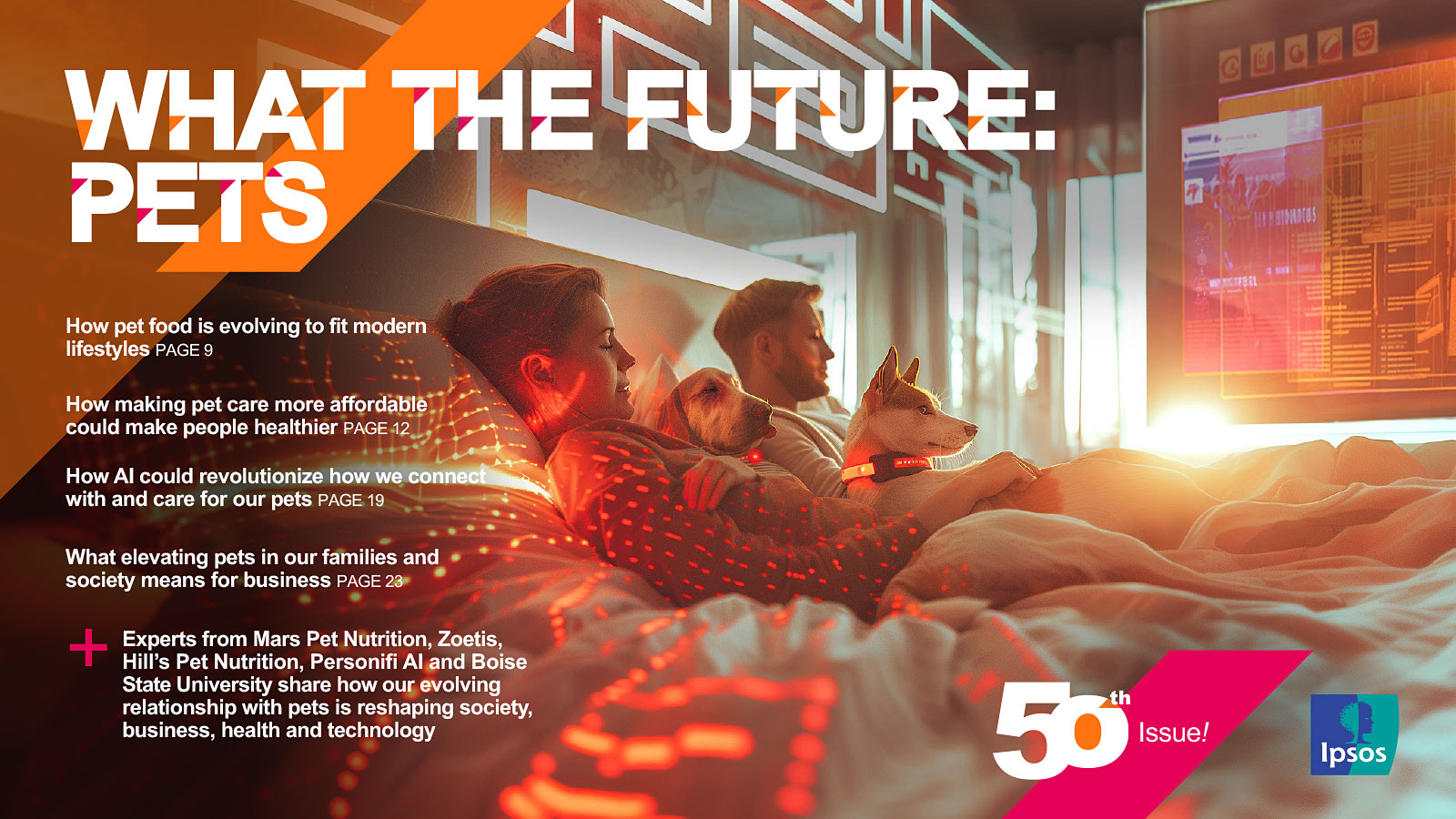
Imagine it’s 2034.
Pets are a big deal. According to the American Association of Pet Products, pets are about a $150 billion industry in the U.S. Eight in ten younger households (18-34) have a pet, according to the Ipsos Future of Pets survey. That’s 10 percentage points more pet households than in 2018, before the pandemic.
Growth in the future will be driven by a combination of long-standing demographic trends: Americans are getting married later, having kids later and having fewer of them. More of us live alone, especially the growing portion of our population that is older. We live in more urban spaces.
But humans are social creatures. We crave companionship. Only 8% of people say they don’t want a pet at all.
There are barriers to that potential growth. Younger (and older) people are more likely to rent, so finding housing that will take pets is a challenge. Caring for pets was a lot easier during the pandemic, when much of this boom occurred.
Back-to-office mandates, resumption of normal travel patterns and inflation could create adverse conditions for keeping pets in the family. Most pet owners, according to Ipsos, say pets are more of an investment in both time and money than anticipated.

One thing we heard again and again from the experts we interviewed was that the role of pets in our lives has evolved. Dogs used to live in literal doghouses, outside, in the yard. Then they moved into the kitchen or basement. Now many sleep in beds with humans. Unless the humans are instead sleeping in the pets’ bed. Because that’s a thing. Granted, the ancient Egyptians adorned their pet cats with gold jewelry and dedicated monuments to them. So while our love of pets is constant, it also evolves.
In the future will “in the doghouse” have any meaning?
A confession
Let’s acknowledge the (lack of) elephant in the room. I don’t have a pet. As a kid, I did have a goldfish, Horton Waffle, who lived for 10+ years and had his death announced on a 50,000-watt clear-channel radio station.
Why don’t I have pets? I’m allergic, for one thing. And also part of that 8% who just don’t want them. Maybe my hesitance could be overcome if I had an AI-assisted Shazam band for my would-be pet. We’ll talk about that later in the issue, but it sounds so cool that if it does even half of what it’s setting out to do it might, might make me want a cat.
Just don’t tell my kids I said that or I’ll never hear the end of it and will wind up a cat owner.

To parent or to pet parent?
For many, the answer to that question is “both!” But some are getting pets instead of having children. The need for companionship and to care for another are core human values. Therefore, most (70%) agree that having pets is as much work as having kids — even people who have kids.
Pets are work: Most (72%) say pet logistics are a big part of their travel planning. Half say they have had to take time off from work to care for their pets. Pets also cost a lot. Most (72%) say they will pay whatever they need to get the best care for their pets. And most (59%) say they are more likely to pay for premium food for their pets than themselves.
Premiumization of pets
Premiumization is a theme you’ll hear throughout this issue. We place our pets on a pedestal, or a catio, an enclosed outdoor patio for our cat. We’ll do anything for them, which increasingly means some serious medical bills. Humans have a growing understanding of the effects of food, exercise, and preventative care on both our mental and physical health. That’s spilling over into our understanding of pet health — and vice versa!

Pet tensions
Even though most people have pets and still more want them, that doesn’t mean everyone wants pets everywhere in everything all the time.
Most (79%) agree that people don’t clean up after their pets well enough. Most people (72%) feel that they have a right to quiet and they shouldn’t have to put up with their neighbor’s dog barking all the time. And most (62%) feel that non-service pets shouldn’t be allowed in places that serve food.
These tensions open avenues to both better cater to pets and their caretakers but also to create pet-free spaces. Defining boundaries can reduce the tension in good ways for everyone involved.
What does pet ownership look like in the future?
Let’s spin this further forward. We won’t get into the whole discussion of designer breeds, but that’s a thing, and we’ll probably see more of those as we humans adapt to urbanization and climate change.
It’s worth noting that most (56%) think it’s cruel to keep a pet in a small living space or someplace without a yard. Between that and the tensions, it’s easy to imagine that maybe there’s a lot of silent judging (or social media shaming) going on, and that that could get much worse in our future.
But there are lots of relevant business questions that all come down to one big question: What’s the ceiling of our humanization of pets?
- Will more people need pet health insurance? Or will people’s insurance start to cover pets as dependents? Will financial services respond in general, too?
- Will we see more workplace perks related to pets?
- Will the travel industry, rental housing and especially senior living centers expand their pet accommodations?
- How will our economic trade-offs impact our pet spending?
- Will people continue to have fewer pets per household in much the same way they are having fewer children?
- How will the politics of alternative proteins and the “Make America Healthy Again” movement impact the development of pet foods, too?
In the end, it comes down to one final stat: Sixty-four percent of people say they prefer spending time with their pets than with other people. That’s unlikely to change in the future.
← Read previous | Read next → |