
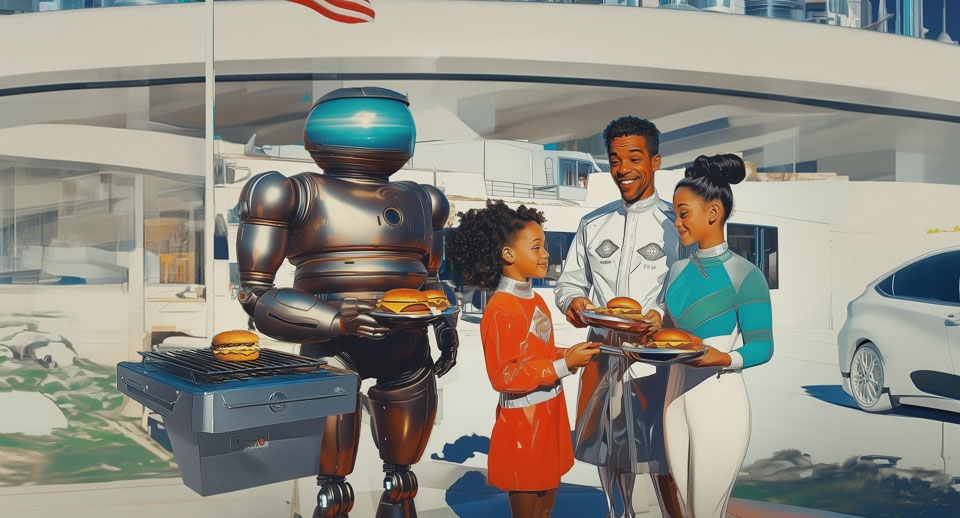
The American Dream is alive. But is it well?
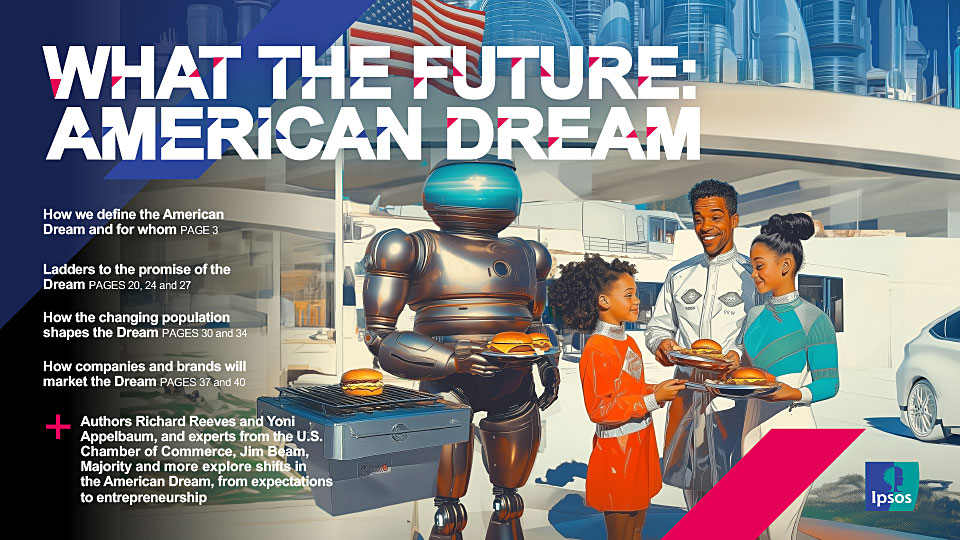
Imagine it’s 2052. How many stars are on the future American flag? Is there a star for Greenland? Or Puerto Rico? Or Washington, D.C.? Does southern Illinois succeed in seceding from Chicago? Maybe that sounds far-fetched, but more than 30 Illinois counties have already passed referendums in favor.

We started thinking about stars when imagining what kind of flag would fly in front of our future American Dream home.
Yoni Appelbaum, deputy executive editor at The Atlantic, dropped an incredible flex during his interview for this issue. He quoted one of the founders of his magazine who summed up the American Dream as one schoolboy saying to another, “I’m as good as you be.” That line comes from an 1892 essay in The Atlantic by said founder Ralph. Waldo. Emerson.
The founder of this magazine had no such pithy description of this idea or this ideal. In fact, that was a problem when we started planning this issue. The concept of the American Dream goes back to the nation’s founding. The phrase itself is almost a century old. But … what does it mean today and what is shifting for tomorrow? Ipsos has been researching ways to Know the New America all year. Shifts in the Dream are a big piece of that. But to discuss the future of the Dream, we needed to understand what that Dream is, and how it differs from person to person and group to group. It’s a big question, so you’ll see how we leveraged the power and breadth of Ipsos.
The following page has some key takeaways from the research. Then there’s an extended narrative around those themes backed by new, exclusive and novel research. And then we’ll get to our panel of experts, which is also super-sized. Finally, having made our case, we’ll come back to those broad themes and talk through some big questions for brands, companies and policymakers alike to help you prepare for the possible futures. Ready? Let’s dive in.
Understanding the Dream today
We started by working with Ipsos’ Online Communities team to lead an online discussion with 1,000 Americans. We asked them an open-ended question about how they define the American Dream. People responded thoughtfully. They talked about owning a home, practicing religion and having a successful job.
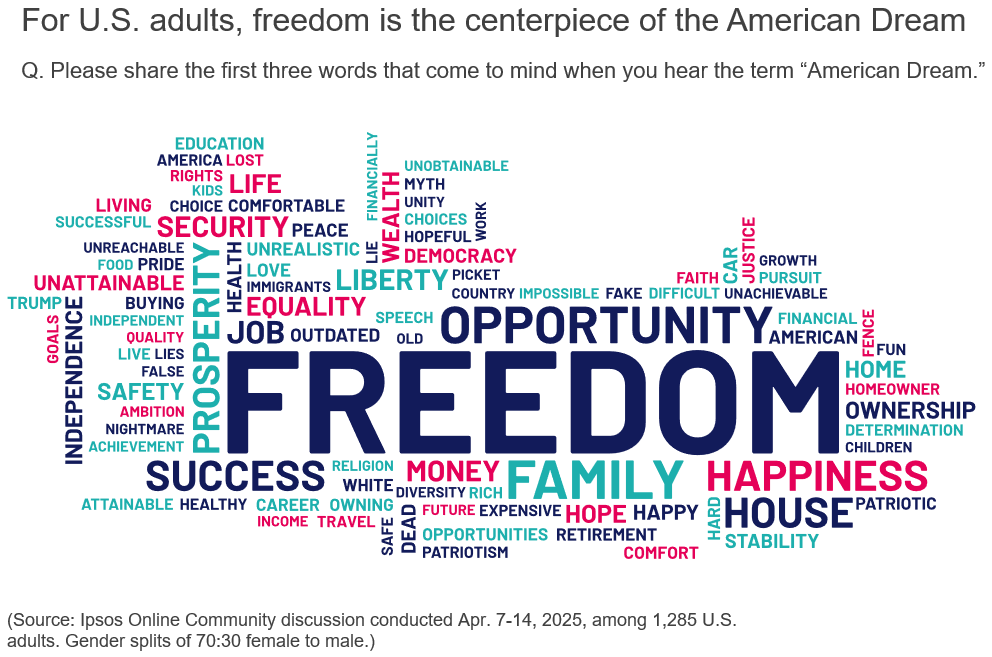
One person wrote, “The opportunity to worship freely, speak freely and be able to lift yourself up from the circumstances you were born into … to use your own wherewithal, hard work and intelligence to get there. It won’t always work but that’s being a realist.”
Another said, “It means I have the freedom to choose how I make my way in the world, opportunities to change my circumstances should I so choose, and relative abundance of food and clean water. I can take many paths in life, and if I work hard enough, I can create a good life.”
Some people said the Dream is impossible to achieve. Some said they had already achieved it. Some said it doesn’t mean anything anymore. One person summed it up, saying, “The whole point is that it can mean a lot of different things.”
In a follow-up question about how their personal dreams compared to the American Dream, most people said they were pretty similar. While the Dream can and does mean different things to different people, some themes also emerge.
We also asked Ipsos’ teenage (13-17) Online Community the same open-ended question. For the teenagers, freedom also popped as the biggest theme, as did themes about success, opportunity, family and happiness.
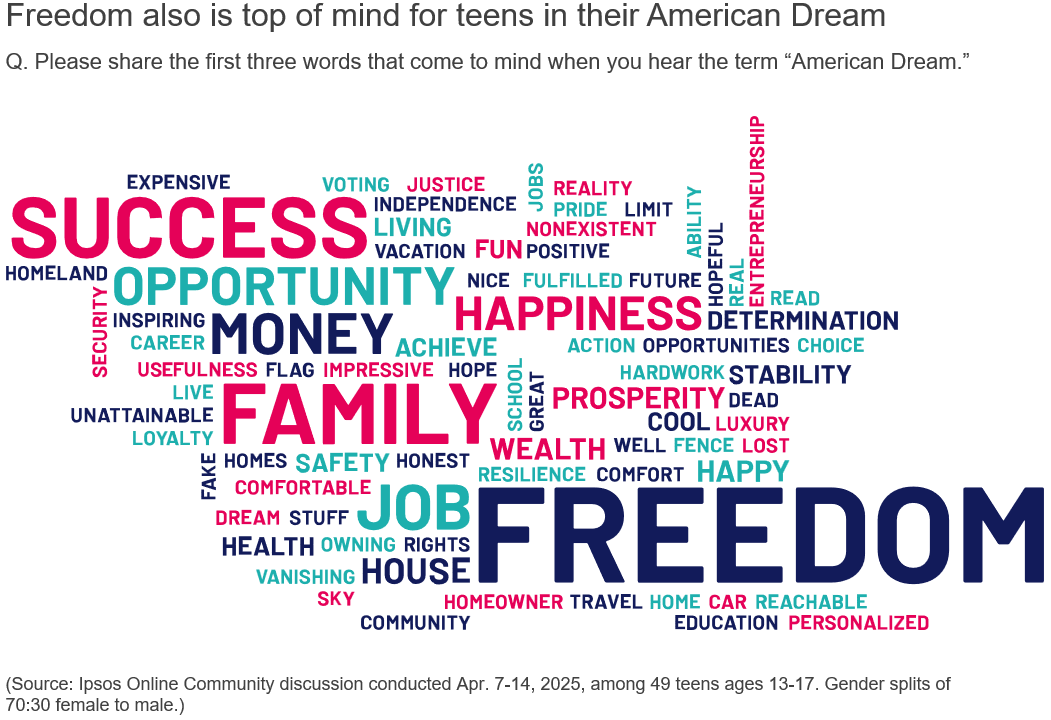
Data from our What the Future: Teen issue showed teenagers mostly shared a view of the American Dream with their adult counterparts. Yet, when it came to life’s major milestones, teens were less interested in getting married and having kids. That could be life stage related — they are teens after all. But it could also signal that long-term trends toward getting married later (if at all) and having fewer kids later in life (if at all) will persist or accelerate. It’s easy to see implications for everything, including how younger people spend and save, what housing they dream of, whether they need baby products, or, as we saw in What the Future: Pets, they might be satisfied just being pet parents.
Gen Zers, especially young men, are a little more bullish on the American Dream than younger women. That could be due to the partisan splits we see opening here, as younger women become more liberal and Gen Z men lean harder into conservatism. But men are also failing to thrive in many cases. We’ll talk more about that later in the issue.
Avoiding getting ‘stuck’
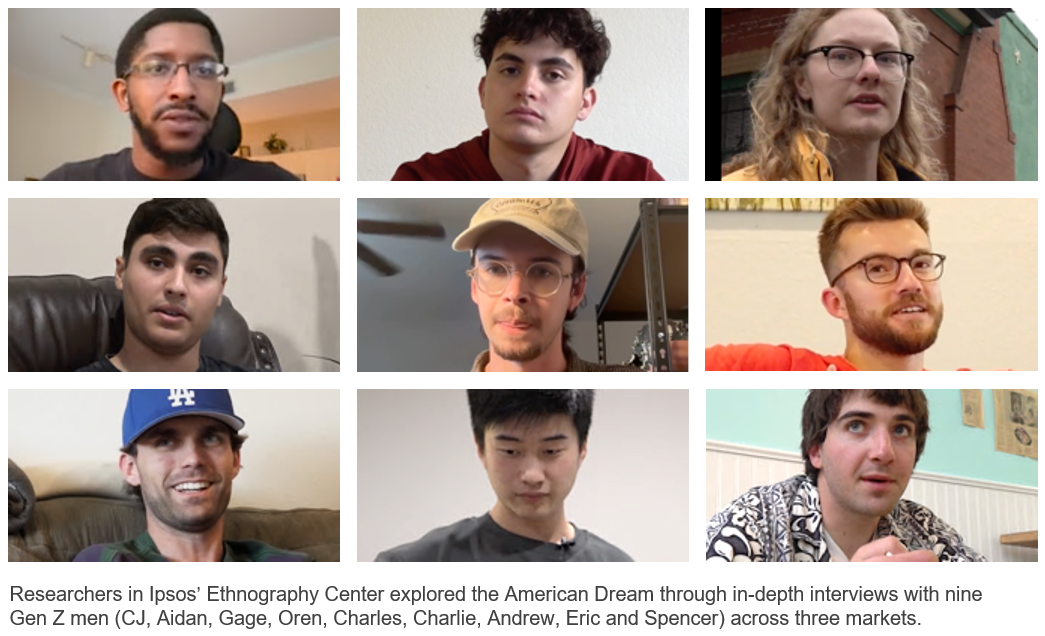
We also talked to several young men directly as part of a project with Ipsos’ Ethnography Center of Excellence.
One participant, Eric, told us:
“I think my American Dream is pretty similar to how people advertise it. What I mean by that is they say, ‘The American Dream is you find a job, you build a family, find happy work, save for retirement, and then you have kids and grandkids and enjoy the time throughout those moments.’ But I think currently that type of Dream might feel a bit unrealistic, because we’re at a generation where not everyone wants to own a house. Maybe it’s too expensive, maybe it’s personal choice. They don’t want to feel ‘stuck.’”
“Stuck” is a complicated tension. As I mentioned earlier, we’ll talk to Yoni Appelbaum, whose book, “Stuck,” talks about how geographic mobility is an economic opportunity engine in pursuit of the Dream, though one that is waning. It’s partially because, as Appelbaum points out, moving can be a headache.
Yet moving is also part of a core American Dream value: freedom.
We used themes from our qualitative research to inform quantitative surveys on the Ipsos Omnibus. We asked what the American Dream means, and pulled demographic cuts for gender, generation, and race and ethnicity.
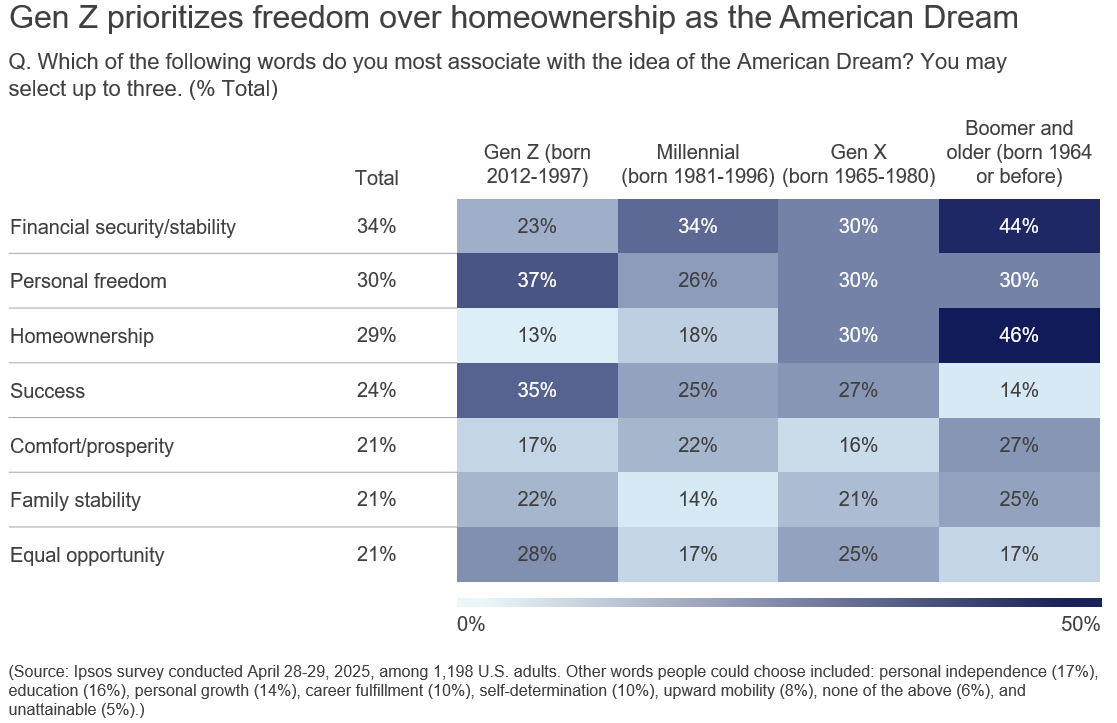
Financial security and homeownership are key components of the Dream for most generations, followed by freedom. Yet for Gen Z that flips. This ties in with several trends highlighted in Ipsos’ Global Trends survey. One is Nouveau Nihilism, which looks at the difference between our goals and aspirations and our (lack of) trust that we will achieve these goals. That difference can lead to a degree of nihilism and hedonism, which manifest in different ways. One way is the growth of spending on experiences rather than stuff. If you don’t think you will ever be able to afford a home, why bother saving for a down payment when you can spend the money now and enjoy yourself?
As another ethnography participant, Gage, said, “I think the American Dream is alive and well if you have corrupt morals. I feel like the late-stage capitalism we exist in really breeds stepping on people, taking advantage of people and using people for your own benefit. You can’t reach it the traditional way of just getting a job, working your way up.”
The splintering rungs of the economic ladder
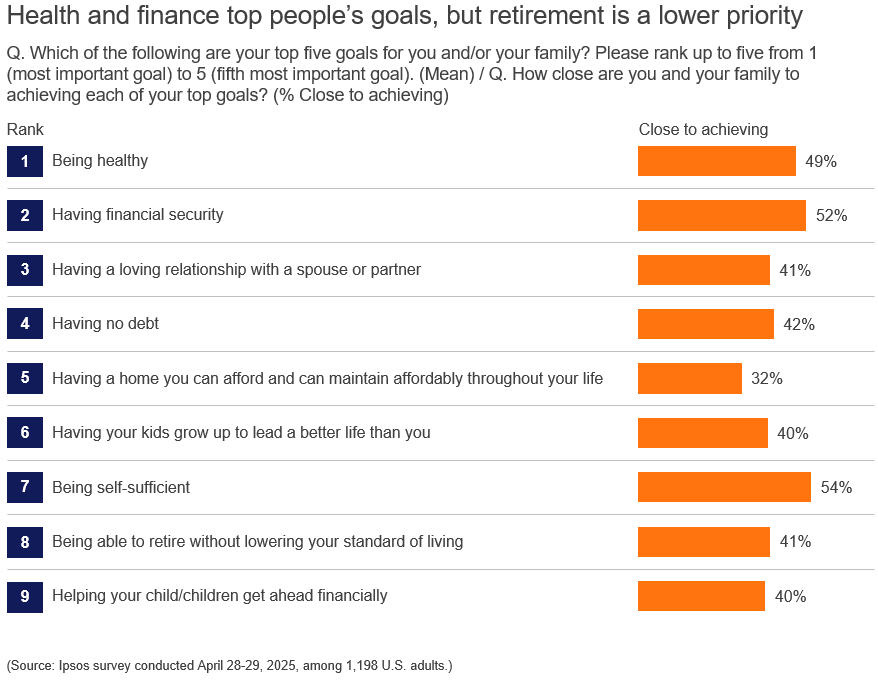
Today most Americans feel they are falling short of achieving the most important parts of the Dream. America is facing a rash of epidemics as our lifespan increases but our health outcomes bifurcate. Consumer debt is at record levels.
The rungs on the ladder to economic mobility in the U.S. have traditionally included: education, investment, homeownership, job or career choice and entrepreneurship. It also matters, of course, which economic status you’re born into.
Many of the rungs are cracking. Homeownership rates for younger Americans are below where they were in the 1960s and have fallen for decades.
High-earning career choices are a wild card in a time of AI disruption. Higher education has always correlated to higher wages and income, but the funding sources (federal research grants, tuition from international students and federal student loans) are being slashed. Research from higher ed-fueled entrepreneurship added trillions to the U.S. economy and supported millions of jobs. Meanwhile, birthrates continue to fall, leading to an enrollment cliff of fewer students starting in 2025.
Hope in a rigged world
So far, investment is still a road to building wealth and arguably national prosperity. But you have to have money to invest money. Roughly half of Americans don’t have any retirement savings, according to the Federal Reserve Bank, and about 40% don’t have money left over each month after paying bills, according to Ipsos research.
Looking ahead, if the education system — and critically the research it fosters — fails or shifts in the degree to which it gives people a boost up the ladder, it’s hard to see what could possibly replace it.
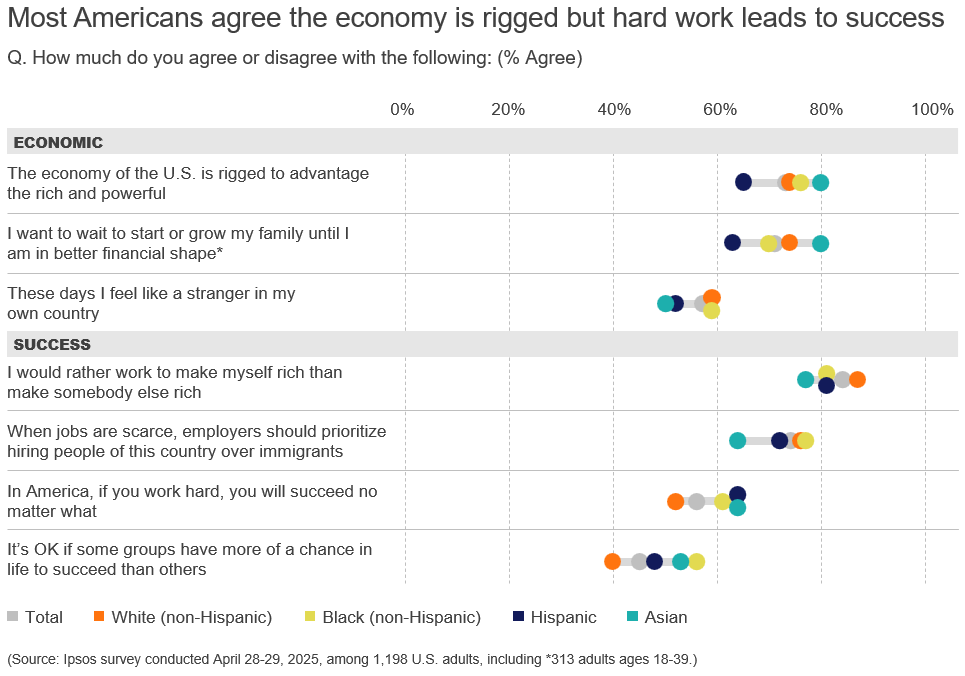
All of this leads to this idea shared by most Americans that the economy is rigged.
The American Dream is fundamentally just that: an aspiration. Dreams foster — and require — hope.
What does our nation’s future look like if this personal nihilism carries forward? What if there’s a prolonged generational shift in homeownership rates and birth rates, especially when people want economic certainty before starting a family? The concern is when people don’t see a promising future, they often look back wistfully at a romanticized view of the past.
A map of the American Dream
The data in the Future of the American Dream survey also echoes in the Ipsos Global Trend called Retreat to Old Systems. As many people feel overwhelmed by change, they wish to return to values and hierarchies they see as more traditional. This ties into the desire to reverse the declining birth rate. The tradwife movement is an obvious example of women and men adopting and celebrating historical gender roles. In the U.S., a large majority in both political parties say they want to wait to have kids until they are in better financial shape. Balancing out the birth-rate boosters, we find the anti-natalist movement. Both versions of the Dream can and have been taken to extremes.
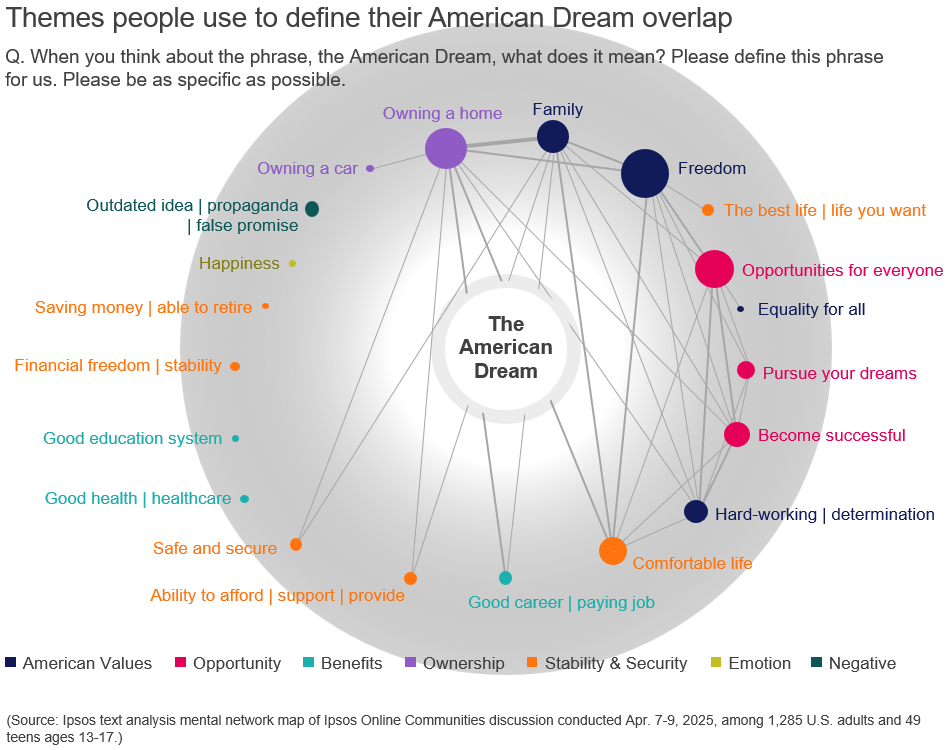
A team from Ipsos’ Global Modeling Unit that services the Ipsos Brand Health Tracking group ran a custom text analysis on the results from the Online Communities qualitative results. The resulting map (below) showed how some themes clustered while other themes were more often discussed in isolation.
Freedom, which was the strongest theme, was often connected to other major themes like homeownership, family and opportunity.
The Dream in marketing and as marketing
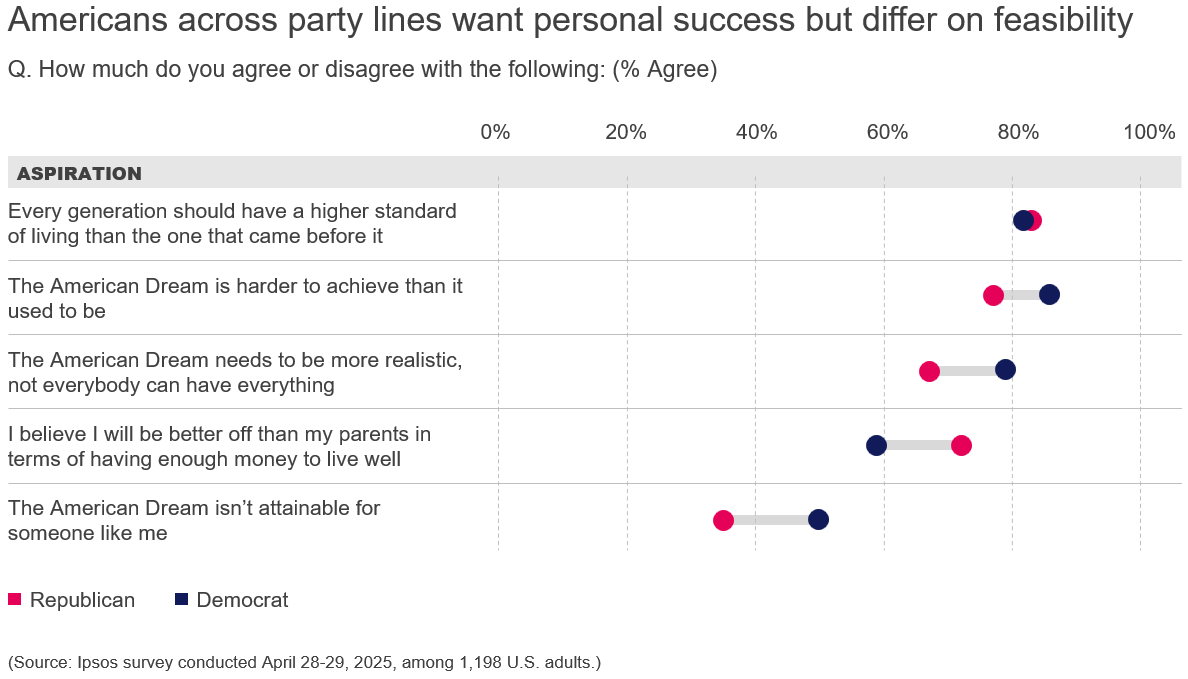
A significant majority of people in both parties agree that every generation should have a higher standard of living than the previous. But majorities also think the Dream is harder to achieve than it used to be, and that it needs to be more realistic — that not everyone can have everything. More Democrats than Republicans say the Dream isn’t attainable for someone like them.
So what do we aspire to? Aspiration and shared values can be powerful tools for marketers, as we’ll see later in the issue. For instance, the Dream was on display in the 2025 Super Bowl. It came from Harrison Ford’s monologue for Jeep about how freedom isn’t free; it’s earned and should be used enjoying the things that make us happy. It came in the form of “Born to Be Wild” grannies with their American-made WeatherTech floor mats. It even came in the form of the hard work and perseverance of ... a young Budweiser Clydesdale. These themes are pervasive in advertising. According to Ipsos’ Creative Excellence database, about 12% of commercials in the last five years leaned into their brand heritage, for instance. Doing so nets a 5% gain in brand attention and a 6% gain in the Creative Effectiveness Index.
The Dream is used to market to America, but it’s also used to market America itself. In the Future of the American Dream survey, 79% of first- or second-generation Americans said the Dream was central to why they came here.
Ipsos’ Cultural Intelligence lead, Janelle James, says she frequently asks about how long people’s families have been in the country when doing qualitative research. She says prompts like “What does the Dream mean to you?” are valuable in determining American identity or initiating conversations on economic mobility. “The magic is in the ensuing alchemy,” she says. “In the age of AI and uncertain economic times, cultural intelligence is our greatest tool for consumer understanding.”
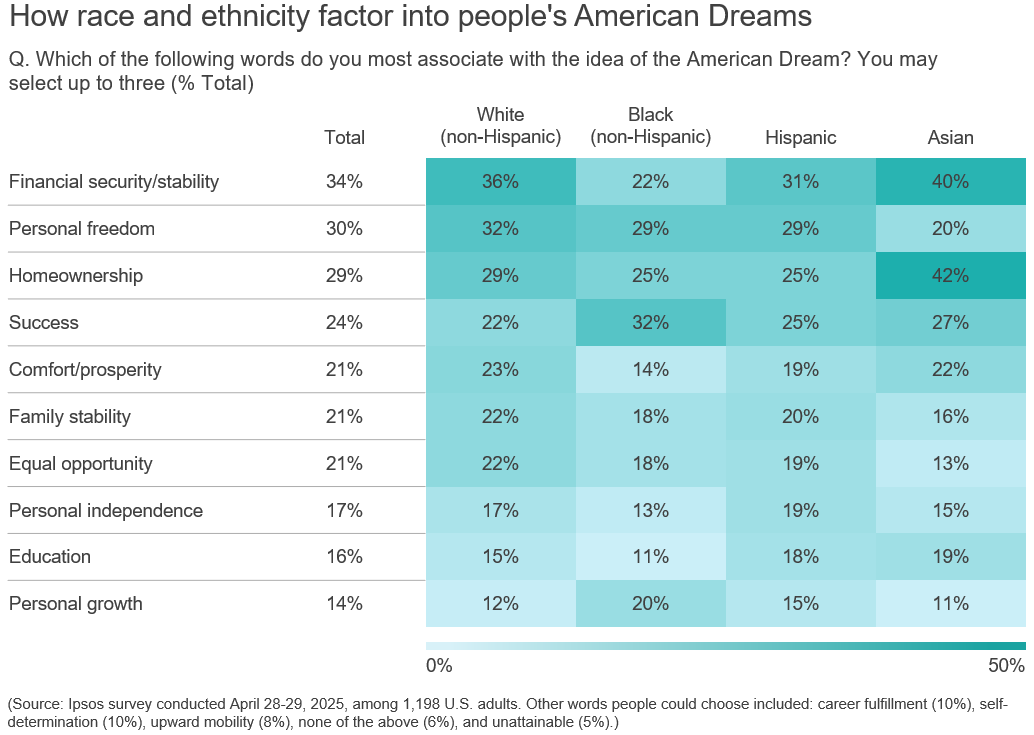
When looking at the Dream by race and ethnicity, it’s interesting that financial security tops the list for white and Hispanic Americans. But for Black Americans, success is key, which suggests that financial security isn’t the measure of success. For Asian Americans, homeownership is the top value, followed closely by financial security and success.
Across race, ethnicity, gender and age, freedom is one of the core values. But like the Dream itself, that deserved more definition.
Freedom is key to the Dream. Here’s what it means:
In a way, it’s easy to see how freedom gains significance when success is hard to achieve.
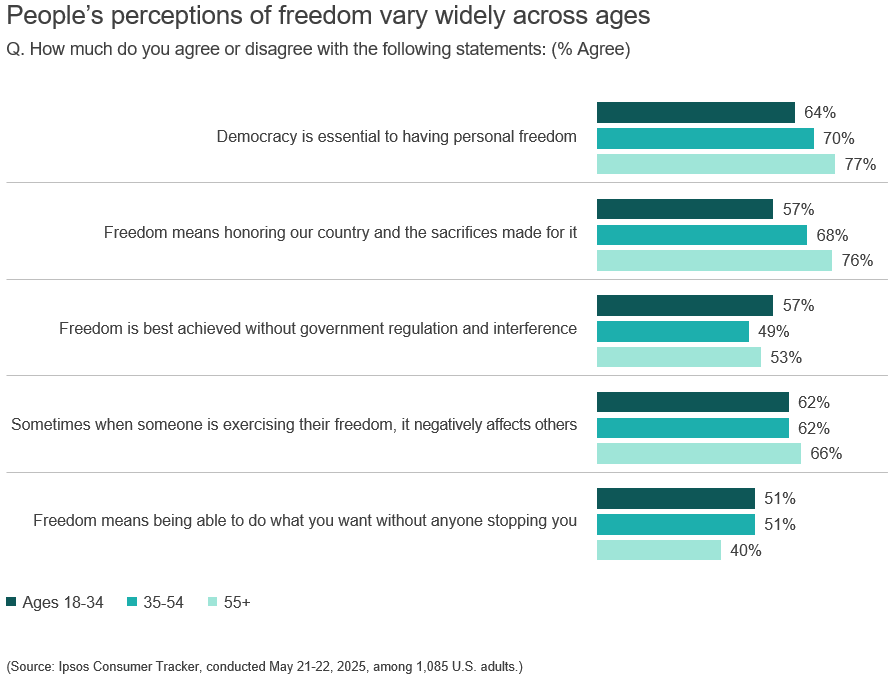
But what does freedom mean? The main words people used to describe freedom included: independence, constitutional rights, liberty and the ability to make personal choices. There were some big demographic splits in that. Democrats list equality as the main association with freedom, whereas it ranks 8th for Republicans. Those over age 55 clustered their responses on constitutional rights, independence and liberty. Younger Americans were much more evenly split among those concepts but also on equality, opportunity and the ability to make choices.
Younger people and Republicans don’t agree on the importance of equality. But both groups align in that they are less likely to agree that democracy is essential to having freedom. That’s a fascinating development. The American Dream was born of democratic ideals, and those ideals have fostered the Dream and helped people achieve it. Now, it seems taken quite literally for granted.
What does the future of the Dream look like if we no longer live in a democracy?
Does the future of the Dream look like its past?
Today the American Dream sits at a bit of a crossroads. Currently, one of the best examples of turning foresight into action is the Heritage Foundation’s Project 2025. The document lays out a vision for the American Dream under the current administration. Many of its authors were appointed to key roles in the Trump administration and many of the policies enacted in the first 100 days follow the playbook. It’s a vision of small government and loose regulation where business, especially small business, can thrive, bringing prosperity.
Policies are aimed at shifting from our current knowledge and service economy back to one focused on manufacturing. Another Project 2025 goal is reversing a decades-long decline in the birth rate. That leads to personal implications as well. Some proposals indicate a shift back to single-income households where men do the earning and women take care of the homes and children. The manufacturing jobs themselves would shift. Robot-led automation will do the real work. Humans will take care of the robots. “It’s time to train people not to do the jobs of the past, but to do the great jobs of the future,” Commerce Secretary Howard Lutnick told CNBC. “This is the new model, where you work in these kind of plants for the rest of your life, and your kids work here and your grandkids work here.”
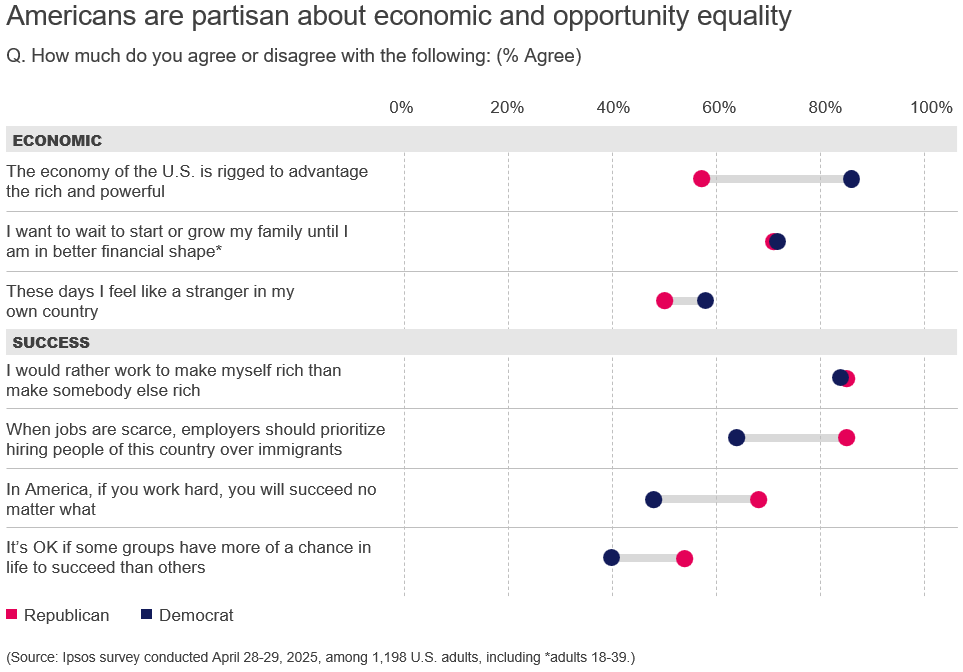
Some of that economic shift might be easier said than done. In the post-war era, America had moved into its third industrial revolution. What once was an agrarian economy moved to an industrial economy and then moved on to a knowledge- and service-based economy. Recently, discussion has focused on a fourth industrial revolution, with a shift to a technology-led economy with a convergence of AI, biomedicine, connectivity and more. Today, most people (57%) say education is the great equalizer. Even more (68%) think government should prioritize making it more affordable.

While the Trump administration has been clear in its goals, the Democrats have been less successful in articulating theirs, but they tend to focus on gender equality, fairness, responsible regulation, technological advancement and global cooperation rather than a more nationalistic approach.
These two visions aren’t necessarily at odds with one another. They open a host of plausible scenarios that businesses and leaders need to be planning for.
Understanding the Dream is one major component of Knowing the New America for this generation and generations to come. As you’ve seen, it’s complicated and requires a lot of intention and a lot of attention to your patients, customers and voters.
Key questions for businesses
- How can brands lean into the values we agree on and avoid the pitfalls where the Dream is breaking down?
- Will small business continue to drive overall and personal economic growth in America?
- What will the ladder to economic mobility look like?
- As our views of the Dream change, how should marketing and innovation evolve?
- What values do we share and how can brands use
them to appeal? - What if America becomes more prosperous? What if it becomes less so?
Having now researched, interviewed and run the numbers on the Dream, I don’t have an answer as pithy as Ralph Waldo Emerson’s. But I think for most people today the Dream comes down to: options and opportunities without obstacles.
As for tomorrow? Read on.
← Read previous | Read next → |