
How can entertainment better reflect all of us?
Identity issue
Media both shapes and reflects our identities — at least for those who see themselves in the media at all. Historically, that hasn’t always been a positive thing. Stereotypes, biases and complex issues of under-representation of some identities have plagued the industry. But there is growing awareness that as audiences are more diverse, media should be, too, says Katherine Pieper, who oversees the research and advocacy efforts for the University of Southern California’s Annenberg Inclusion Initiative. She co-authored its “Inequality in 1,300 Popular Films” report.
Kate MacArthur: How does Hollywood have the most powerful effect on what shapes who we are?
Katherine Pieper: Generally, we talk about media effects as being more powerful in the absence of direct contact. It's when you are less likely to come into contact with people from different backgrounds or from different identities that media can play a role in shaping how we see other folks with potentially greater impact. It really is then back to what are you watching? What are you consuming in the absence or in the presence of what you know?
MacArthur: What are some of the ways specifically how representation is evolving?
Pieper: Is it numerically? Are people present and part of these stories in ways that demonstrate the impact that folks have in our communities, and are present in ways that they're a focus of storytelling? And then some of these other indicators focused on stereotypical stories, or the various aspects of identity that people can inhabit. Intersectional inclusion is often absent. The picture of the LGBTQ-plus community in top films is still largely white and still largely male. That's important to represent that experience, but there's a variety an array of experiences that, that people in our communities and in the audience experience. And we often don't see those represented on screen.
MacArthur: What might be a powerful entertainment moment that would shape or reflect a person's identity?
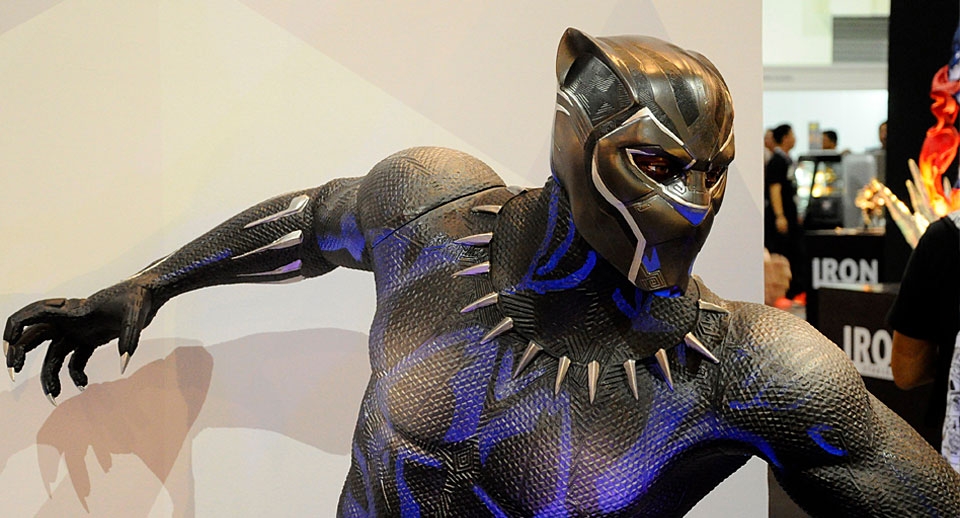
Pieper: It's going to vary so much between people. But portrayals that make people feel seen and heard are always important. You can see when “Wonder Woman” came out, all the anecdotal reports of women who said, “I'm finally seeing something that is inspiring to me, or I feel excited about it.” Or “Black Panther” and how Chadwick Boseman embodied that character and what it meant to viewers and to people.
MacArthur: What has been most successful that will help move things forward?
Pieper: You're seeing companies who take this seriously who are trying to put systems in place. Amazon Studios, who we've worked with to build their inclusion policy and playbook that they released last summer is really a guide to how to do this well. There's more work to be done and it's finding those places in the hiring and the development process.
Whatever place in the process where they can take actions or put something into practice, that's going to shape the things that move forward. Seeing progress for women directors, seeing that the gains that we had were sustained, that's so important. That number has been very stubborn to move over time. So, there is progress. Now it's about widening that aperture so that women of color are also part of that progress.
MacArthur: Can you connect those metrics with profit?
Pieper: When we looked at films with women of color in leading roles, they consistently were given lower production budgets, lower marketing, put in fewer theaters and fewer territories. If films aren't getting the support that they need to succeed, and they tend to be films that fall into stories about
women or people of color, then there's something else at play. The question about linking profit to identity, you can’t answer it because you're consistently setting films up with women and people of color in the lead to not perform as well. It's about coming back to that, and for executives who are green-lighting and developing films saying, “How do we level that playing field and then really see what happens,” because that's not been the case.
MacArthur: Now you can be anything in the metaverse and you don't even have to identify with a particular gender. Where do you see that going?
Pieper: We're very much at risk at replicating some of what we currently have. So that's where our eye will be. Are things looking the same or are they looking different in the worlds that are constructed, because then we're just inserting people into the status quo and expecting something different.
MacArthur: How much opportunity is there in the metaverse for people to reflect or express their identity?
Pieper: You’re seeing some interesting research right now, like on Instagram and girls. How is social media also a way to put on an identity and play with that identity in ways that that can have real consequences for people offline? It's young people that will be the fertile ground for research as they embrace these technologies from a younger age.