
Will we have different identities in virtual spaces?
Identity issue
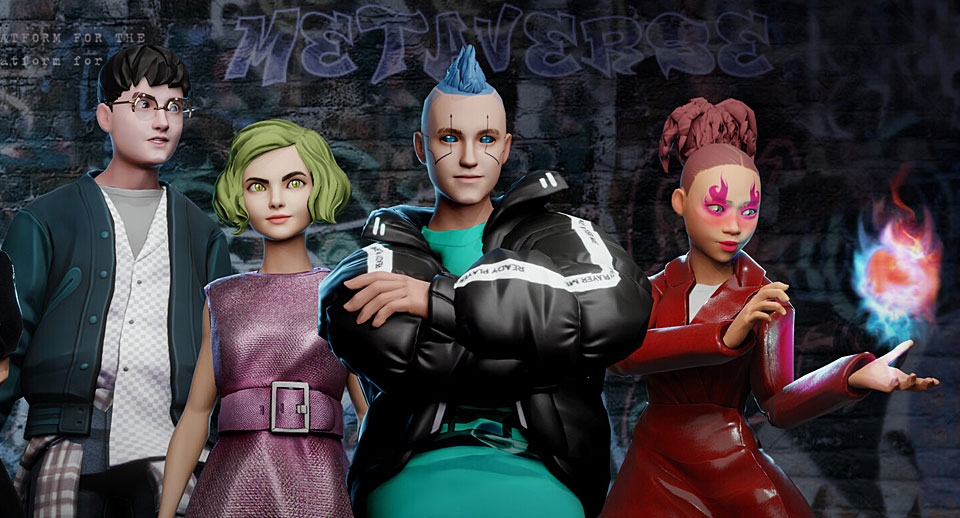
Talk of the metaverse is all the rage today, but tomorrow these sorts of 3D virtual spaces will likely be ubiquitous. However, the metaverse evolves, people are going to need an avatar to represent their identities. Timmu Tõke sees the metaverse as “a network of thousands of different places.” He believes that as people move from one virtual space to another, they won’t want to make a new avatar for each, so he’s building an interoperable format that can be used in multiple worlds. He started Ready Player Me to fill that need.
Matt Carmichael: How do you think about identity in virtual spaces?
Timmu Tõke: Identity is your representation in a virtual world. You can have many identities. If you have a 3D world, you need to have some kind of avatar. The more social the game is, the more important the identity is. The more you play the game with your friends from real life, the more likely you are to create an identity connected with your real-life identity, versus if it's a fantasy world you might create something that doesn't relate to you at all.
Carmichael: What will we be able to do to express ourselves differently?
Tõke: A great thing about the virtual world is that there's no physical limitations. People will have a lot of different virtual identities and avatars that they use for different types of experiences. One can be connected with your real-life identity. You might have a realistic one for work meetings and you might have a more aspirational version for playing games with your friends or going on a date. And then there can be also just a fantasy identity that can be a different gender or an animal.
Carmichael: As the metaverse evolves how do you see the role of avatars changing?
Tõke: The more time people spend in 3D virtual worlds, the more they need an avatar to represent them. Our core hypothesis is that people will spend more time in virtual playing games, shopping and going to events. In all those places they need to have an avatar. It becomes a bigger part of our lives as more virtual interactions will happen through an avatar. People will see avatars as an extension of their own identity.
Carmichael: How many identities do you think we can support at once?
Tõke: Ultimately you will land on a few different identities. You will use not an infinite amount because you still want to create a connection and live out different parts of your own character in those identities.
Carmichael: How will people express those identities?
Tõke: They're more likely to spend money on them to buy skins [costumes and gear for avatars] and buy cool things and express themselves and so forth. Right now, it's very much a gaming thing and a lot of people play games. But it’s going to be more mainstream as virtual spaces evolve.
Carmichael: And as you’re moving from world to world, will you look the same? What happens to the skins and accessories you buy for your avatar?
Tõke: We believe that the metaverse needs to be more connected and interoperable. We believe that the assets you buy in one world should work in other games – not all of them, but I think with avatars it makes a lot of sense to be consistent.
Carmichael: How are brands helping people create and express their identities in these 3D virtual spaces?
Tõke: In the real world, brands tell a story and help you express your identity. I can't see why that would be any different in the virtual world, because if you have built a real- world brand and it’s something people desire, why wouldn't they scale that virtually?
If it's a clothing brand, you could have incredible margins and maybe even a better business in the virtual world long- term. It also makes sense that the same new brands will be desirable in the virtual world. They’re just experimenting now. There’s so much to learn.
Carmichael: Will brands have to work across multiple platforms as well if avatars aren’t interoperable?
Tõke: You can either go to each individual game and customize and create a new asset that works for their [specifications]. But that’s going to be a nightmare. An interoperable avatar is great for brands because people can purchase something that then becomes usable across thousands of different worlds. That enables brands to play in the metaverse in a different way than manually creating assets for each game. That’s just not feasible.