
How we’ll compete (and watch) in digital play
Play issue
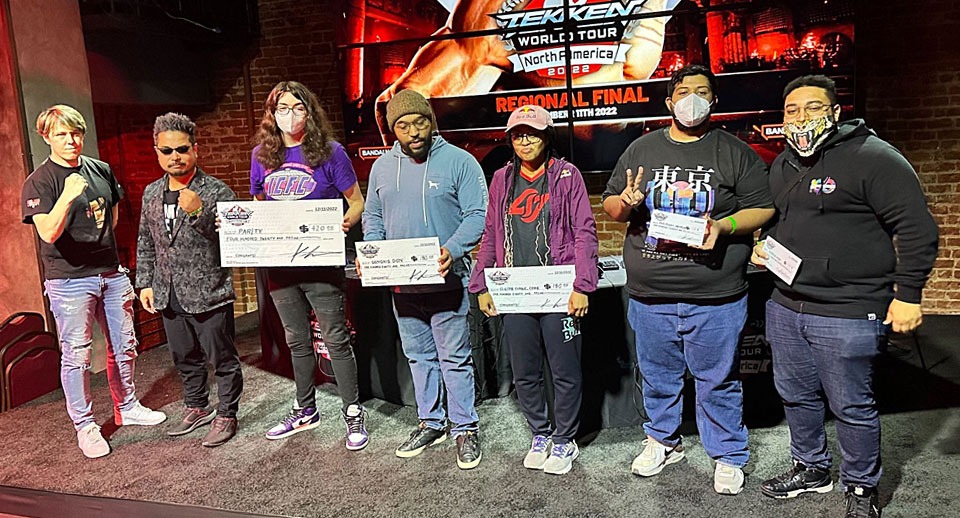
Jeannail “Cuddle_Core” Carter grew up with video games, but it wasn’t until college that she got serious about play. Today, the 28-year-old is one of the world’s best at the iconic fighting game Tekken. Carter sees the esports fandom growing, from the crowds at tournaments to her nearly 25,000 Twitch followers. But she also thinks pros and fans alike need to hold each other accountable for making newcomers feel welcome.
Christopher Good: What makes someone watch a Twitch stream instead of playing a game?
Jeannail Carter: I think there are a lot of things. Personality. Energy. Technique. Skill, aesthetic, how much the viewer gets to interact — it depends on the person and what they’re looking for. People come into my stream because it's a good time. I can be funny when I want to be, but I have a lot of knowledge about the game — they ask me [something], I'll give them an answer. Regardless of what I play, competitive or not, I give a lot of emotion and energy. I'm very expressive when I want to play this stuff, because it's what I love.
Good: How is building a fan base in esports different from building a fan base as a professional athlete?
Carter: I don’t think there’s much of a difference. If you're a popular player or streamer or an athlete, eyes are on you. What you do is magnified times 10 — good, bad and in between. But one big difference is that people don't always understand what we do. This could probably be said for traditional sports, because people don’t understand what athletes go through in training. But you see all that physically. All you see when you see me sit down is that I'm sitting down. I think that's the biggest thing, that lack of knowledge about what pro players do to prepare and grind it out.
Good: What responsibilities do you think streamers and players have to their audiences?
Carter: When newer players come into a space, their first interactions are the ones that will leave the biggest impression on them. So, it’s important that we be as welcoming as we can. If we can be these resources and provide knowledge for new players, it'll make even more people want to come and join. That’s a huge responsibility. I also think there has to be more accountability; more rules put in place, so that if somebody says something or something happens to someone, they know who they can come to.
Good: Right now, a big part of making money in esports is fandom, from audience donations to merchandising. How does that impact the culture?
Carter: The following is a huge part of making it as a player. Now, not everybody is going to be competitive. That's totally fine. But how you market yourself determines discoverability and determines finances. I think merch really helps the culture, too, because people wear this stuff all the time. Maybe it’s something catchy, something your game has that's unique, or some meme. The fighting game community has tons of sayings or phrases you see on shirts, even on shot glasses — just funny things that connect to your brand and people's experiences.
Good: Unlike traditional sports, fans of esports can comment directly on their favorite players, and the lines between entertainment and competition can get blurry. Are attitudes changing?
Carter: That's an ongoing thing. In gaming competitions, the biggest advice is: “Don't look at the Twitch chat,” right? When there are 200,000 people watching a tournament, there's going to be some unsavory things in the chat. And it doesn't matter whether players see it or not, that's not the point. It’s about showing what we condone as a community. When comments are really good, you're like, “Wow, that makes me feel good.” But while you could see 80,000 positive comments, you see one negative one and it ruins your day. Still, attitudes towards it are changing, which means new people feel more comfortable coming into these spaces. It's changing slowly. There are more new faces.
Good: Doing what you love can also make it hard to separate work and life. Does the competitive gaming and streaming culture need any changes around work-life balance?
Carter: I see a lot of discussions about work-life balance for streamers and pro players. You're self-employed in some ways, you're your own boss, you don't punch in and punch out. You make your own schedule. But you find yourself working a lot more than you think. You might have a team owner, but they're not telling you, “Hey, don't play.” That's on you.
I've had to create this massive separation between the two, because nobody else is telling you how to do it. In a space where there's no defined path or blueprint, you grind so hard. I think people are getting better at changing that, but the path is new, so it’s still trial and error.