

What anti-obesity drugs could shift in how we think about weight
WeightWatchers has long been lauded as one of the most effective diet programs. But in 2023, the company pivoted from its focus on behavior modification programs to add clinical support as new prescription weight loss drugs surged in sales. Through its WeightWatchers Clinic, eligible members can receive these prescriptions in conjunction with customized behavior and nutrition programs. Dr. Spencer Nadolsky, WeightWatchers’ medical director, explains the shift and what it means for the future.
Kate MacArthur: When you think about the future of weight management and this new class of drugs, what's your biggest question?
Dr. Spencer Nadolsky: My biggest question is whether we're going to have an impact on our larger environment in talking about these medications, or if we're just going to focus on medications alone. We need to do both to be successful. I don't think we're going to drug our way out of this situation. Having said that, the medications are extremely powerful and part of the solution.
MacArthur: What if we could use medication rather than lifestyle to prevent obesity in the first place?
Nadolsky: It's not out of the realm that in the future there will be therapies that prevent obesity in the first place, similar to using statins for preventing heart disease. While weight gain may be prevented, there will likely still be a need for lifestyle to optimize health beyond the scale. That is, unless there is a therapy that mimics exercise and eating a healthful dietary pattern!
“I don’t think we’re going to drug our way out of this situation. Having said that, the medications are extremely powerful and part of the solution.”
MacArthur: Then what role do these drugs play in helping a person manage their weight?
Nadolsky: When you take these medicines, it brings agency back into play where, you're like, “I don't have to have that dessert.”
MacArthur: What does that mean for weight management companies and programs?
Nadolsky: As people get more educated around weight and health, there's going to be this big shift to understand that health goes beyond the scale. It's important for every company that's looking at weight loss and weight in general to do that.
MacArthur: Are these treatments a cure or a lifelong therapy?
Nadolsky: Most people will likely require some form of long-term therapy, whether it's medicine plus diet and exercise, or diet and exercise alone. They will still have to continue those lifestyle habits; they wouldn't be able to go to do whatever they were doing before and keep the weight off.
MacArthur: What do brands need to help people do if stigmas about obesity change?
Nadolsky: Accepting yourself and being OK in your body, but also just improving quality of life, regardless of your body. And including people with obesity so they don't feel excluded from being able to use the product or service.
MacArthur: How do these drugs shift views on obesity?
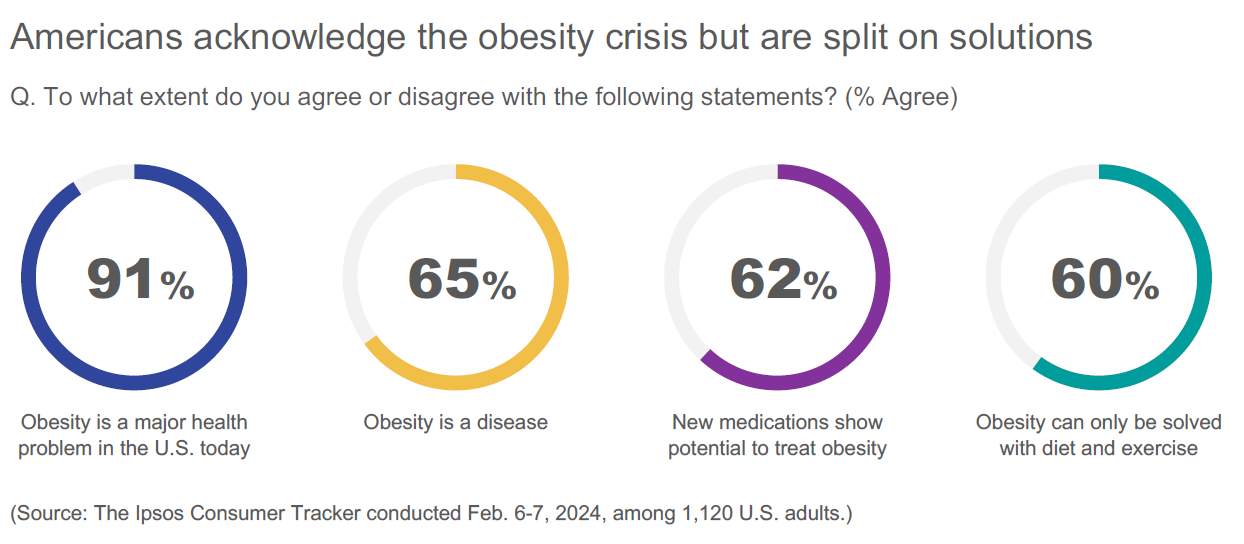
Nadolsky: Most used to, and still think of, obesity as a willpower and a discipline issue. With these drugs, it shows that there's a much stronger biological underpinning of obesity than was thought. Many scientists and researchers have known this for quite a while, but now the public is starting to understand.
MacArthur: There is such a powerful stigma about weight, particularly in the U.S. Yet, we also have this movement toward body acceptance. What changes with these treatments becoming mainstream?
Nadolsky: It's possible that people might be stigmatized further because other people will still not understand the complexities of obesity or know that there may be other things that go into obesity that the medicine couldn't resolve. It's going to take another paradigm shift to understand that obesity is heterogeneous.
MacArthur: Is obesity ever not a disease?
Nadolsky: There's a whole international committee working on the definition of obesity. I've been in debates about this because if you think of obesity as based on body weight, body fat, BMI, at what line does it become a disease versus not a disease? It's impossible to know whether it's a disease or not based on weight alone.
| ← Read previous Shifts: Three forces that will shape the future of wellness | Read next → |