
What people want from local news and how to fund it
Local news in the U.S. is endangered. Just 6,000 daily and weekly newspapers have survived the digital transition from some 24,000 in the early 1900s, according to a Northwestern University/Medill study. In the last generation since 2005 alone, nearly 3,000 newspapers and 43,000 journalist jobs disappeared as print advertising collapsed and publishers struggled to replace those revenues with digital ads. Still, Rick Edmonds, media business analyst for the Poynter Institute, argues that local news still matters and shares hopeful signs of a new news landscape.
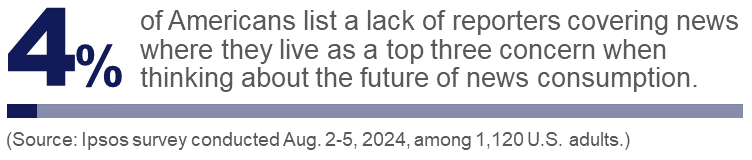
Kate MacArthur: What does the public want out of local news?
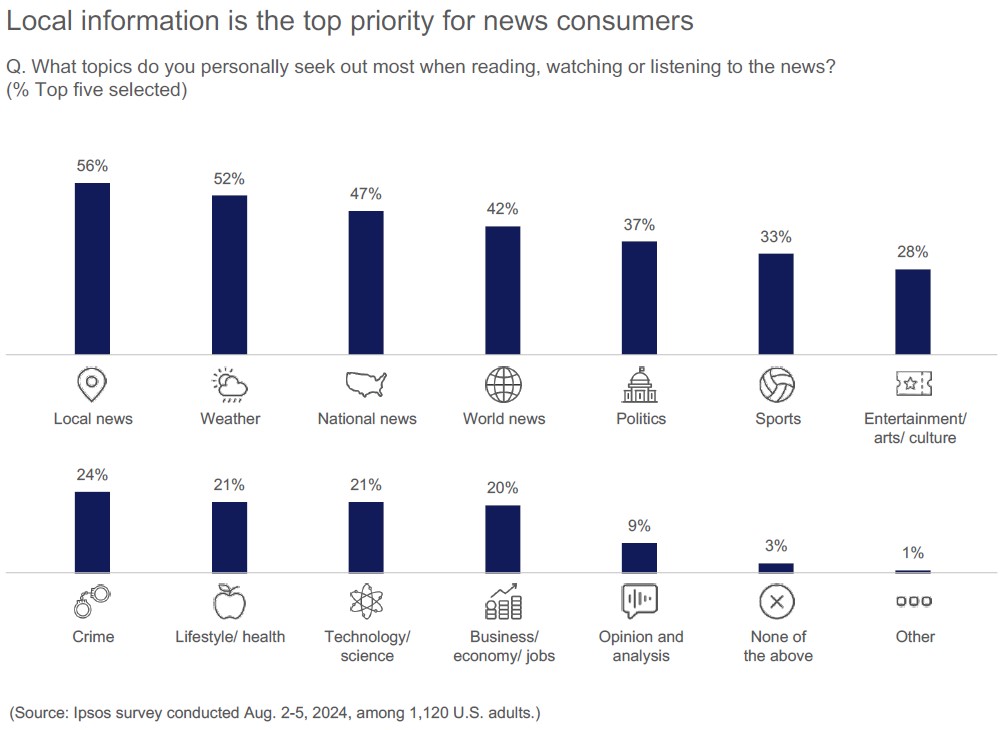
Rick Edmonds: There's an emerging consensus that political news and investigative news have a part. But people are looking for practical information to help them live their lives in the community. And these items are gaining coverage: real estate, affordability, what to do, where to go, colorful local history. There's still a search for what the components of that package are and who will produce them in the newsroom, and it hasn't exactly been field-tested.
MacArthur: Is it what people want or what they need?
Edmonds: We know from research that the main place people get their local news is local television. And weather and traffic are for many people what they need. Now I think that's not the only thing. Once they're in the medium, the right story that catches their attention is a viable part of local news.
MacArthur: Have you found signs that people are willing to pay for news at a sustainable scale?
Edmonds: There is some evidence that young people are more willing than older people to pay for news. The rise of subscription services — which are a powerful competitor for the time of potential news readers — acclimates people that if you want the best, you're going to need to pay for it.
MacArthur: How is the demand for local news evolving with digitally or socially native audiences?
Edmonds: Reuters Institute in Oxford documented not only that there are many people who go to social media for much of their news, in some cases, the predominance of news. Some of the platforms — TikTok is a great example — are still not big, big, like Facebook, but the trend line is going up very fast. With both social media and, to some extent, the digital or local news startups, we're entering an age where many smaller things form an ecosystem, because these outlets feed on each other. As we break down different kinds of media collectively, you need to put the creator, influencer or other social media where people are getting their news.
MacArthur: We see streaming media creating bundles where you can pick the content you want to pay for. And they’re brand friendly. Do you see that kind of model having sustainability for news?
Edmonds: I do. Another thing we should mention is the rise of newsletters, and newsletters are absolutely something that tend to be quite targeted, so you pick the one or ones that fit your product best. One final thing is several of them are structured so there is one sponsor, not a bunch of different advertisers. So if you have a good newsletter, and it’s got a good reputation and is growing, as an advertiser, it's your newsletter. You’re the sponsor. That can be a really good message.
“The rise of subscription services — which are a powerful competitor for the time of potential news readers — acclimates people that if you want the best, you’re going to need to pay for it.”
MacArthur: Of the various models and experiments to sustain local news, which look most promising?
Edmonds: One is for a subsidy, and that can be the cost of having a subscription. Another is tax credits and the case for that is pretty clear. The hesitation on both the government side and the publisher side is, “We’ve got to keep the news side and the business side totally separate to avoid a potential conflict of interest.” I don't think that's an argument that makes sense in the current climate because there's a real possibility that the newspaper organization will either go out of business or will be downsized so much, especially in a smaller community, that you barely have any reporters and editors left.
MacArthur: What do futures with less local news or more local news look like?
Edmonds: We see many communities that are served not at all, the so-called news deserts. But as long as news consumers get comfortable with a bit broader shopping around to see what suits their needs, that's a sector that's growing very quickly. It has the support of local philanthropy in many instances now. Local and community foundations that used to focus on healthcare and other social issues pretty exclusively now see journalism as something they should consider supporting, and in many cases now they do.
← Read previous | Read next → |