
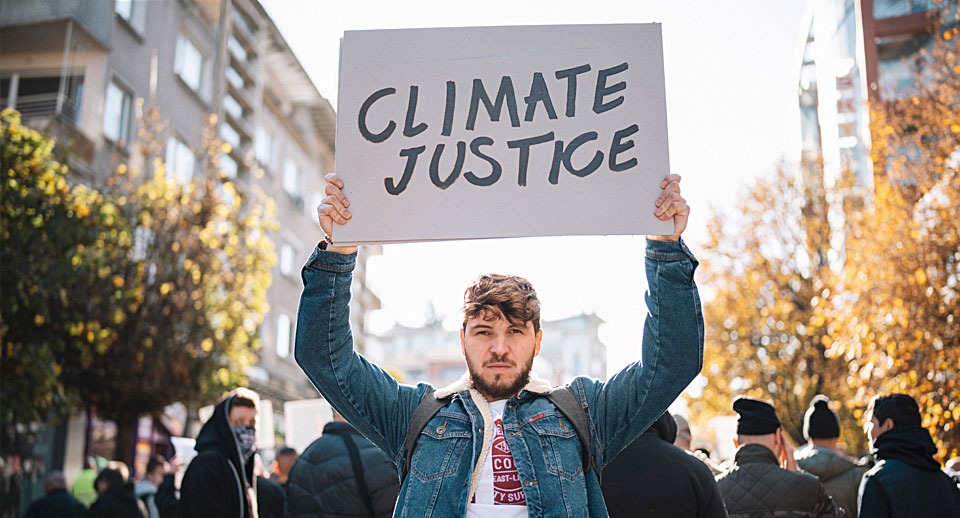
Why political polarization means brands need to clarify their purpose
Love issue
Corporate purpose has been a reliable tool for boosting corporate reputation. In recent years, strategies for corporate social responsibility (CSR) have given way to environmental, social and governance (ESG) practices and investments. But ESG and corporate purpose at large have become politically polarized, which marketing professor Nooshin Warren says makes backlash to corporate purpose increasingly challenging to manage.
Kate MacArthur: Some people call ESG the new CSR, while others call it brand purpose. How do you differentiate between these terms?
Nooshin Warren: CSR and activism are on a spectrum. Both CSR and activism are done to make a change. But one is something we all agree on, one is something we don't. Now, where is ESG supposed to be? Several factors included in ESG are now becoming closer to activism. So as much as companies call ESG the new CSR, several parts of it are, in fact, polarizing and partisan. Climate change initiatives, employee relations, diversity and healthcare, and political contributions are often in publicly available reports and can create controversial debates across political parties. Firms need to carefully pursue their activism so that it doesn’t conflict with their ESG reports. If one person knows your ESG initiatives, it goes on social media, and everyone will know it. You can't put a pro-choice message out while you are putting all your money toward a candidate that is basically against it. All of that I call a controversial act.
MacArthur: How does polarization factor into whether a company’s purpose activity is activism?
Warren: What we define as specifically corporate activism is when you are standing up to support or oppose an issue that is political and partisan, which then is polarized.
MacArthur: What can brands do to get through any initial backlash as well as in the future?
Warren: Our team suggests to brands to not use activism as a PR tool. Don't use it as something to advertise. When you decide to speak up about a sociopolitical issue and your values — and I hope that this is a core value because in that case it's much easier — move forward and don't care who gets upset. Just care about the people you gain. For a long time, Patagonia [has done] that. They don't care if they lose some people; they will also gain some people. Those are the ones that I see being successful in the long term.
MacArthur: Is there such a thing as being neutral?
Warren: At one time, there was. Neutral is difficult right now. We ran an open-ended survey on about 400 people. We created scenarios for a firm to stay out of a political issue. There was gun control, LGBT, gender equality, immigration, many of these types of issues. We gave them scenarios: “This is happening, a lot of firms are talking, and this particular firm doesn’t. How do you see that?” Between 20% to 30% of people say this firm is neutral. That’s it. Then we asked, “Why do you think the silence exists?” Their answers were apathy, fear, a lot of it was fear. [The firm] worried that they're going to lose something, lose face, lose customers and then it does change their attitude.
MacArthur: How have politics and backlash evolved with purpose over time?
Warren: Go back absolutely to social media. Backlash now cannot not be seen because we have a platform for it to be seen and to be very loud.
MacArthur: How do you think polarization and backlash could play out in the future?
Warren: Pew Research Centers has the picture of it. If you look from 1990 until 2017, they have how much we have become polarized just generally as a country. If this is the trend, we are going to go further and further. Can this stop? It might actually need an exogenous shock to stop it, which I don't know what it can be. It might be regulations in social media, which then brings that fear of how we are going to lose freedom of speech if we start regulating that. I think having educational panels to teach people what exactly is included in something that [they] are fighting over. AI might be very useful in creating those platforms of education.
MacArthur: You touched on authenticity and living the message. Is there a lesson for the future?
Warren: A lot of animation movies that are coming out now for children have very big concerns that they're trying to cover: having superheroes that are different colors or from different backgrounds, having bisexual or homosexual characters in them. I have friends who are upset about it because they say, “My kid watches it and then thinks this is normal.” And I'm like, “That’s the whole purpose of that, to make that normal.” We are upset now and polarized, but it might be different for the next generation that is growing up. So, some of these things that we call “-washing” might be to us, but for future generations might not be.
|
← Read previous |
Return to beginning |