
How institutions and policy can lead to healthier, more sustainable food
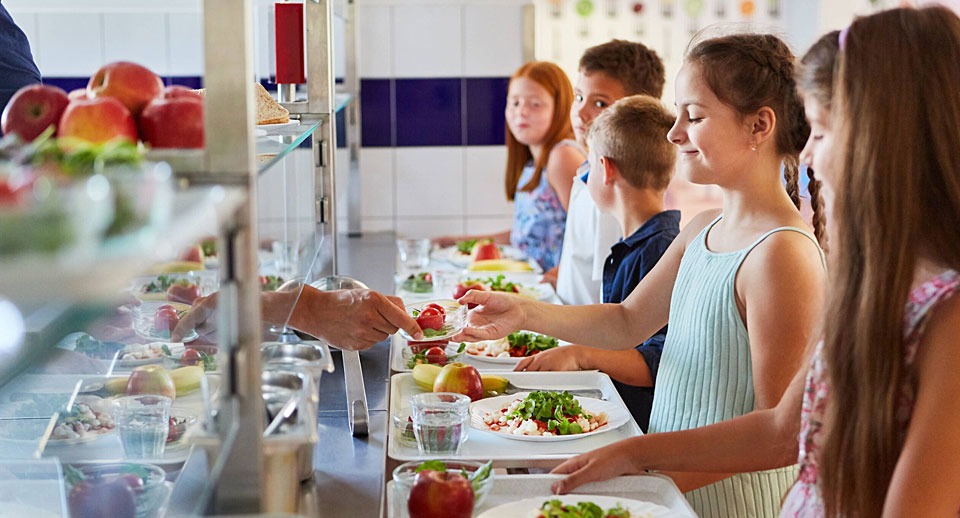
The New York City Public Schools system is the second-largest institutional food buyer in the nation. It serves breakfast and lunch daily to 1 million kids in 1,600 public schools. The New York City Mayor’s Office of Food Policy, directed by Kate MacKenzie, sets the policy for the schools and for restaurants in the city. When she thinks about the future, she’s thinking how policy and education can nudge us to a healthier and more sustainable future, as long as the solutions can scale.

Matt Carmichael: What policies do you set that impact food for New Yorkers?
Kate MacKenzie: Many kids get most of their calories from schools. Our job and responsibility is to make sure that all students have access to delicious, culturally appropriate and nutritious meals. For instance, we introduced Plant-Powered Fridays that feature whole, minimally-processed plant proteins in ways that are really delicious.
Carmichael: How do you work with food manufacturers?
MacKenzie: First, New York City has its own labor force. We do our own food buying; we do not outsource our food service like some school districts do. We are the country's second-largest buyer of food when it comes to our school system. In 2008, the city introduced nutrition standards for the food it serves and buys. If a product didn't exist, it would be created for the city of New York. Some classic examples include a whole grain bread that met the nutritional profile for students but also wasn't overly brown in the sense that kids would be turned off from eating it. Another instance was a yogurt that met serving size requirements without too much added sugar. These are intricate relationships back and forth with food manufacturers to be able to create something that the city of New York will buy.
Carmichael: That must impact the market broadly.
MacKenzie: The ripple effects of this are that other school districts and other municipalities will be able to benefit from that, too.
Carmichael: How much of the food is precooked?
MacKenzie: Many of the recipes that we've been able to advance and serve with our plant-powered menus are predominantly scratch-cooked. That’s an investment in culinary training and consistency.
Carmichael: Shortening supply chains is an issue in the future of food. To what extent do you expect your partners to source locally?
MacKenzie: We have rich agricultural production in New York state. But we are not immune to some of the effects of climate change on our crops that make it both important to support our agricultural community, and make it challenging, because we need to make sure that we have a steady supply of food. Where possible, we make relationships directly with farmers. But we are not some idealistic school district that “backdoors” deliveries from farmers and puts them onto the menu later in today's lunch. Just the sheer size of the city prohibits that. We make sure that our food distributors or manufacturers are utilizing New York state products where possible.
“Many kids get most of their calories from schools. Our job and responsibility is to make sure that all students have access to delicious, culturally appropriate and nutritious meals.”
Carmichael: When it comes to setting policy, how do you balance between healthier foods, which often cost more, and budgets, which are often getting smaller?
MacKenzie: I would push back on the premise that healthier foods are more expensive. When compared to beans or other plant-based proteins, the meats are the more expensive option.
Carmichael: How does setting policy for the New York City restaurant industry differ from schools?
MacKenzie: Restaurants are how many New Yorkers eat every single day. One policy is we have been encouraging restaurants to buy less meat and dairy. We have committed as a city to reduce the carbon footprint of our food purchases by 33% by 2030. We have put out a call to the restaurant industry and private industry at-large to also commit to buying less meat and dairy to reduce their own carbon footprints by 25%. This is not about elimination. It’s about introducing more plant-based options and maybe not promoting as much or putting heavy meat options at eye level on a menu, for example. There are behavioral nudges that can go far in this effort.
← Read previous | Read next → |