

How news can thrive by borrowing from tech and CPG playbooks

The New York Times has unique but also shared challenges with the rest of the news media. Not everyone can buy Wordle and Wirecutter. But there’s also high demand for quality news. Finding the right model and getting people to trust your publication isn’t easy, however. David Rubin, the chief brand and communications officer at The Times brings a background in tech and consumer packaged goods marketing to the news world. When he thinks about the future of news, he’s finding inspiration from outside as well as within.
Matt Carmichael: What can other news organizations learn from The New York Times?
David Rubin: I don't know that there is a single playbook that anyone should be telling everyone else what to do. It's still more of a growing industry from the subscription perspective or subscription-driven models. But first, have a real sense of your most-defining business model and align that model with your mission and your product. The other part of our model is that advertising remains super important to us. An affiliate model has been helpful. Licensing revenue has been helpful. We have multiple revenue streams, but we also have a sense of what's most important, and we can organize around that.
Carmichael: The Times is successful at many of those revenue streams. How does that work?
Rubin: One of the challenges about our industry is we use words like “the media” and say that's one industry. I don't think folks making video-based cable news have a whole lot in common with Disney+ or with us. They're very different models and in some ways, different industries. Bringing them all together confuses folks and, in fact, confuses the public. Pulling those things apart takes sophistication but is really important to do.
Carmichael: The Times is both a local paper and a national resource. What part of the localness translates to other news organizations?
Rubin: What matters most is that you put out quality work that people want. That may seem simple, but it’s not. News is hard and expensive. It is a human-first endeavor. In the digital era, all of us, including local publications, have seen an expansion in their total audiences, but a reduction in their business strength because the platforms are taking a lot of that economic value versus, say, the print model of 20 years ago.
Carmichael: This topic can get depressing.
Rubin: Yes, but there are examples, ourselves included, that prove that there is a path. We have a lot of consumer interest. Now we just have to figure out what to do with it.
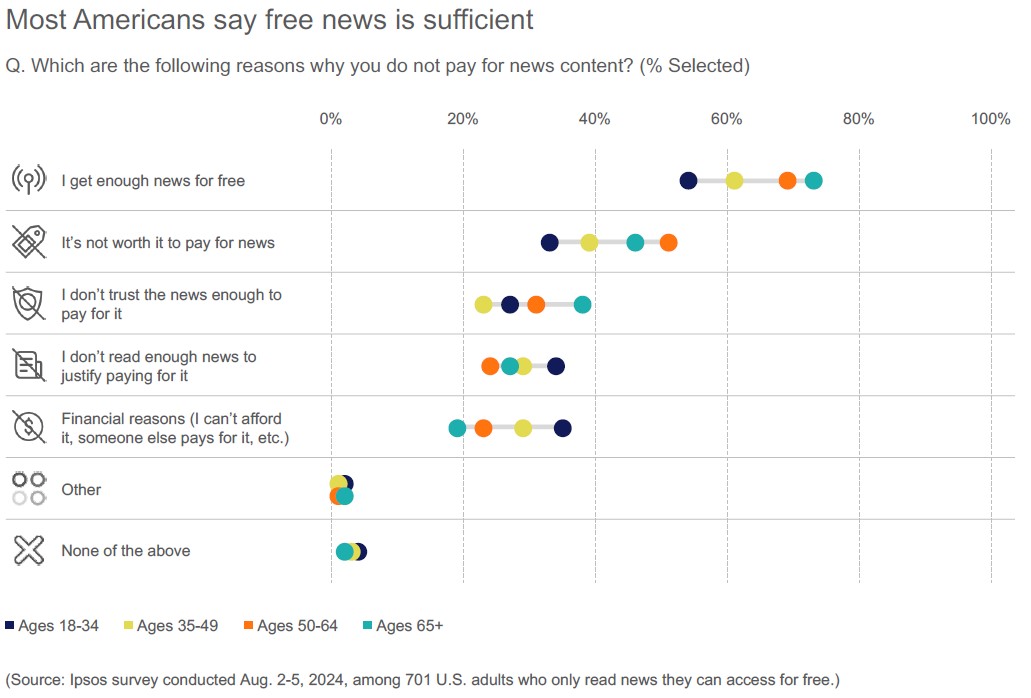
Carmichael: In our Future of News survey, a strong majority said that they only read news they can access for free. What does that show you about the future of news?
Rubin: You also see a whole lot of people in those same kinds of surveys lamenting the state of our news: There's no shared fact base; they don’t know who to trust. Our job in news is to help connect those dots for people, so that if you’re not actively supporting a news organization, and then you don’t like the quality of news that's out there … you should ask yourself [why].
“There’s always value in looking outside for models and inspiration. It is hard to come up with something no one’s ever thought of. It’s a lot easier to apply something that no one’s ever thought of in your particular context.”
Carmichael: Your background is in CPG. What do you think news organizations can learn from other sectors?
Rubin: In the end, businesses are businesses. Of course there are differences. There’s always value in looking outside for models and inspiration. It is hard to come up with something no one's ever thought of. It’s a lot easier to apply something that no one's ever thought of in your particular context.
Carmichael: There are systemic issues with the industry and consumer trust. How does that challenge you as a marketer?
Rubin: It's helpful for us to not see ourselves as a mature industry, but as a startup industry of digital subscription journalism. The insight behind Axe body spray, which I worked on, was to stop talking about how it works because everybody knows those products all work equally well. Start talking about other elements. In news, it's helpful to have the mindset that we have to explain to people the basics of what we're offering. People sort of think they know what they're getting, but they don't really.
← Read previous | Read next → |