
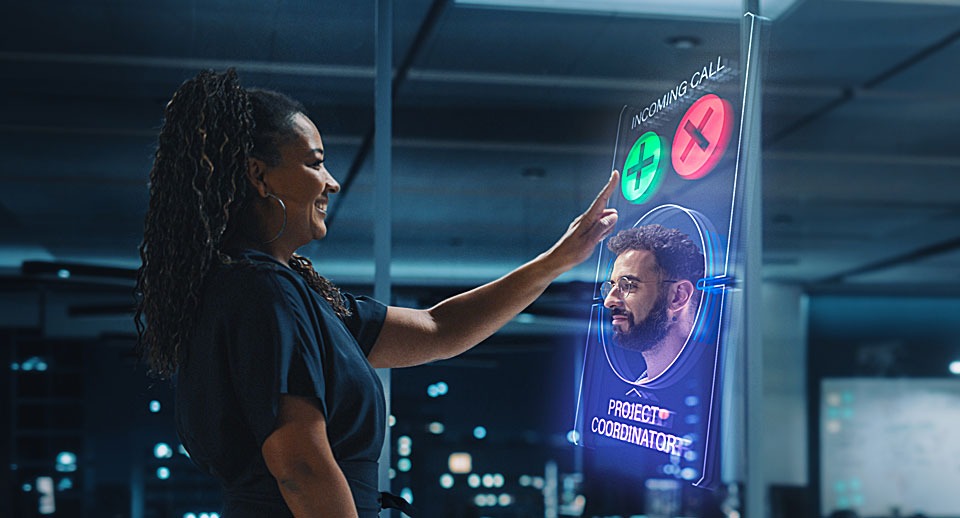
How physical and digital will meet at the office
Cities, as they currently function, rely on a steady diet of office workers to survive. Those workers pay rent, and buy lunches and other things and keep buildings and businesses afloat. Kay Sargent is the Director of WorkPlace at HOK, a leading global architecture, design and engineering firm. She thinks two things will continue to upset that ecosystem: hybrid work and virtual spaces. So how do we design cities for the future? And what can virtual spaces learn from physical design?
Matt Carmichael: Can cities survive without offices and office workers?
Kay Sargent: Some cities maybe, but I doubt it. A lot of the cities west of the Mississippi were less than 150 years old and were built around a central business district. That is the entire model. All of the businesses in that central business district are thriving or dying based on whether people are coming in or not.
Carmichael: Cities will take time to change. If someone is building a new skyscraper, what time horizon does a design firm work with?
Sargent: Three years typically, but I think that’s too long.
Carmichael: How so?
Sargent: The real estate model needs to evolve to be more responsive to meet the needs of people today. A lot of our clients need to get in and out of spaces fairly quickly because their needs are evolving and changing. Yet, in North America, we have some of the longest lease times. The average life cycle of a company is seven years, yet leases are 10 years and furniture is a 20-year or lifetime warranty.
Carmichael: How should cities be thinking about hybrid work?
Sargent: We’re going to lose the word “hybrid” and it’s just going to be “work.”
I think we need to stop designing in silos. We need to create more precincts that are blended and mixed. Before, you went to school here, you shopped there, you worked there, you lived there. Now those things are blurring and we’re blending those lines.
Carmichael: What do we need to change in our physical spaces?
Sargent: Most conference rooms are the biggest rectangular table you can shove in a room with a maximum number of chairs, a teeny screen at the end where the lead of the call is at the farthest end — farthest away from the microphone and the camera. They’re the smallest and the hardest to see. That isn’t a good experience. We have to rethink what are the purposes of all these rooms, then design specifically to enable that type of experience.
Carmichael: Like what?
Sargent: They say at the conservative side, 55% of communication is nonverbal. There are some people that say it’s as high as 70%. If you can’t read somebody’s face, if you can’t read the room, so you probably aren’t as being as effective as you could or should be.
Carmichael: What can virtual space designers learn from physical design and architecture?
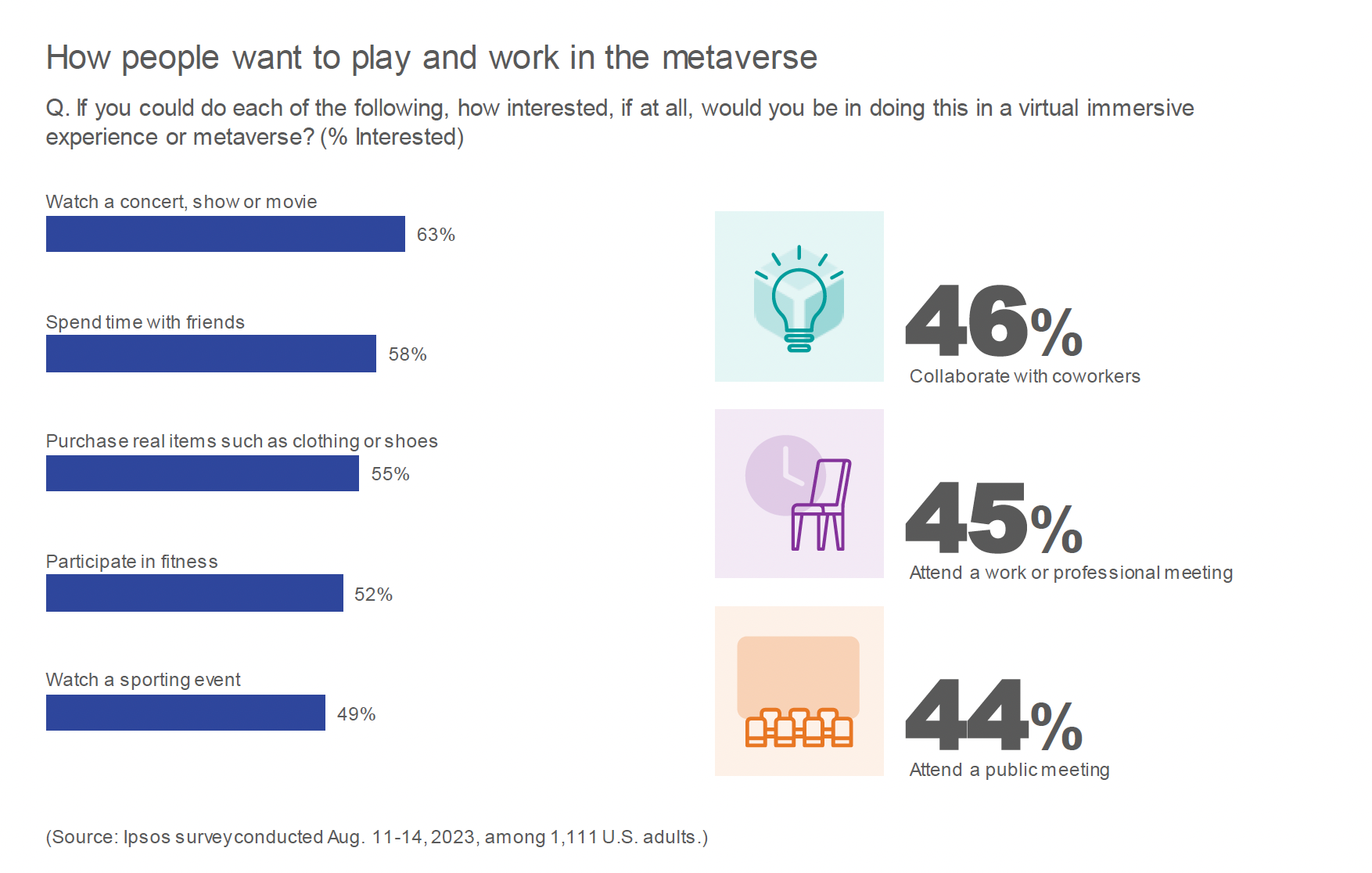
Sargent: When you hire an architect to design your space, you’re hiring them for their expertise about how to put that space together in a way that will lead to the best experience for the user. Right now, there are a lot of people that are designing spaces virtually or in the metaverse that don’t have that same type of sensitivity about sensory processing.
The majority of these spaces that you’re going into are just sensory assaults. Because you can do so much, people tend to just do it all in ridiculously overblown, cartoonish, chaotic type of worlds with all kinds of crazy things going on. Most people can’t process that very well.
Carmichael: That goes for 2D as well as 3D, yes?
Sargent: We need to understand that in the virtual realm, we are impacted by what we are seeing and experiencing in those spaces, just like we do physically. You can physically get nauseous, you can get dizzy, you can lose your focus. You can be totally distracted by the monkey bouncing with a banana in the background because somebody thought it was funny. We have to have some sensitivity to what is the primary focus here? What are we trying to achieve and how can we best do that?
“We need to understand that in the virtual realm, we are impacted by what we are seeing and experiencing in those spaces, just like we do physically.”
Carmichael: How so?
Sargent: There are all kinds of things that we don’t understand about how distracting our backgrounds are to other people, but they are. When you’re in a real-world environment, you can tune some of those things out. But when you’re staring at something, it’s like you’re looking at a picture. It’s a different experience.
|
← Read previous |
Read next → |