

Why living where the politics differ from yours could make a difference

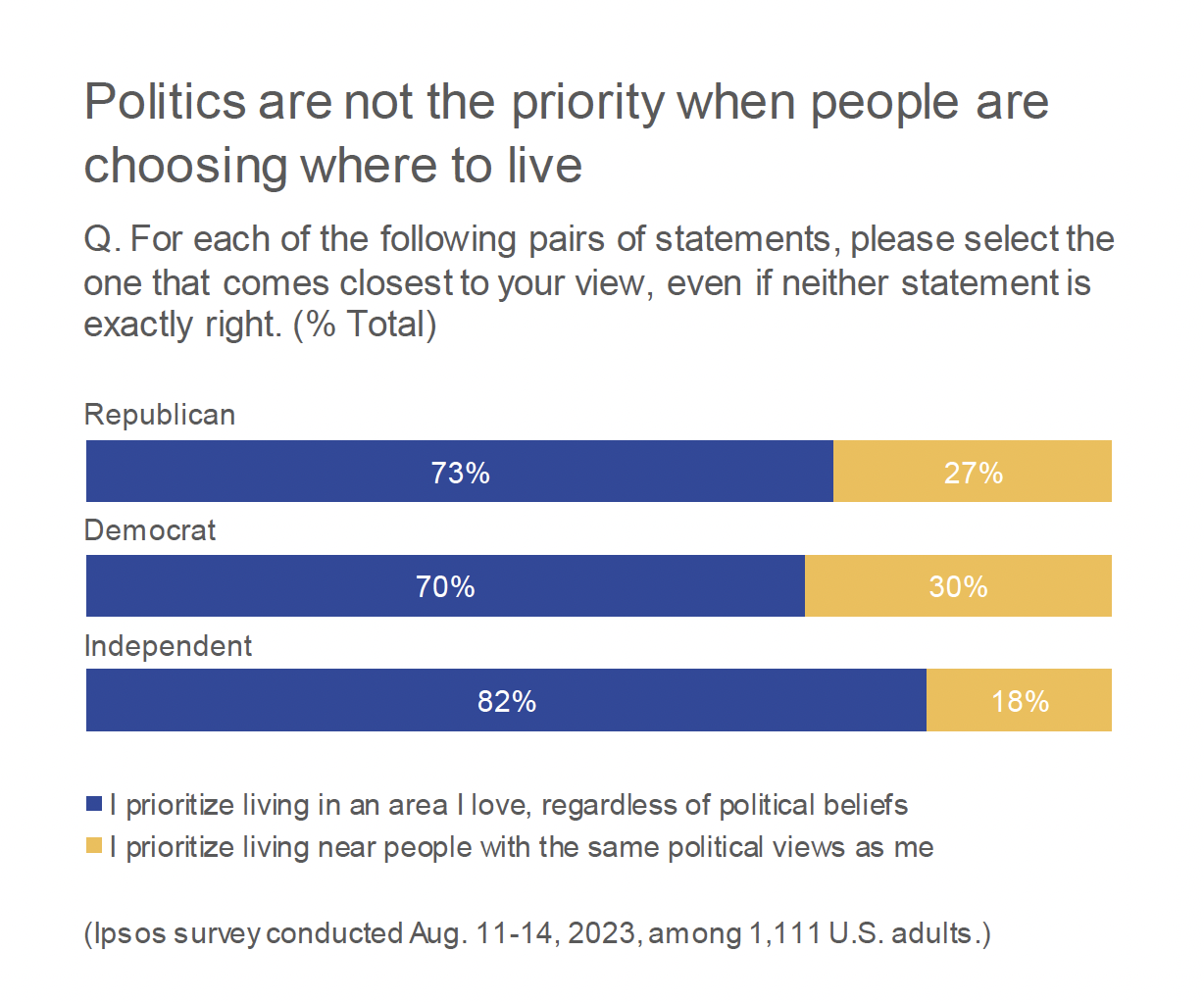
Fewer than one in four Americans say that politics is top of mind when they are thinking about the areas they would choose to live. But perhaps we should.
“The idea wouldn’t be to live near people like you,” says Chris Jackson, who leads Ipsos’ public polling practice, “but to move to places where people think less like you.” That could make more swing districts.
The political sorting of where we live has contributed to bad knock-on effects from impossible cost-of-living challenges in cities to weak job prospects and “deaths of despair” in rural areas. It has also turbo-charged a political system with lopsided districts.
If more urban professional workers chose to move out of the expensive major cities and move to smaller towns across the country, it could have multiple positive impacts. For the individual, lower cost of living and a quieter environment. For the community, the income these high-paying knowledge economy jobs bring, which would flow out into the rest of the town. And for the country, more “purple” districts.
|
← Read previous |
Read next → |
For further reading
Remote workers value access to good services and proximity to family in the communities they live in