
How AI can reduce the friction in work and life
Peter Schwartz is one of the OG futurists. His resume includes not only the legendary forecasts by Shell International that launched foresight as a business discipline, but also consulting on the 1983 techno-thriller film, “WarGames.” Now at Salesforce, he’s contemplating how artificial intelligence will shape the workforce of the future. He’s (mostly) positive and thinks the biggest changes will be in the reduction of the friction of everyday life, both at work and at home.
Matt Carmichael: AI experts and developers are sounding alarms about the tech they are building. Is that helpful?
Peter Schwartz: There’s a famous book by Herman Khan called “On Thermonuclear War.” It served a very useful function. It got people to think seriously about it, and it was one of the contributors to arms control. It’s one thing to have a pessimistic scenario about a bad business outcome. It’s a very different thing to have a pessimistic scenario about the end of humanity. They’re not really planning scenarios. They’re warnings and play a very different kind of function.
Carmichael: How has the nature of work changed over the years?
Schwartz: It depends on where you are in the world. More work is knowledge-intensive and people-intensive and relationship-intensive as opposed to physically intensive. Just as 80% of people once worked producing food for everybody, now it’s 2%. Or manufacturing was 65% and that’s now down to 15% or 20%. That’s a huge change, and as a result, the technologies that affect individuals and what they do have been hyper-consequential.
Carmichael: How will AI evolve that?
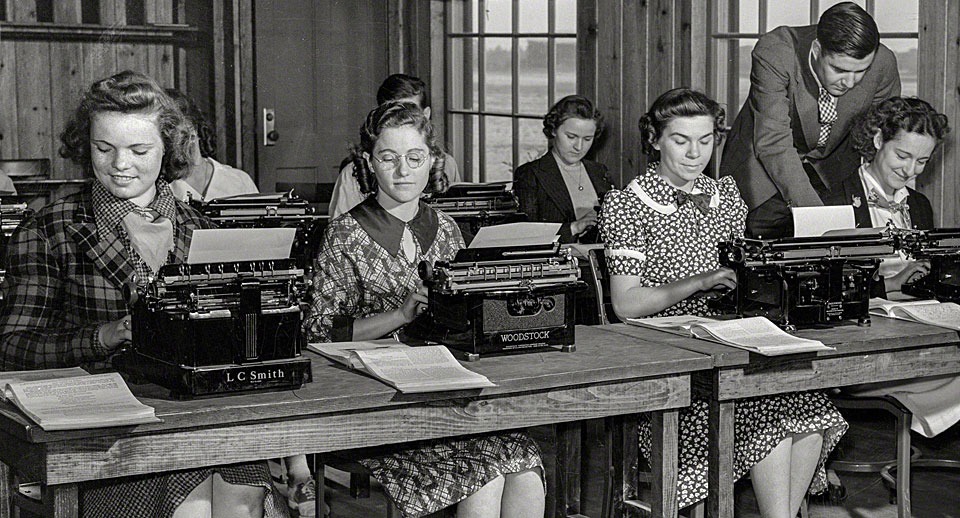
Schwartz: If you went to a bank in the 1950s and went to the back room, you would find a room full of women typing bank statements. Because if you wanted your bank account statement, a woman sat at a desk and typed it. When mainframe computers were introduced, all those jobs of those women went away. We don’t miss them for a moment. What happened to the jobs and the women? One, they did other jobs in the banks like bank tellers because the banks grew. They made more money. They became executives in the bank. The other thing is that the economy grew. [Women] got other jobs as the service economy grew. That’s what keeps happening. We’re in one of those moments.
Carmichael: People are concerned that AI is coming for their jobs. But it’s going to create jobs, too, right?
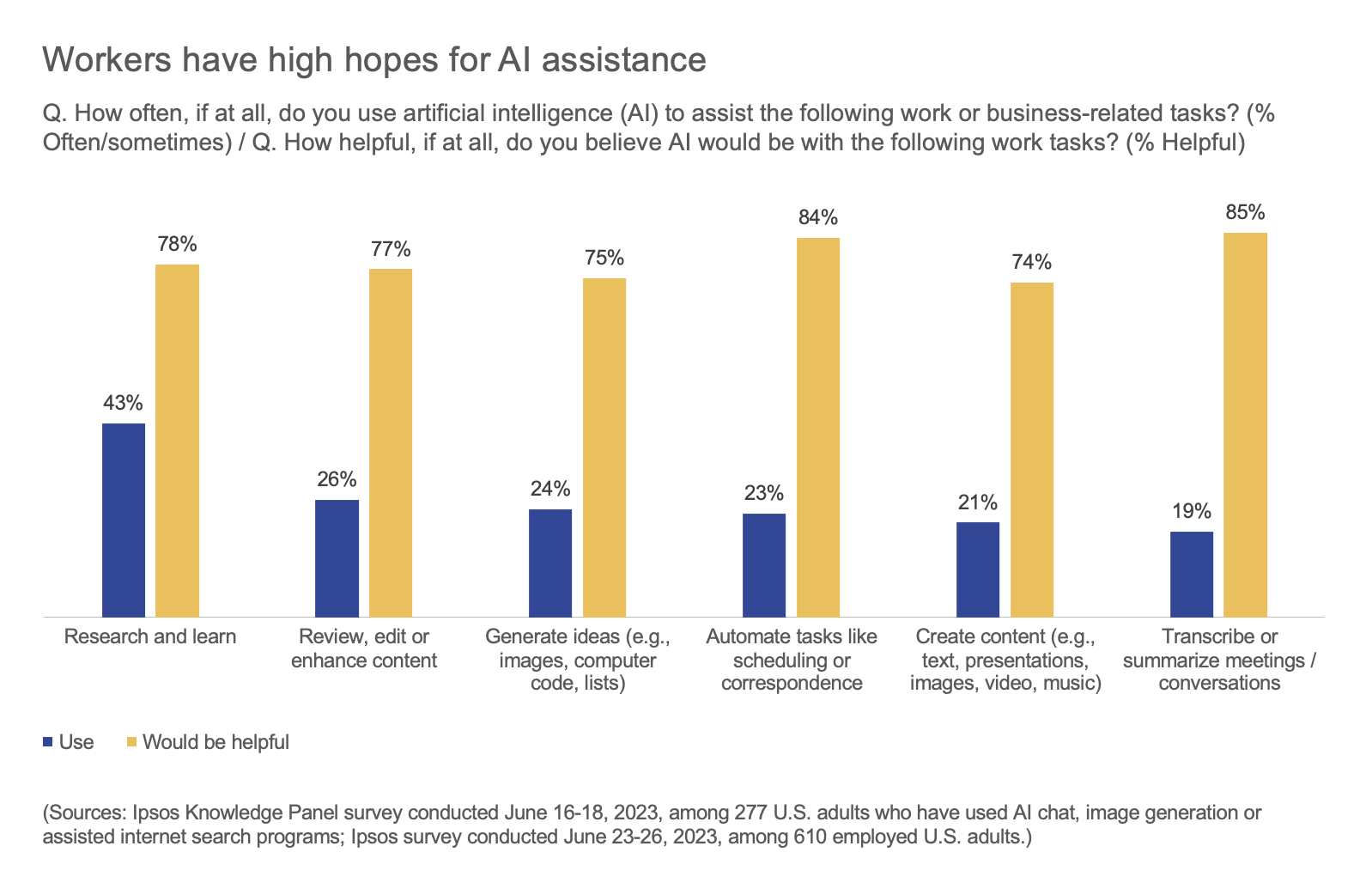
Schwartz: I don’t think AI’s going to take a lot of jobs. I think that the fear there is exaggerated. I think it will enhance many jobs. Basically, everybody’s now gotten a smart research assistant, and soon they’ll have a smart executive assistant as well, that takes the friction out of a lot of banal tasks.
“I don’t think AI’s going take a lot of jobs. I think that the fear there is exaggerated. I think it will enhance many jobs.”
Carmichael: How do we train workers for new jobs?
Schwartz: One of the great, cool things we have is AI teaching tools. It won’t just be for training the workforce. Every kid will have a personal tutor that will be able to go along with them. The first versions already exist.
Carmichael: And how will AI impact business-to-business differently from business-to-consumer?
Schwartz: Say I want to sell you something. I have to go back to the finance and legal departments and get back to you next week with our proposal. My AI sales assistant will be listening to that conversation, and by the time you and I have finished our conversation, all the paperwork is ready for you to sign and agree on. The friction disappears. Is this earth shattering? No, but it’s much more productive.
Carmichael: How will AI affect an aging workforce?
Schwartz: It will be transformative. I have friends in my age group [septuagenarians] who would just as soon not get on an airplane but now can collaborate and work with others in ways that they couldn’t before. And we’re going to see AI-enhanced tools that deal with human infirmities. Think about the Apple headset that was just introduced. But now take a much more modest version for a person with macular degeneration that adds an AI doing real-time analysis of the inbound data and compensates for the loss of vision directly to the brain.
Carmichael: How is AI helping you today?
Schwartz: I’ve been an information hunter for 50 years and I’m pretty good at it. But now I’ve got an unbelievable tool to help me do that and to do it faster, better and so on.
Carmichael: You’ve talked a lot about the wonder of AI. What’s your biggest worry?
Schwartz: The most challenging and most problematic is false information. Not “hallucinations,” but deliberate falsifications.
|
← Read previous |
Read next → |
For further reading
One in five investors report using AI chatbot in the past year
Conversations with AI: How generative and qualitative research will benefit each other