

Teen and brand relationships might stay complicated
When it comes to the relationships we have with brands, one key difference generally and generationally is that today’s teens want to have relationships at all. They want to engage with content and those that sponsor it. And many want to create content on their own. YouTube’s Robin Watson watches these trends shift from her role as global head of creative for the video platform’s ad products. Here’s what she sees.
Matt Carmichael: Younger generations are forecast to continue getting more diverse. How are sponsors adjusting?
Robin Watson: From a brand and marketer perspective, you're starting to see them take action. Just as the viewers and the audience are super diverse within our platform, you're starting to see marketers in the way that they're talking, in the way that they're casting, in the way they’re creating narratives. When I say casting, it’s not just in who they're casting, but the roles that those individuals are playing within their own ads. That's really tailoring to a more personalized experience for the viewers who are absolutely expecting representation of themselves and of their friends in the ads. It's more important as the diversity of voices and the diversity of content increases.
Carmichael: How is generative artificial intelligence going to play into helping brands reach both mass audiences on platforms like YouTube broadly, but also the niche communities within that?
Watson: It’s a differentiator for us that’s both a unique opportunity and challenge. In the simplest form, you can come to YouTube and if you don't have an ad, we can generate an ad for you. We'll make sure that you're speaking to somebody in a horizontal manner on the Watch page, but we have Shorts, which is a vertical environment or a feed environment. We have AI that now takes ads and automatically reframes them in a different orientation.
Carmichael: As people create and share content about brands, how does that evolve the creator/ brand relationship, and will that change as they age?
Watson: I absolutely believe that they will carry this forward. It’s a unique opportunity for brands because this is a cohort that wants to engage, and they will engage with your content, and they will remix it or share it in a group chat or send it to their friends or talk about it with their family in a way that you don't have to be at the water cooler anymore. It takes on a life of its own.
“There are more commonalities globally across markets and regions… You have to be creative. You have to show up in a way that they want to talk to you and engage with you.”
Carmichael: AI tools will open all kinds of creativity on limited budgets. How will that affect relationships between creators and brands?
Watson: Particularly with youth, what we're hearing is that they're okay with creators using generative AI. AI can help supercharge creativity for big marketers who have a ton of resources. For small creators who never really had the resources to entertain or delight in the same way with sight, sound and motion in a video ad, this is a great equalizer. And there are significantly more smaller creators who have very passionate fan bases that we as marketers should think about engaging much more broadly beyond just the big guys who are going to give massive scale.
Carmichael: How are the expectations of a younger audience different?
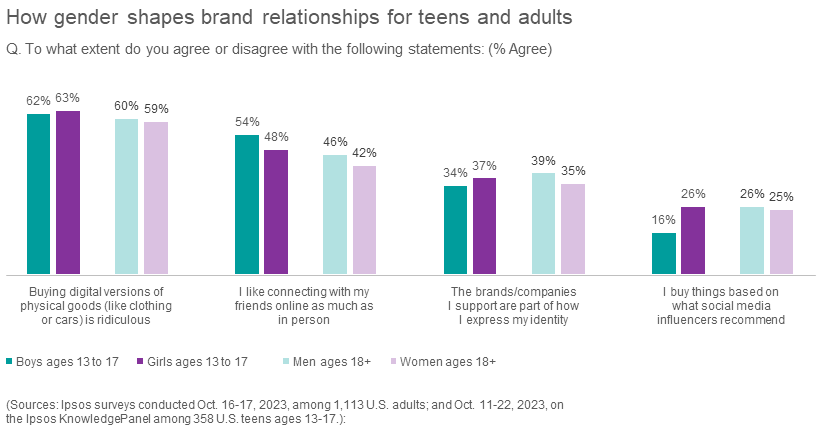
Watson: There are stark differences with older generations. One is that they're more willing to engage with ads. From a marketing perspective, it's okay for you to say that you're an ad. Bringing your brand to the table and being clear about who you are and what you stand for is helpful in engaging younger consumers. Very simply stated, they want to know who you are. They want to know what you're about. They want you to delight them very quickly and they want you to be relevant in the moment. That’s a different tone than we've seen with the older generations who have grown up on broadcast where you're pushed an ad and it’s not always relevant to you.
Carmichael: What global trends are the same and which vary across regions and markets?
Watson: There are more commonalities globally across markets and regions. Some of the elements are dialed up or dialed down depending on the market. You have to be creative. You have to show up in a way that customers want to talk to you and engage with you. That’s universal. In some of the Asian markets, it's the information and the relevancy that is more important and critical than the beauty of the ad. In the U.S. and U.K., they want relevancy that's still a No. 1 driver of performance, understanding and engagement with the brand. But they want beautiful, streamlined, modern experiences.
|
← Read previous |
Read next → |
For further reading
Younger gamers display strong and diverse spending behavior across video game touchpoints