
How farm tech is changing how we’ll feed America
Farming issue
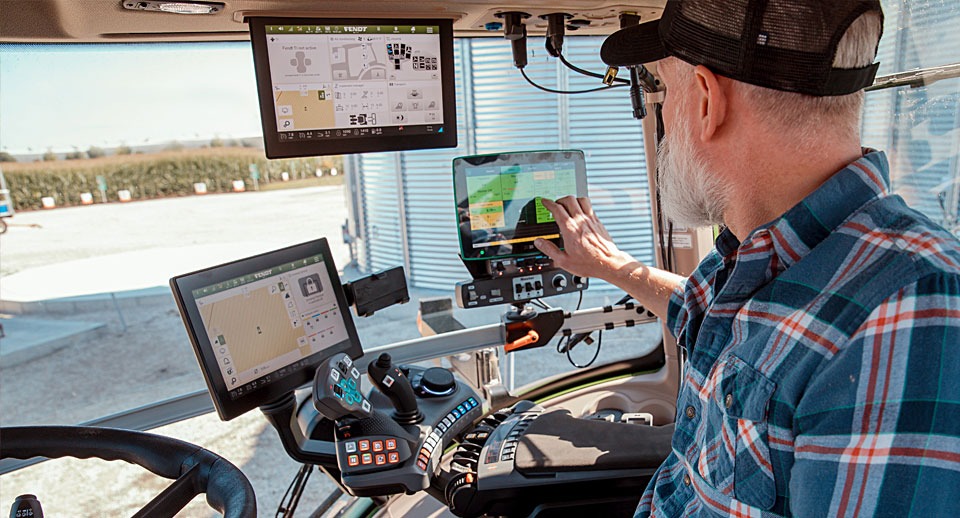
Think Teslas are high-tech? You should see the cabin of today’s combines and tractors. Farming technology often leads the way for more consumer uses. Where is farm tech today, and how is it changing the way we feed America? Seth Crawford from equipment manufacturer AGCO gives us the lay of the land.
Matt Carmichael: How do you see the tension with big farms and smaller farms playing out?
Seth Crawford: I think big farming gets a bad name. The reality is, the extreme majority of farms today are family farms. They're just bigger family farms than they've been before. Yet, the overall quality and the consistency of our food supply is better than ever with less variability and greater stability. That’s exciting because as we have the growing world and improving diets, that’s going be ever more important.
Carmichael: Farm equipment is expensive and can take years to pay off. Will smaller famers be able to keep up?
Crawford: We have retrofit products that we put on equipment. We make it scalable so they can step up in technology year-by-year, even if they have smaller units. I think the farmers that want to be a small farmer and operate with the latest technology can do that.
Carmichael: How is technology making farming more sustainable?
Crawford: We've been able to show in our field trials that by precisely placing the seed and the fertilizer and managing the timing of the fertilizer, we can maintain the same yield and reduce the fertilizer by 50%. You’re not only reducing the cost for the farmer; it also greatly helps from an environmental standpoint.
Carmichael: Will climate change force more regulation?
Crawford: We’re going to see a regulatory environment where farmers have to document operations, and that’s going to require certain technology, because it's proving to be much more sustainable. We view our role as enabling the farmer to do that in an economically feasible and reliable way so they can continue their livelihood without being burdened.
Carmichael: How is technology changing the experience of farming?
Crawford: We're seeing farmers go much later in life operating at a very, very high level and they love it. They would never let you take that technology away. It’s somewhat counterintuitive. A lot of times people think the tech is just for the young ones in the industry. Absolutely not. I know plenty of 80-year-old farmers that are fully decked out with their technology.
Carmichael: There’s ongoing debate if cars will ever be fully autonomous. Will farm equipment get there?
Crawford: With camera-based sensors and high-speed connectivity you're able to reference back to have humans look at an obstacle rather than stop at everything and send a note to the farmer to go out and check their machine. We can remotely do that. That builds up our database so we can program our models so that we can overcome those issues. I wouldn't say that we'll never get there. We've made the commitment that we’re going to be there across the full crop cycle by 2030. We're well on our way.
Carmichael: How much of an issue will connectivity be?
Crawford: Very few farmers have perfect connections across every acre in their operations. We have to have the sensors and the edge processing capability to process the data and take action in the moment without ever connecting to the cloud or going offboard in any manner. We do that today, but I think as we get to more autonomous operations, we will need better connectivity because without that, we can’t just call in a second set of eyes to look at an issue the equipment has run into. We’re going to be stuck. And that’s going to get frustrating for everyone.
Carmichael: Will we see more smaller equipment?
Crawford: I first heard this debate close to 20 years ago about continuing to invest in larger equipment or small swarms of machines. What’s happened is really a bit of both. In some ways, the machines have continued to get larger with higher horsepower, wider operating widths and higher speeds. I don't know that machines can get a lot bigger. It's very difficult today to move some of our machines from field to field. At the other end of the spectrum, with electrification and advanced sensors coming, we've worked with companies that are sending out small bots to scout fields, looking for pests on the underside of the crop canopy. They can get into fields much later in the season with some of our large equipment.
|
← Read previous |
Read next → |