
How this farmer is planning for an uncertain future
Farming issue
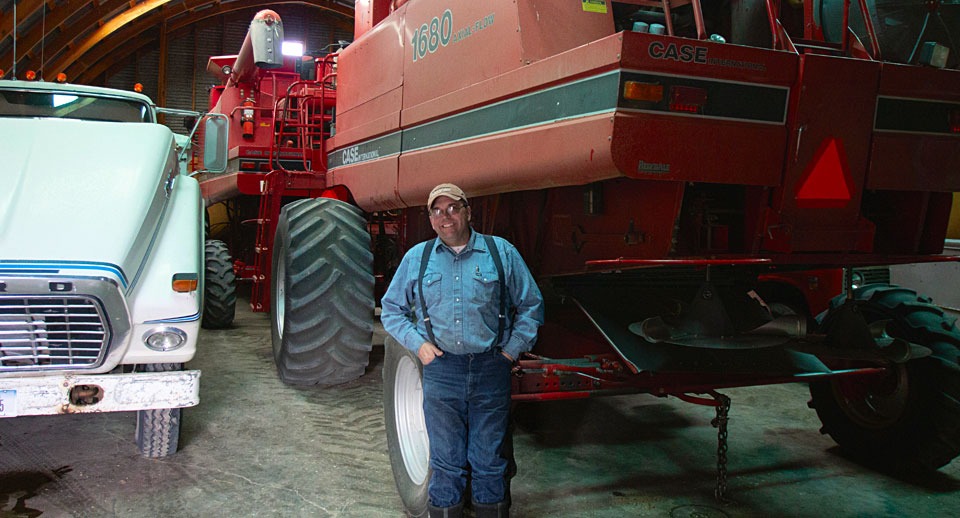
It would be remiss to talk about the future of farming and not talk to a farmer. Dale Hanson knows full well the challenges facing the industry that has supported his family for generations. Some challenges are local and specific to his region of Montana; some aren’t. He feels the effects of globalization personally, but he’s also fortunate not to be affected by some of the key challenges. Hanson is hopeful about his own farm, although he sees clouds around farming’s future in general.
Matt Carmichael: What has changed recently about farming?
Dale Hanson: For our area, the biggest thing we've seen is that people are realizing just how important the land is. A lot of foreign investors are coming in that have deep pockets and are willing to buy land. That’s been really driving up the land prices.
Carmichael: What kind of impacts does that have?
Hanson: With farming you're land-rich and cash-poor. If somebody's getting ready to retire, they probably don't have a lot of money saved, but they have a lot of value in their land. They only have one opportunity to sell it. They’re going to try to get the top dollar. And unfortunately, it’s not going to come from the neighbor down the road or the daughter or the beginning farmer. It’s investors.
Carmichael: How is technology shaping farming?
Hanson: We can steer our tractors without [manually] steering our tractors. All our equipment, whether it's an aerator or a sprayer, has section controls so it's mapping while we're doing it, so nothing gets oversprayed. Unfortunately, all this stuff comes out of costs, but it will pay for itself in time.
Carmichael: What are some of the day-to-day effects of automatic steering or optimizing spraying?
Hanson: It's amazing how tiring it is to hold the steering wheel of a tractor after a 15-, 16-, 18-hour day. With a 350- to 400-acre field you have like 80 passes on it at 4.5 mph. We all get a little bit of carpal tunnel [syndrome]. [With automatic steering] now I push a button and go. I can watch my implement, pay attention more and look for rocks. If you run a rock through the combine, those parts are expensive and it [costs] thousands of dollars in downtime.
Carmichael: Will tractors get fully autonomous?
Hanson: Twenty years ago, I could never fathom that we’d have autosteer, but by the same token, I can’t quite think how tractors are going to be running themselves on our terrain, with hills and washouts and wet spots. I imagine that [an autosteer tractor] would get in trouble.
Carmichael: Is labor an issue?
Hanson: Labor is hard to find. If it wasn't for my family, my wife and I'd be screwed because you just can't find labor. Everybody’s getting so far removed from agriculture that nobody really understands it. You can't just come on the farm and go to work, just like I couldn't go to your job and go to work. You need to know the ins and outs.
Carmichael: How does that tie in with the investors buying farmland? Who farms it?
Hanson: There's a small group of farmers that’s OK with farming land for investors. They're farming because they cannot get the finances to buy it, and they just want to farm the land. But these investors aren't in it to make money. They just want to be able to control the land.
Carmichael: Why is that?
Hanson: Investors are getting in on irrigated ground. These people are controlling this irrigated land, and, in essence, they control the water. Water is such a precious commodity; when you control the water, you control the outlook of the area. My dad, well, all the old-timers say, “Whiskey’s for drinking, water’s for fighting.” It has caused a lot of heartaches between neighbors because somebody used too much water or stole the water. That's happened. During the night, people open gates or shut gates or put dams in and it's really not good.
Carmichael: What’s giving you hope?
Hanson: For my operation, it’s the next generation. My [three adult daughters] want to be part of it. That’s rewarding to me. Farmers are getting a little bit of recognition. And we're starting to see this circle going through these younger kids that are now a little older and having kids in school. They realize these small towns aren't so bad. You don't need to have constant entertainment in life. If we have a good, stable school and a good grocery store and find a home, that's what we need.
|
← Read previous |
|