
What auto insurance tells us about the future of America’s car culture
The car’s role as a symbol of adulthood and identity in American culture is waning among younger adults. Only 24% of 18- to 34-year-olds believe their car greatly reflects their personality, down from 30% in 2017. Young drivers are taking longer to get behind the wheel, too. Katie Irey, senior vice president of product design at Allstate, tracks these and other shifts since insurance protects our prized possessions. When she thinks of the future, she says the industry must redesign insurance to match our changing needs.

Kate MacArthur: How is car culture in America shifting?
Katie Irey: Particularly in urban areas, there are a lot more options today to get around than there were 20, 30 years ago. Ride-sharing is a huge one. Even scooters and e-bikes and mobility options that are more rental-based are more prevalent in big cities. That's where we see a bigger shift in car culture, and it's based on need. You maybe don't need the same ownership structure as in the past. Outside of urban areas, car culture is still very strong, and today it's more about how car technology is changing.
MacArthur: How so?
Irey: Cars are more like a moving computer we ride in than what they were in the past. What's the newest and greatest technology that cars can offer us? There's a lot of fun in that. There's also a lot of safety in that. As an insurance company, that's important to us. We have always been focused on how we help our customers be safe on the road. So assisted-driver technology like lane-departure signals are things we're very interested in as we're changing our products to meet the needs of the consumer.
MacArthur: Getting a driver's license has long been a rite of passage. How is that changing?
Irey: Compared to a generation ago, we see more teens delaying when they get their first driver's license. We see that more in urban areas in different pockets of the country. For teens today, the risks and the costs of driving continue to be high, and the benefits may not be as great as they once were. They have plenty of other options available now. Before smartphones, your driver's license represented responsibility and freedom. Now we have that constant connectivity with your smartphone. So the responsibility remains and the degree of freedom that comes with that responsibility is less. That risk-return trade-off has changed compared to the past. We're starting to see our first introduction to a new driver shift as people wait until they're 18, when they're a fully independent young adult, as the first time they're going to transact business with an insurance company.

MacArthur: How are graduated driver license (GDL) requirements shaping driving trends?
Irey: States with stronger graduated driver licensing laws have the largest reductions in fatal crashes among 15- to 17-year-olds. Kids don't have as much freedom as they used to before GDL laws. They have to put in the hours of supervised driving. There are nighttime restrictions, there are passenger restrictions. So those things change how teenagers are driving. The balance of kids who may skip it altogether and just wait till they're 18, that's where we have wider variations in readiness for driving and in driving performance.
MacArthur: Younger generations are more used to subscriptions. How is that influencing insurance?
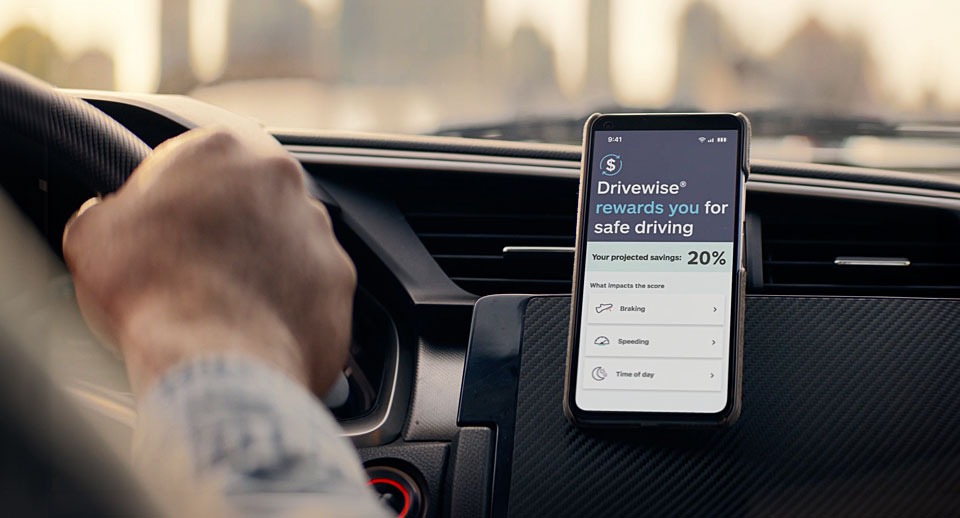
Irey: From an insurance perspective, that's where our usage-based insurance offerings become more attractive. The usage-based insurance programs typically charge a rate per mile driven, and that rate takes into account driving behaviors like hard braking or speeding or time of day. We see that being attractive to people across generations. We have both a traditional telematics program, which is really a behavior-based insurance program, and then we have a usage-based program, so it gives people options depending on what their needs are.
 Before smartphones, your driver’s license represented responsibility and freedom. Now we have that constant connectivity with your smartphone.”
MacArthur: What shapes people's tolerance levels for data collection and how that affects their rates?
Irey: We started with Drivewise in 2010. At that time, telematics were pretty new, and using actual driving experience to price insurance was an eye-opener. Over time, we still have a bit of resistance with different groups, but more people are getting comfortable with it. People are growing more aware that smartphones have a lot of information about us. Using actual behavior, in a sense, feels a lot fairer. Consumers who choose to be part of these programs with Allstate rate us higher on our customer satisfaction.
MacArthur: What are ways electric and self-driving vehicles are changing the insurance landscape?
Irey: Insurers are definitely adapting. With electric vehicles, the loss experience differs from internal combustion engine vehicles. EVs tend to come with pretty advanced technology in the car. A lot of data, a lot of safety features. There’s a heavy vehicle with an expensive battery, and body shops maybe don't have the advanced repair skills, so there’s a lot of cost involved in accidents. On the self-driving technology, the challenge will be knowing when that vehicle is being controlled by the operator of the vehicle versus being controlled by the vehicle software or even someone hundreds of miles away. It’s going to take some time for us to figure out how to make that work where you have some autonomous and some human drivers in control of the vehicle on the roads at the same time.
← Read previous | Read next → |