
What the changing role of cities means for citizens and businesses
Imagine it’s 2035. Hybridization of work, of digital experiences and more has changed how we work and how we live. But who can afford this evolving reality?
Jason Pargin, author of “Futuristic Violence and Fancy Suits,” says that, “Cities are always living in the future. Trends always start in the cities and not all of them are good.”
The dual disruptions of soaring cost of living and hybrid work are the reasons the future of cities is even a question. This issue looks at how that plays out in two tension points, neither of which look good for the future of cities: We neither want to live in cities nor work in them.
Regardless, millions of us rely on cities and live near them, if not in them. Between 2000 and 2050, the share of Americans who live in urban areas is projected to increase from 80% to 90%. That figure was just 5% when the nation was founded and most of the constitutional rules were written. And 90% of our GDP is generated in urban areas.
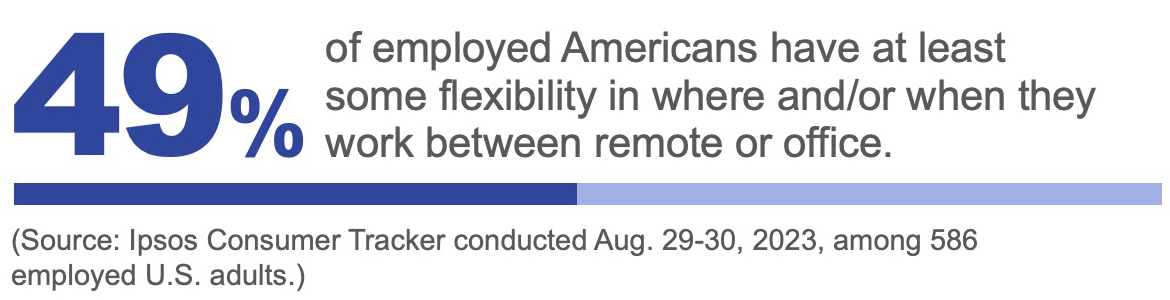
For corporations, this has broad implications for their workforces but also for the kinds of products they need to innovate. That’s true across industries as auto companies, office supplies, tech and equipment, packaged goods and even restaurants will have to factor what hybrid life or changing commuting mean for our buying habits and the occasions in which we shop and dine.
Cities are facing a dispersed workforce, aging infrastructure, homelessness, crime and a lack of affordable urban housing. Each of those trends can be unpacked further. For instance, affordability is affected by rising rents due partially to a commercial buying spree from private equity and venture money when interest rates were low. Now that those rates have doubled, there’s an enormous bubble of financing hanging out there. That’s a huge problem to solve.
This issue also contains a lot of ideas that are hopeful about the future of cities, including ideas from prior What the Future issues. Not surprisingly, much of the discussion focuses on the other disruption of hybridization, which might be easier to work with than the affordability issues.
Hybridization is often enabled by the digital disruption happening all around us. In What the Future: Play, we talked about how gaming has moved from tabletop to electronic to online, and in some cases, back again. Play has moved from outdoors to indoors and might do more of that as our climate changes. Play was social. Then some of it became isolated as we played video games alone. Now it’s often physically isolated but virtually social as we play online with friends and stream to a broader audience. Play didn’t say, “Stop. Come back to the playground or ballfield.” It said, “Digital is here to stay. Let’s enable that with games that are social as well as tailored for the home experience.” And everyone made a ton of money and had a lot of fun.
Cities accelerated changes during the pandemic. Streets in downtowns and residential areas alike were closed overnight to cars and opened to outdoor dining, walking and biking spaces. Ideas that used to take years of planning and red tape were executed overnight to great success. Some of that has been dialed back since lockdowns ended.
Work, on the other hand, hasn’t been reinvented to the same extent. Sure, we started doing meetings online but we have yet to make changes discussed in What the Future: Work of thinking through new processes and ways of doing things in our hybrid worlds. But the long evolution of play and the sudden acceleration of trends in our downtowns show that work can get there if we do the research to understand the ways in which hybrid can be a benefit to employees, employers and cities alike.
If we can truly make hybrid work, future cities could look very different than they did in the past.
There are three other plausible directions we see in the signals. One is that the future of our cities will look much more like the distant past when we built cities more for humans than cars. Think of the livable models in Madrid and Copenhagen.
Or, those with money and power build new cities from scratch. Several tech titans have that in mind as they buy up land in California. In Saudi Arabia, a group of investors are developing an ambitious city project called The Line. Sustainability is a stated goal of both projects. But cautionary tales abound in China, which has ghost megacities dotting its vast landscape.
Or, while many experts say that hybrid is here to stay, companies are also calling people back to the office with greater urgency. We have to acknowledge that there’s a possible future that looks very much like 2019. Changing something as central to our being as “where we work” takes a huge push like a pandemic. The counter-push will also be strong. To paraphrase urbanist Joel Kotkin who was interviewed in What the Future: Transportation, never underestimate the power of inertia.
|
← Read previous |
Read next → |